

The interaction between humans and machines will increase exponentially.
Over the past few decades, technology has already transformed many workflows. What is happening now, however, differs qualitatively from earlier waves of digitalization. Today the shift goes further than the arrival of individual new tools. Work itself is being reorganized.
Companies are starting to break their tasks down into individual steps and to ask, for each step, whether a human still needs to perform it or whether a system (specifically an automation or an AI agent) can take it over. Modern technologies make it possible to automate simple, rule-based processes as well as tasks that previously required human thinking or interpretation.
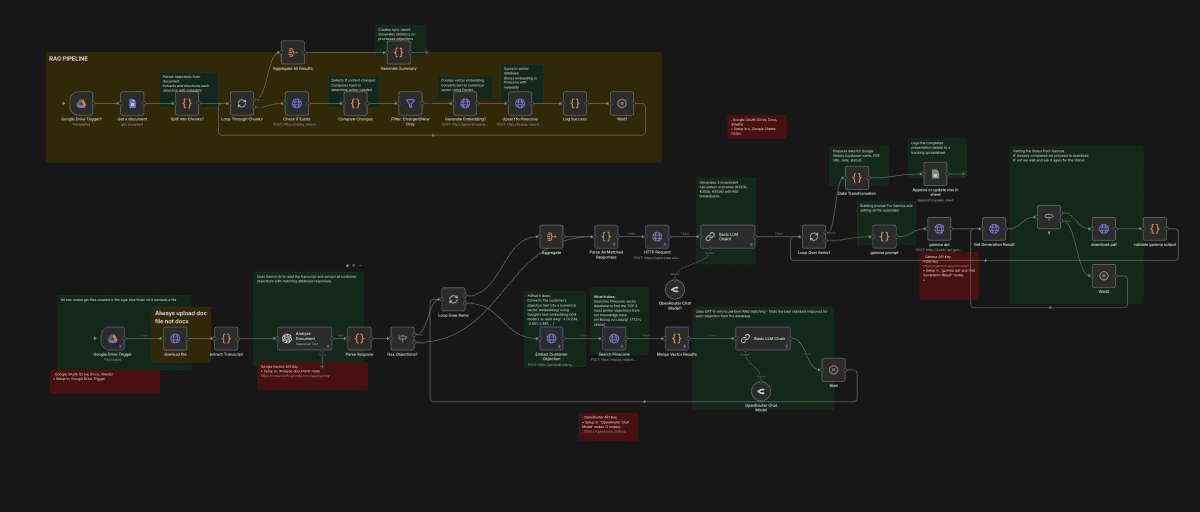
Automated n8n workflow built by us at APEX that processes meeting recordings and turns them directly into structured quotes, including tailored objection handling, a summary of the client's requirements, and a finished proposal PDF in the client's preferred design.
Studies show that the technologies available today already carry high theoretical potential for automating work: a report by the McKinsey Global Institute estimates that around 57% of the working hours performed worldwide would be technically automatable using existing technology. This applies above all to information-intensive activities, meaning the kind of work found in agencies, SMEs, administration, and back-office functions. At the same time, the researchers emphasize that the point here is a new form of collaboration between humans and machines rather than a complete replacement of people.
This means that routine and repetitive tasks can increasingly be taken over by systems, while people gain more time for decisions and for complex, creative work.
What does this mean for companies in practical terms?
The classic automation solutions we know from CRM systems, marketing tools, or workflow platforms have been creating efficiency for years by standardizing recurring processes.
Such systems follow fixed rules: "If this happens, then do that". They prevent errors, reduce manual effort, and give employees room for more important tasks.
The use of AI, however, expands these possibilities considerably. Modern AI systems, above all so-called large language models, can process data as well as read texts, draw conclusions, understand information, and even prepare decisions that previously required human interpretation. Or, put simply: AI can do the work within a process and also help with the thinking.
A recent McKinsey report emphasizes that AI in everyday working life is already understood as a kind of "cognitive boost". It can complement human work and extend capabilities, which allows companies to increase productivity, creativity, and efficiency at the same time. In many companies, however, this potential is not yet fully used, because the integration into existing workflows is missing.
Why AI and automation are more than just a "nice trend" in 2026 and genuinely make a difference
There are plenty of figures and buzzwords around the topic of AI. But the decisive question for business owners is: what actually happens in companies that use these technologies seriously?
Several international studies point to similar trends:
Demand for skills in working with AI, referred to as "AI fluency," has risen sharply in recent years and is among the fastest-growing requirements in job postings. This shows that companies are increasingly looking for people who can use the technology and also design and steer workflows with AI.
Many companies report concrete benefits when they deploy AI in an integrated way rather than in isolated spots, for example higher process efficiency or better results in innovation and growth. At the same time, the effect often fails to materialize when AI is introduced merely "as a tool" (such as ChatGPT) without changing the underlying workflows.
International analyses show that work tasks are changing while entire jobs do not simply disappear. Instead, new tasks and roles emerge, partly because important human skills such as collaboration, communication, problem-solving, and creativity remain in demand, despite automation or precisely because of it.
This means that automation and AI serve as a means of restructuring work rather than as a replacement for people: faster, more reliable, and at higher quality.
How automation and AI take effect in the most important areas
Sales: efficiency and speed are decisive
In sales, large efficiency gains arise when recurring work is automated and people can concentrate on the genuinely demanding tasks. Classic automations take over tasks such as:
Generating new leads with the help of AI
Entering and assigning leads
Pre- and post-qualification of leads
Automatic routing of tasks
Maintaining the CRM via AI automation
Reminders for follow-ups or recalls
Beyond that, AI can recognize patterns that are hard for people to see on their own, for example:
Generating summaries from calls or emails immediately after they happen
Assessing the quality of a lead ("Does this lead fit my company?")
Preparing personalized replies
This shortens the sales cycle, and teams can react to opportunities more quickly. Technology alone does not create this advantage. It comes from AI supporting the human decision instead of replacing it.
Marketing: speed, relevance, and consistency
Marketing today has many layers: content has to be planned, created, distributed, and analyzed. Classic automations ensure that processes such as mailing list segmentation or campaign planning run reliably. AI creates a further advantage by:
Generating content meaningfully from existing information
Evaluating customer feedback in a structured way
Deriving marketing tasks directly from the meeting and creating them in ClickUp, Asana, or other project management tools
Recognizing patterns in large volumes of data that people would overlook
The result: less time spent on routine, more focus on strategy and creative approaches.
HR: recruitment, onboarding, and personnel processes
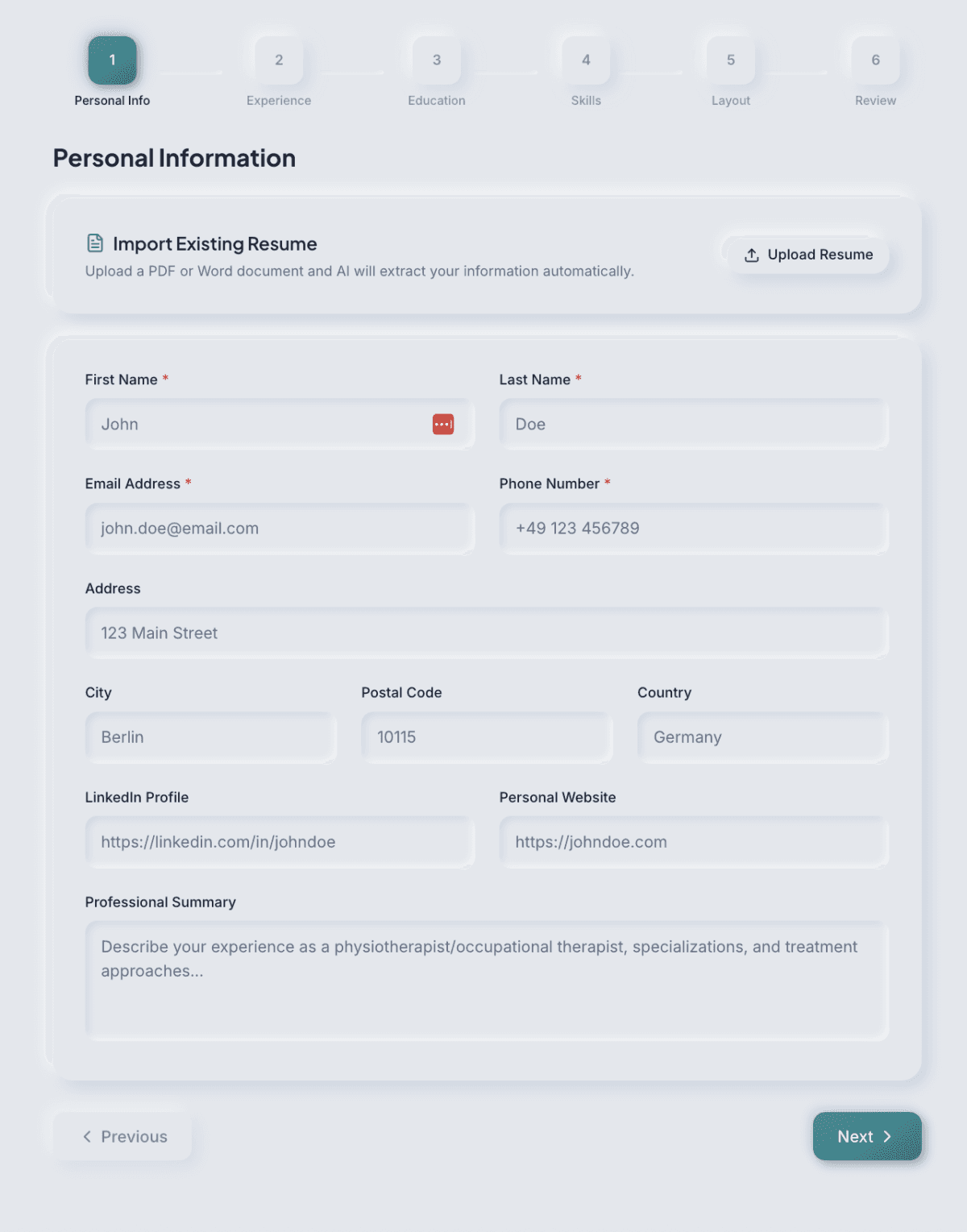
AI-supported CV and resume checker in the recruiting area: applicants can upload their CV, have it analyzed automatically, and optimize it in a structured way, specifically for the German job market.
HR processes, too, are time-intensive and repetitive in many companies. Standard processes such as:
Applicant screening
Scheduling interviews
Standardized communication
can already be automated well today. In addition, AI can:
Summarize application documents
Provide initial answers to standard questions
Recognize patterns in applicant data
This does not mean that HR becomes superfluous. Quite the opposite: HR teams can concentrate more strongly on interpersonal aspects, because the routine work is handled by systems.
Back office: the often underestimated productivity lever
Back-office work covers many tasks that are necessary but do not directly create value, for example:
Invoice capture and filing
Approval processes
Data maintenance
Such processes are classic candidates for automation. When back-office teams are relieved of routine activities, they can focus more strongly on oversight, quality, and strategic tasks. Here, AI can additionally understand, classify, and prepare content, for instance from documents or emails.
Why you should act now, and not tomorrow
Automation and AI are not spreading slowly. They are already an active competitive factor today. Companies that adopt these technologies only hesitantly or in isolated spots risk two things:
They lose time and efficiency compared with competitors who automate processes consistently.
They invest in individual tools instead of process competence, and gain no lasting advantage.
Studies show that automation does not happen overnight: many companies can only realize noticeable productivity gains once automation achieves broad penetration across their business processes, often at more than 30% of supported work tasks. Only then do efficiency gains and cost advantages genuinely contribute to business success.
In 2026, automation with and without AI will no longer be a "nice to have"
In 2026, automation and AI are developing from a technology trend into a fundamental component of modern corporate management. The point is organization, structure, and collaboration between humans and machines rather than "technology for technology's sake."
The goal is to make people's work more meaningful, more efficient, and more strategic rather than to replace them. Companies that view automation and AI as part of their working culture and their processes, and not merely as individual tools, will achieve lasting advantages in efficiency and quality.
About APEX Consulting
APEX Consulting is an AI automation and growth consulting firm supporting B2B organizations with intelligent workflows, AI agents, CRM automation, and scalable operating systems. The firm focuses on practical, implementation-driven solutions that reduce manual effort and enable sustainable growth.
More information: https://apex-consulting.ai/