Finally more time. How? Systems!
You know the feeling: your business is running, but it is actually running you. Every day the same questions, constantly putting out fires, never really room to breathe. Yet you did not found your company to live on a hamster wheel.
The good news? There is a way out. And it leads through systems that actually work, not through guru promises or endless Loom videos that nobody watches.
Anyone who has implemented well over 100 AI projects like we have knows: there is a clear roadmap. Five concrete steps that help you build your business in a way that runs even without your permanent presence. Let us walk through together how that works, and above all, what you absolutely must avoid.
Book your free AI consultation now.
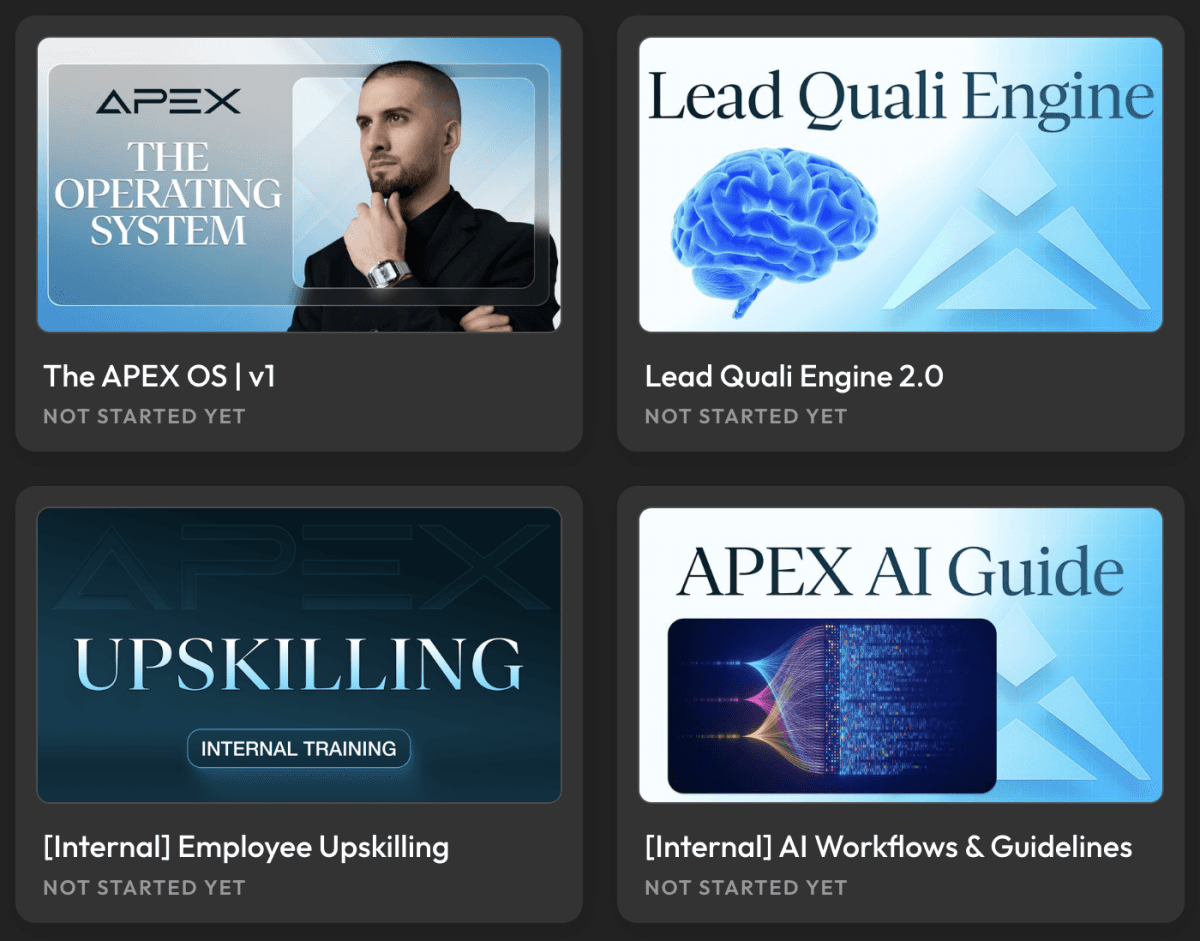
An example from our LearningSuite on the topic of upskilling and providing systems. Employees as well as clients can view important information on various topics here, so that everyone develops an understanding of terminology and tools.
The 3 biggest lies about business systematization
"Do what I did": the guru trap
When you google how to run your business without you, you quickly land on self-proclaimed experts. Usually in a suit, always with the same promise: "I made it, you just have to do the same." Sounds tempting, right?
The problem: these people may have systematized one business, maybe ten. Their experience is based on a handful of cases, often in completely different industries from yours. What works for a portfolio company will most likely do little for your agency. Apples and oranges.
Genuine expert status does not come from one-off luck, but from hundreds and thousands of repetitions. Some consultants do more systematization projects in a month than a serial entrepreneur does in their entire career. That is what makes the difference.
Recording Loom videos: the documented time waster
This advice often comes from well-meaning people: "Just record videos of everything you do!" The idea behind it? Get the knowledge out of your head.
But what happens in reality? You sacrifice precious hours, creating video after video, SOP after SOP. Then: nothing happens. Your team does not use the videos. Why?
They are often wrong because you do not actually know exactly how your team does things
They gather dust in some Google Drive folder and get forgotten (not with LearningSuite, a small tip on the side)
They are outdated because processes change every few weeks
Nobody wants to record new videos every two weeks
The result: a digital mass grave full of unused documents. Pure waste of time, zero real system improvement.
Hire a genius: the expensive illusion
Integrator, business coach, certified expert, no matter what they call themselves, the message is always the same: you alone are not capable enough to systematize your business.
Nonsense. You have brought your company this far, without systems, without a handbook, the hard way. That is impressive. That proves you are absolutely capable of taking the next step.
Of course experts can be valuable. They can push you, accelerate you, support you. But they are not the solution in themselves. You are the solution. You already have everything you need. It is just still in your head. And no, you do not need to get it out through hundreds of Loom videos.
What actually works: the system for systematizing
When your business is running you instead of the other way around, the answer is not to run faster. The answer is systems. But not just any generic delegation framework.
What you need is a system that systematizes your business. A continuous improvement engine that you set up once, and that your team then uses daily to make your business progressively more documented and efficient. And alongside normal work, with no extra effort.
That is the key. And for exactly that there are five clear steps.
Step 1: WHAT does your business actually do?
"Of course I know what we do, I have been running this thing for 5 years!" Maybe. But can you really list all the tasks? How are clients efficiently onboarded? When do you send client gifts? How do you respond to emails professionally? And is that perhaps already systematizable?
The reality: of everyone who has done this exercise in consulting sessions, only a handful could complete it fully on the first attempt. Why? Because we forget the small, recurring details, even though these are exactly what keeps the operation running.
Your goal in this step: an exhaustive list of all areas of responsibility in your company. A small business has a few hundred of them. For example "maintain website" covers: updating plugins, fixing bugs, implementing improvements.
This exercise takes about an hour. And the best part: the list stays relatively stable for years. Invested once, used again and again.
Important: areas of responsibility are not the same as tasks. The focus is not on individual to-dos, but on zones of responsibility. That is a subtle but important difference, and the reason why this list is so valuable for later delegation.
Step 2: WHO is responsible for what?
Now it gets interesting. There are two ways to assign responsibility:
By person: "Tom takes care of the website."
By role: "The website manager takes care of the website. Currently that is Tom."
Option two is stronger, especially in small teams where one person wears multiple hats. Maybe you are simultaneously CEO, social media expert, YouTube content creator, newsletter author, and lead consultant. Five roles, one person.
Why is that so powerful? When you later delegate, you simply hand off an entire role, with everything that comes with it. Clean, clear, structured.
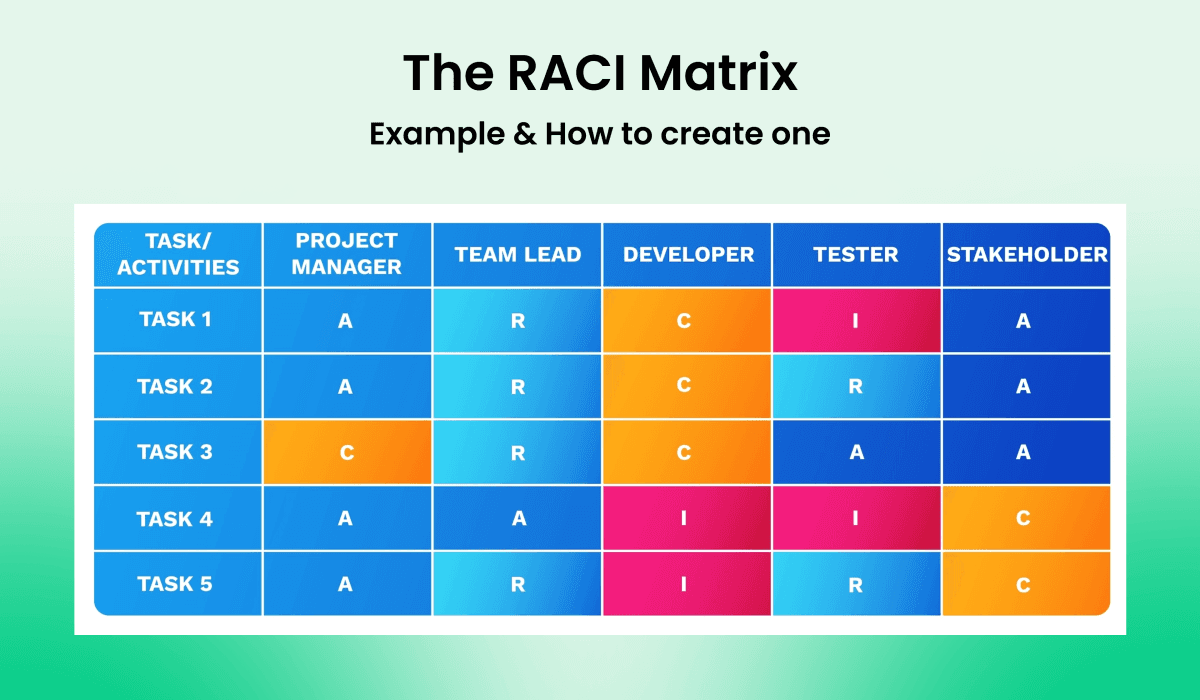
Clear overview of tasks and roles with explicit assignment of Responsible (R), Accountable (A), Consulted (C), and Informed (I) for unambiguous clarification of responsibilities in the project. Source: https://resources.rework.com/libraries/project-management/what-is-raci-matrix
What if I am on my own?
Perfect! Then you simply define your various roles. You are not "just you," you are managing director, sales person, product developer, and accountant all in one. Write it down. That will help you enormously later when prioritizing and delegating.
Step 3: WHERE do your systems live?
Now it gets technical, but keep reading, it is worth it. The question is: where do you store all this information so that it actually gets used?
The answer: in a single tab of your browser.
Your goal is to reach everything you need for work through one search bar. In most cases that means a project management tool like ClickUp, Asana, or Monday.
Why? Because these tools are flexible enough to organize all your what, who, when, and how information in one place. No more paper chaos, no more searching across five different apps.
And the best part: most of these tools start at €0. If you save just one hour per day, it has already paid off.
The elephant in the room: "I have already tried three tools and nothing worked"
We hear this often. And now comes the hard but honest truth: the problem is not the tool. The problem is how you use it.
If your processes are chaotic, they will stay chaotic in every tool. Bad habits travel with you. That is exactly why it is so important to first understand the structure, and then use the tool correctly.
Step 4: WHEN does the work happen?
Now we get to rhythm and routine. When exactly do things get done in your business?
Examples:
Every Monday: update plugins
Every quarter: improve the website
As soon as an error is reported: fix within 24 hours
Daily: check emails
Some actions have fixed schedules, others are triggered by events. Knowing both is worth its weight in gold, especially when you want to delegate.
Why? Because you can see exactly where your time goes. If you notice, for example, that proofreading newsletters eats up five hours a month, you know: that would be a great job to hand off, possibly even to an AI employee 😉
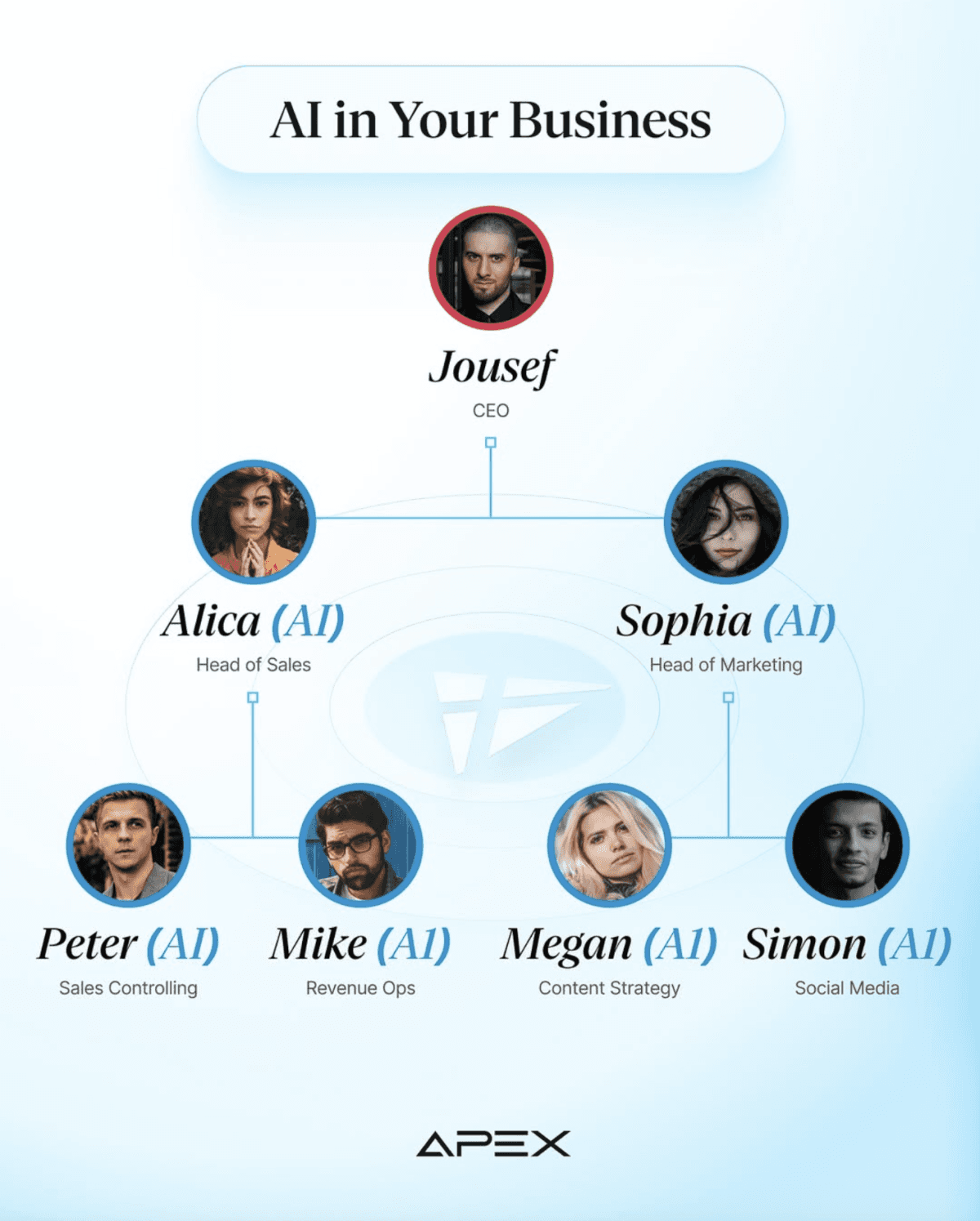
My vision for 2026: at the top sits the human CEO, below them various AI employees who support the CEO on diverse topics. Controlled via chat or voice.
What if I do not know when I do what?
Then observe yourself. For one week. Or ask others, your team, your partner, business contacts. They often see more clearly than you which routines you have.
Step 5: HOW is the work done?
Now we have arrived at the classic "SOP writing," but be careful: this is the last step, not the first.
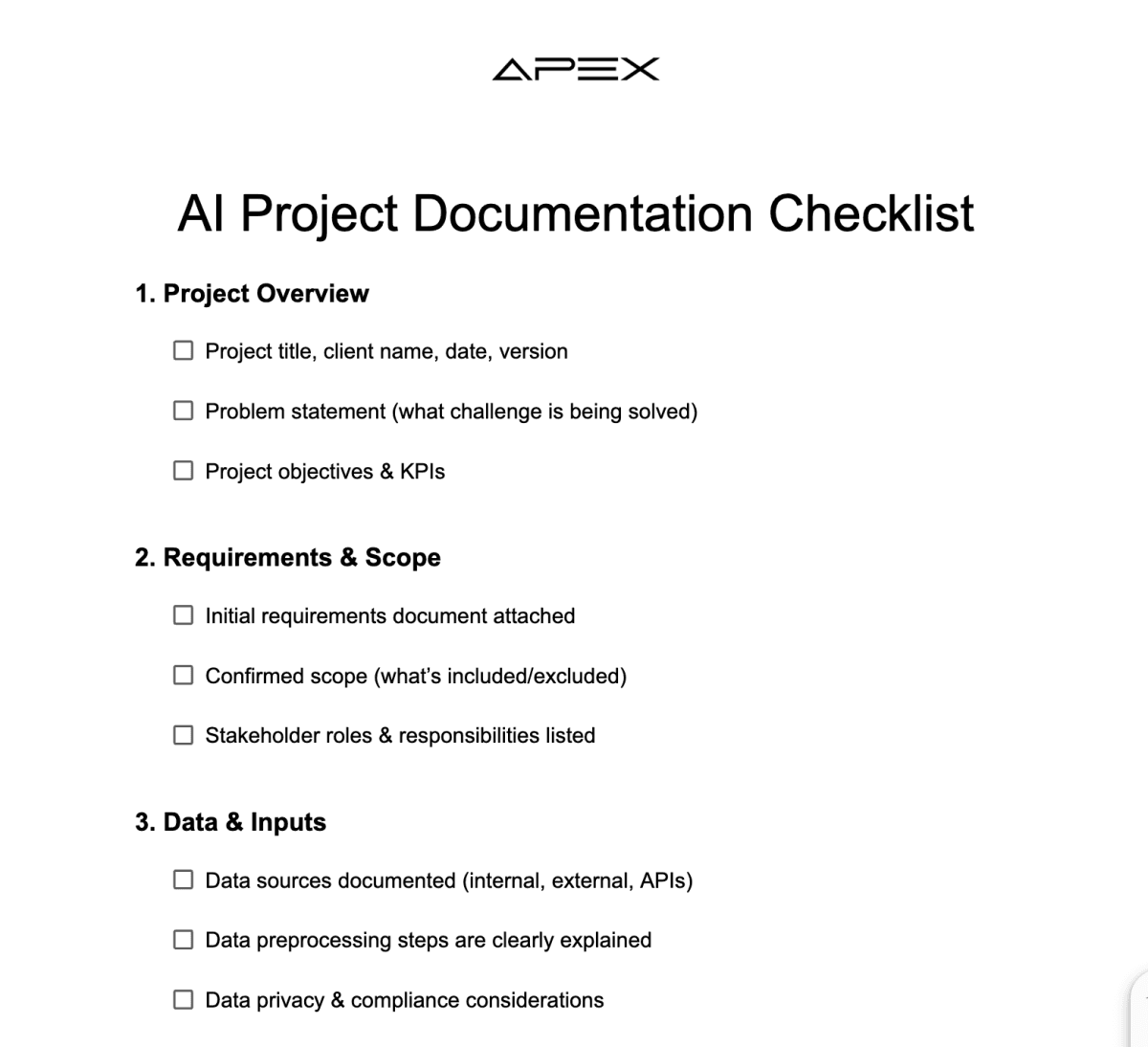
A very simple but effective SOP on the topic of AI workflow checklists. Without an "approval" of these points, no workflow is permitted to be marked as "ready."
Why? Because 80 percent of tasks in your business do not need a detailed guide at all. When someone knows what needs to be done, who is responsible, when it needs to be finished, and where the information lives, that is usually enough.
Only for the remaining 20 percent, the complex, error-prone processes, is the effort of creating a step-by-step guide worthwhile.
Where should you start?
Think about the last really painful mistake in your business. The one that still makes you feel sick today. Start right there. Write the guide that would have prevented that mistake.
If no mistake comes to mind (congratulations!), then start where money changes hands, around the sales process. There, every mistake counts twice.
Should I document everything before I hire someone?
No! It is often even better to have new team members create the guides together with you. They bring fresh eyes and ask the right questions.
How it all comes together: from founder to team
When you answer these five questions, what, who, where, when, and how, you have a system that runs without your constant involvement. No more endless loop of Slack pings and emergency calls.
The beautiful part: you as the founder handle the first two steps (what and who). After that, your team takes over. They maintain the system, optimize the workflows, and update the guides.
Your job? Create the structure, and then get out of the way.
That is exactly the moment when your business starts working for you instead of the other way around.
You already have everything you need.
You do not need to hire a genius. You do not need to record a hundred videos. You do not need to emulate some guru who runs a completely different business.
You only need to do one thing: get the knowledge out of your head and capture it in a structured way, in five clear steps. What does your business do? Who is responsible? Where do you organize it all? When does the work happen? And how is it done?
Once these questions are answered, you have a living system that grows with your team and continuously improves, alongside normal work, without any extra effort.
You have brought your business this far, without a handbook, without perfect systems, the hard way. That proves you are more than capable of taking this next step. So: start today. Write down what you do. And watch your business begin to run without you.
About APEX Consulting
APEX Consulting is an AI automation and growth consulting firm supporting B2B organizations with intelligent workflows, AI agents, CRM automation, and scalable operating systems. The firm focuses on practical, implementation-driven solutions that reduce manual effort and enable sustainable growth.
More information: https://apex-consulting.ai/