
The 4-step plan for systematization
Imagine you have been running your business for three years and can still travel for months without a single cog grinding to a halt. Sounds like a dream? It is not. The key lies not in a bigger team or even more working hours, but in clear systems that ensure your company runs reliably, with or without you.
Many founders make the same mistake: they dive headfirst into automation, AI tools, and workflows before they have even understood what is actually keeping their business running. But building automation on top of broken processes is like building a house on sand.
In this article I show you the 4-step plan for systematization that allows you to step back from day-to-day operations step by step, without your company falling apart in the process.
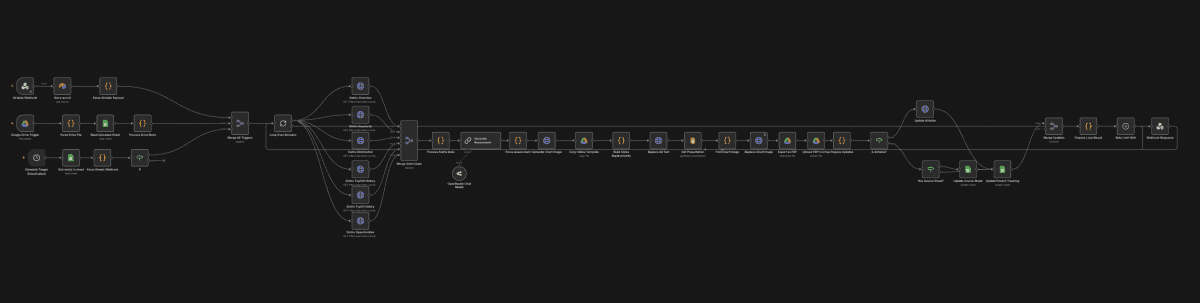
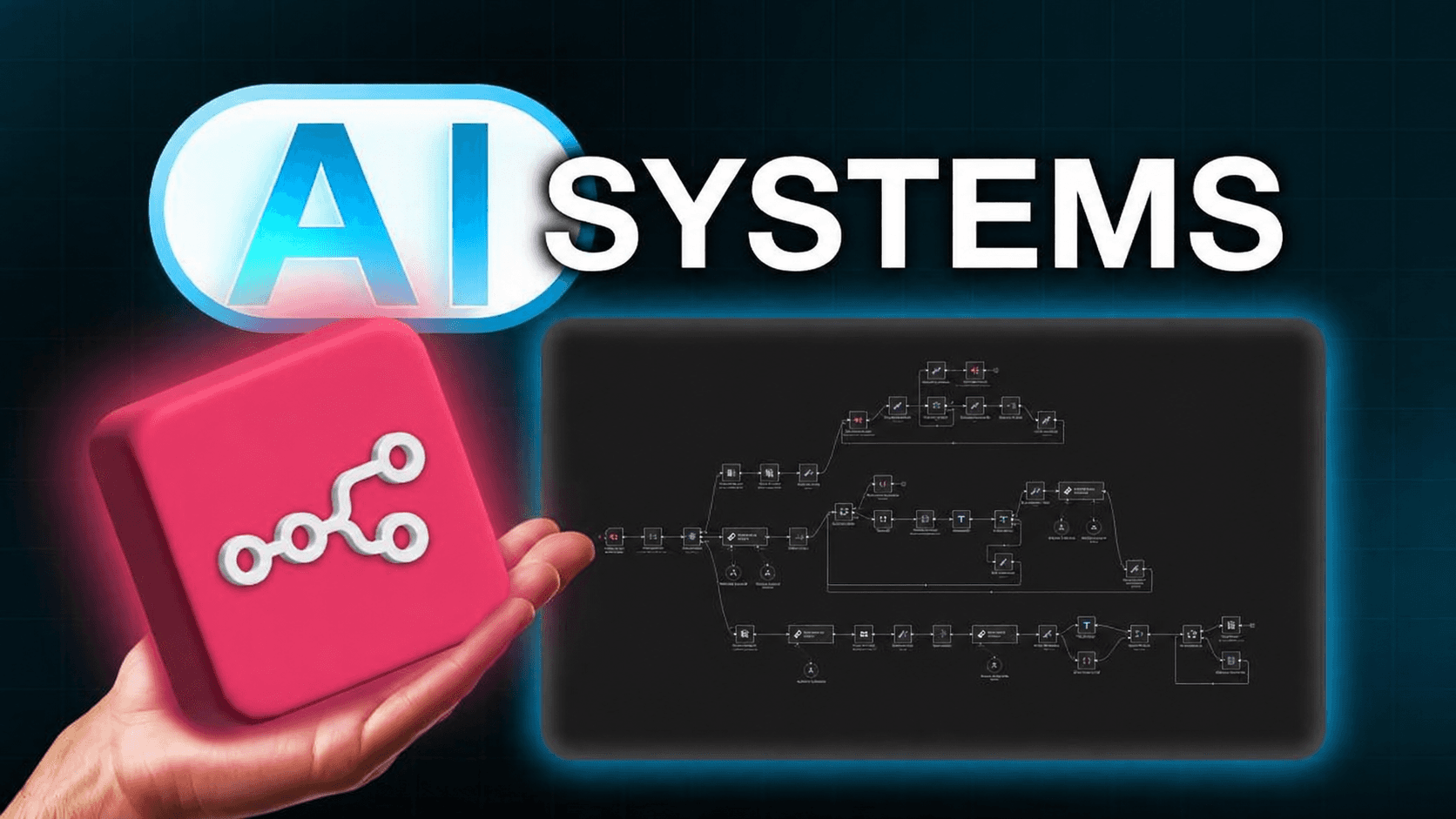
Automated end-to-end workflow for creating, enriching, and delivering presentations. The flow connects multiple triggers and data sources, executes analysis and evaluation logic, generates slides with AI support, and synchronizes results back into Drive, Sheets, and Airtable. Ideal for scalable, repeatable content and reporting processes.
The two foundations: nothing works without them
Before you automate a single process, you need to understand: every service business stands on two central pillars. If these wobble, even the best technology will not help you.
Pillar 1: Client acquisition: from stranger to paying client
Client acquisition is the engine of your business. It transforms people who do not know you into paying clients. Regardless of niche, offering, or channel, this process can always be broken down into three phases:
Lead generation: identifying potential clients
Outreach: approaching these people in a targeted way
Appointment setting: converting interested parties into concrete sales conversations
If your client acquisition does not run predictably, your entire business becomes unstable. You may recognize this: for one week you throw yourself into outreach, win a client, and then do nothing for three weeks until the next wave of motivation arrives. That is not sustainable.
Concrete tools that can help:
For lead generation, Clay.com is well suited with its AI function for finding thousands of prospects and personalizing outreach
For email sending, you can use Smart Lead or Instantly (both connect directly with Clay)
For social media DMs, solutions like autoIGDM exist for Instagram
For appointment setting, you can rely on AI-powered assistants like Appoint, which previously required hours of manual work
But be careful: the tools are not the system. They are only the instruments that execute your strategy. The system itself is the well-thought-out sequence of steps.
Pillar 2: Service delivery: what happens after the "yes"
As soon as a client commits, the second fundamental system kicks in: service delivery. This covers everything that happens after the sale:
Onboarding
Strategy development
Execution and delivery of the promised assets
Ask yourself this question: what would happen if the person currently responsible for these processes, which might be you, suddenly had to take a week off and you needed to onboard two new clients? Would everything run smoothly? Or would chaos break out?

AI-powered verification and decision workflow for uploaded documents. The process extracts content via OCR, normalizes and compares identities, evaluates matches with LLMs, and makes eligibility decisions in an automated way. Results are stored in a structured format and forwarded as a notification.
If the latter is the case, you urgently need a repeatable service delivery system.
How to automate service delivery
Onboarding should run identically for every client, essentially copy-paste. Processes like this are excellent candidates for automation with tools like Make, Zapier, or n8n. But before you do that, you need to document the process step by step (more on that shortly).
Strategy development used to be a highly specialized task that only experienced team members or the founder could handle. Today you can transfer the knowledge of your best strategist into a Custom GPT, essentially a digital brain specifically trained to develop client strategies.
Examples of what Custom GPTs can be used for:
Generating offer ideas
Writing ad copy
Scripting video ads
Creating image and video concepts
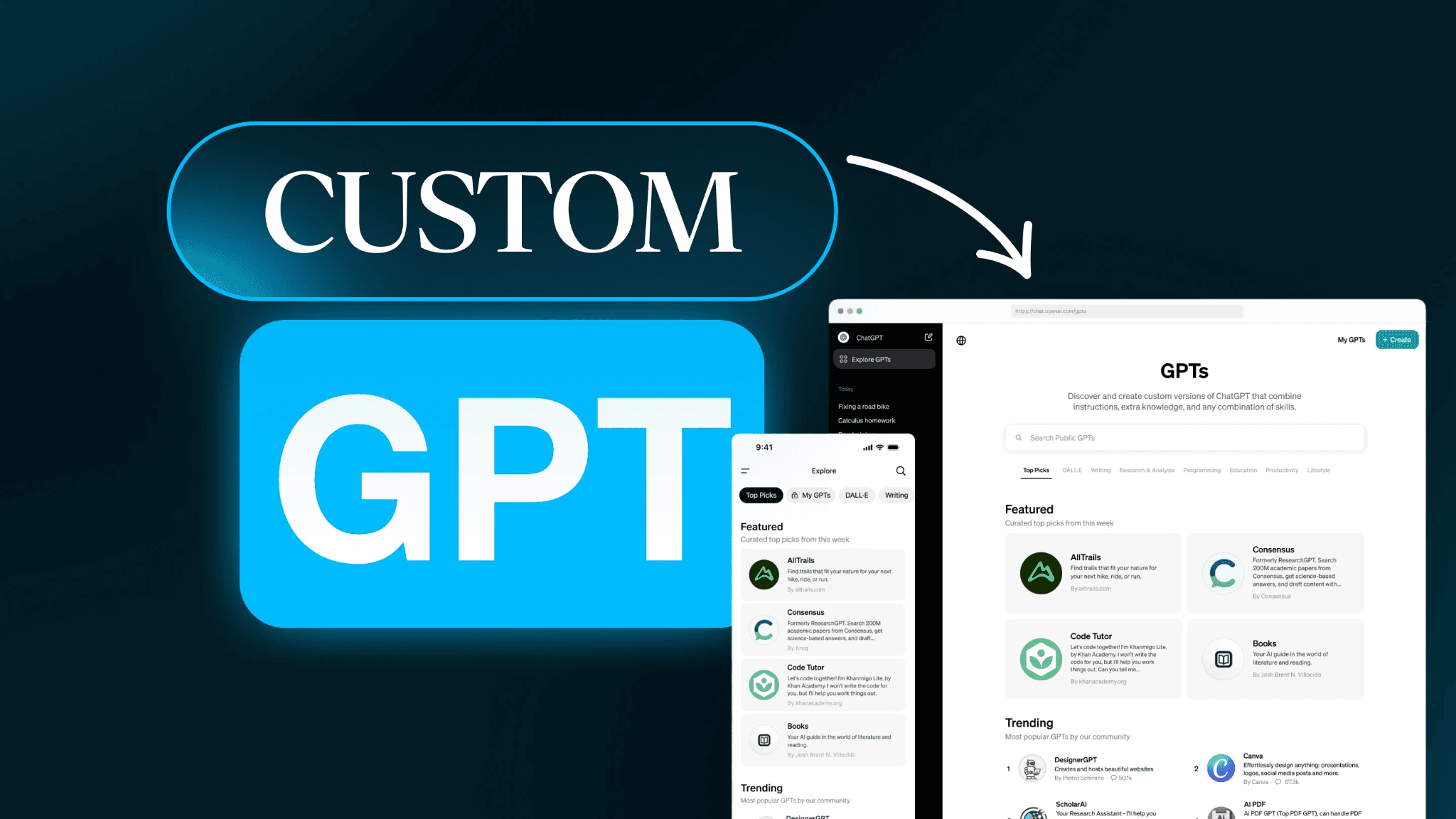
Read our article- Custom GPT: How to Build Your Own AI Assistant in Minutes: https://apex-consulting.ai/resources/blog/custom-gpt-build-your-own-ai-assistant
A practical example: content agencies use Custom GPTs to create hundreds of new video ad scripts per month, simply by using proven winners as a template and generating new variations from them. Previously you had to watch each successful ad individually and manually develop ideas. Today you feed the GPT with transcripts and receive new iterations in seconds.
For the visual execution you can use tools like Higgsfield, which brings several powerful AI models together under one roof.
But be careful: before you get into systematization, one thing must be crystal clear. If it does not work with you in it, it will work even less without you. Automation only amplifies what is already there, for better or worse. Only when your business runs reliably does systematization make sense.
The 4 stages of systematization: how to remove yourself from the process
Now we get to the heart of it: the 4-stage model that is applicable to every area of your company, whether client acquisition, service delivery, finding podcast guests, or managing your email inbox.
The four phases you work through in sequence are:
Eliminate
Document
Automate
Delegate.
Stage 1: Eliminate: shed the ballast before you optimize
The biggest mistake many founders make: they assume that everything they are currently doing also needs to be done. That is not true.
Think of your business like your cost balance sheet. When margins are thin, you first look at where you are spending money unnecessarily. Time works the same way.
Before you build systems because you are "too busy", you need to understand where your time is actually going and whether those things are genuinely important.
Here is how to proceed:
Do a time audit over roughly two weeks. Not roughly estimated, not from memory, but written down live as it happens:
What was the task?
How long did it take?
How often does it appear in the week?
If you have a team, have everyone participate. Do not use software. Write it by hand. Only then will you truly notice where the time goes.
After two weeks you will see patterns. Most tasks fall into one of two categories:
Growth: marketing, sales, strategy, actively moves the business forward.
Maintenance: admin, chasing the team, explaining things twice, solving avoidable problems.
The problem: most founders spend most of their time on maintenance, even though what they actually want is growth.
Elimination means correcting this imbalance. The question is not "can I automate this?" but "does this even need to exist?"
Example: are you spending hours every day in team calls without a clear agenda, simply because "that's what's in the calendar"? That is objectively a waste of time. Meetings should only take place when there is a clear reason for them.
Remove everything that neither brings in money nor moves the business forward. Only then are you ready for Stage 2.
Stage 2: Document: out of your head and into the system
Many founders hear "document your processes" and immediately think of weeks of writing work that nobody will ever read. That is not the point.
Documentation means: what is in your head needs to come out, in a way that someone else can execute it in exactly the same way.
Imagine your grandmother gives you her legendary spaghetti bolognese recipe. If she leaves out or changes a few steps, it will no longer be grandma's bolognese. Processes work exactly the same way.
The most common mistake: people document how things could theoretically be, rather than how they actually run today. That makes the documentation worthless.
You need to first perfect the process yourself, then capture it exactly as it is. Only then do you guarantee that someone else will achieve the same result.
How to structure your SOPs (Standard Operating Procedures)
Every process needs a starting point (trigger) and an endpoint (end state). Everything in between is the system.
Onboarding example:
Trigger: client says "yes"
End state: client is fully set up, expectations clarified, delivery can begin
Structure of an SOP document:
Title: e.g. "Client Onboarding Process"
Purpose and scope: what is the SOP for? Why is it necessary?
Owner: who created it? Who updates it?
Success criteria: what is the goal? What needs to be achieved at the end?
Terminology: are there any technical terms or abbreviations that need explaining?
Step-by-step instructions: the most important part, clear, precise, no frills
References and resources: links, tools, external documents
Do this for every important process in your company. Over time an SOP library emerges, your intellectual property, the blueprint of your business.
Without this library, your team improvises every day. And where improvisation happens, consistency, quality, and scalability disappear.
By the way: if you ever want to sell your company, no buyer will come on board if nothing is clearly defined. Clear documentation turns your business into a genuine asset.
Stage 3: Automate: but only what is truly repeatable
Automation only works for processes that always run the same way. That is why you first need to identify which parts of your process are suitable for it.
The easiest way is with a visual flow. Tools like Miro or Figma are perfect for this.
Simple method:
Manual steps = squares
Repeatable steps = circles
Onboarding flow example:
Client says "yes" → manual (square)
Book onboarding call → manual (square)
Send contract, invoice, questionnaire and set up communication chat → repeatable (circles)
For step 3 you build an onboarding trigger form: you enter company name, contact details, email, and price, and the rest runs automatically.
The form can also trigger automatic follow-ups if:
The contract has not been signed
Payment has not been received
The questionnaire has not been completed
Further automatable steps:
Team notification about a new client
Welcome message in chat (can also be manually personalized)
Sending a welcome gift (e.g. via Zapier)
Creation of a client dashboard (manual, but copy-paste)
Which tool to use? For onboarding forms, contracts, payments, questionnaires, and notifications you can use Go High Level for example. For chat creation and gift sending, Zapier.
But honestly: the tool is secondary. Make, Zapier, n8n, all achieve the same goal. Try a few and go with the one whose interface suits you best.
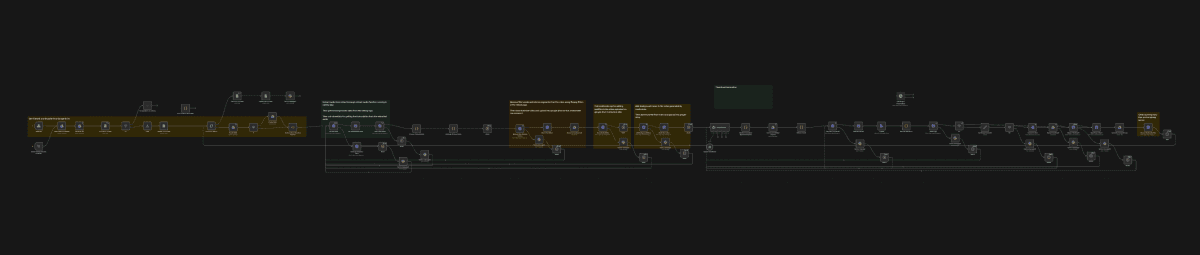
Fully automated AI workflow for the autonomous creation and editing of Reels. The system identifies trends, selects suitable raw material, cuts clips, adds subtitles, music, and visual effects, and optimizes content for each platform. Ideal for scalable social media production without manual intervention.
Important: automate nothing before you have documented and visualized it.
Stage 4: Delegate: transfer genuine responsibility
Now things get serious. This is where your business actually detaches from you.
Delegation does not mean giving someone a task. It means transferring responsibility for a result.
You know the feeling: you give someone a task, think you have communicated everything clearly, and then the result is full of errors. You micromanage, constantly look over their shoulder, and feel as though your team simply does not have the same standards as you.
The uncomfortable truth: most of the time it is on you.
You are delegating wrong. And you cannot delegate correctly if you have skipped the previous steps.
Only when your systems are genuinely solid and things still go wrong do you have a people problem. Then it is time for difficult conversations and fast separations.
"Hire slow, fire fast." Live by this principle.
The goal of any hire is a consistent result without your involvement. Anything else means the person needs to go, and quickly. Emotional attachment must not stand in the way here.
Your team is what allows you to step back. You need people who follow processes independently, show initiative, and take ownership.
The fear of losing control
Many founders fear losing control when they delegate. Understandable, since you built everything yourself, are a perfectionist, and want to have everything under control.
But delegation does not mean losing control. It means you no longer do the work. You check the result.
At the beginning there is a learning curve. But over time you get used to monitoring rather than doing. And the business still runs at a consistent level, even when you are not there.
Clients continue to receive the promised results. Problems get solved without everything flowing back to you. At this point your business is no longer dependent on your time.
And that is precisely the goal of the entire systematization process.
Conclusion: systems are the difference between self-employment and freedom
A business that runs without you does not emerge by chance. It emerges through conscious, structured systematization.
The four stages, eliminate, document, automate, and delegate, are not a nice-to-have. They are the prerequisite for your company ever becoming more than a well-paid job you created for yourself.
Start today: do your time audit. Eliminate what does not need to exist. Document what remains. Automate what can be automated. And delegate the rest to people who can do it just as well as you.
Then you do not just have a company. You have a genuine asset that works for you, instead of the other way around.
About APEX Consulting
APEX Consulting is an AI automation and growth consulting firm supporting B2B organizations with intelligent workflows, AI agents, CRM automation, and scalable operating systems. The firm focuses on practical, implementation-driven solutions that reduce manual effort and enable sustainable growth.
More information: https://apex-consulting.ai/