
AI is building custom solutions faster today than ever before.
The business world is changing structurally rather than step by step. What we are experiencing goes beyond another round of digital optimization. This is a technological turning point. Artificial intelligence amounts to more than just a new tool. It is currently shifting the very foundations of value creation, division of labor, and competition.
Even so, AI is still treated like an experiment in many companies. A bit of ChatGPT here, a few automations there. Meanwhile, entire markets are changing in the background. Processes that have worked for decades are losing their economic logic within just a few years. Business models designed for stability are coming under massive pressure.
This article is not about tools, prompts, or trends. It is about five fundamental shifts that are already taking place. Those who understand them can profit from them. Those who ignore them will gradually become irrelevant.

AI avatars from APEX as a digital sales and content lever at Bildungsfabrik. While others are still producing videos manually, this avatar scales consulting, content, and communication in an automated way, around the clock and without bottlenecks.
The End of the Hourly Rate
Why time-for-money no longer works economically
The classic career model was clearly defined for a long time. Education, specialization, experience, and then the selling of time. Expertise was converted into hours. The scarcer and more qualified it was, the higher the rate.
This model is currently collapsing.
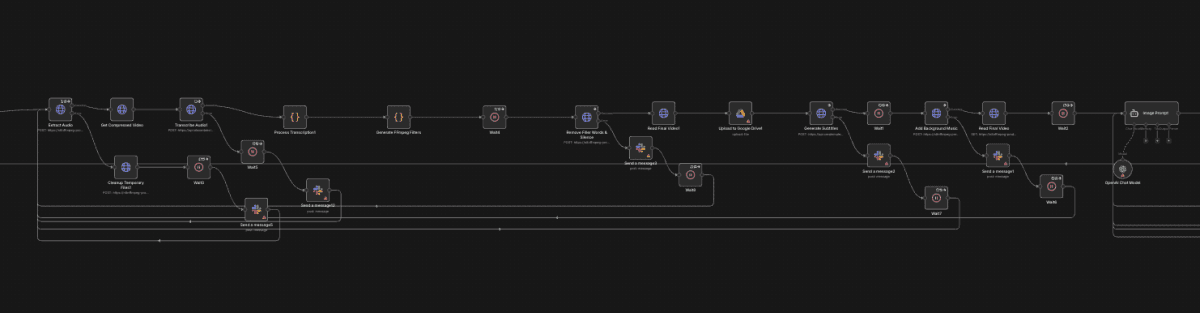
Fully automated AI workflow from APEX for producing high-performing short videos. The system analyzes raw footage, identifies relevant scenes, cuts clips automatically, adds subtitles, and exports ready-to-publish short-form videos, with no manual editing.
This is happening because expertise has become scalable, not because it has lost its value. AI does not raise the productivity of knowledge workers by ten or twenty percent. It raises it by multiples. A developer, consultant, or analyst no longer works linearly today. They orchestrate systems, models, and agents that produce results in parallel.
The bottleneck is no longer working time. It is the ability to structure problems, make decisions, and take responsibility for results.
This creates a conflict of interest for the client. Why pay for hours when the result can be delivered faster, more cheaply, and reproducibly? For the service provider, an even bigger problem arises. Anyone who continues to sell time penalizes their own efficiency.
The logical consequence is a shift from input-based to output-based compensation. Projects, value contributions, savings, revenue levers. What matters is the economic effect, not the time invested.
Companies that understand this early are building business models today that scale without requiring proportionally more staff. Established service providers with rigid billing logic are at a structural disadvantage here. New providers can think and argue in value-based terms from the very start.
From Stable Processes to Permanent Adaptation
For decades, operational stability was a strength, particularly in the German economy. Processes were defined, documented, certified, and then barely changed for years. Efficiency came from repetition and standardization.
That logic is currently being reversed.
In the age of AI, capabilities, cost structures, and possibilities change in extremely short cycles. Models become more powerful, cheaper, more specialized. Tools disappear, new ones emerge. What is best practice today can be obsolete in three months.
This does not mean that processes lose their importance. It means that rigid processes become a risk. The new competitive advantage lies in the speed of adaptation.
Successful organizations develop meta-processes. Mechanisms for regularly reviewing what can be automated, improved, or replaced. Decisions are revised more often. Pilot projects are permanent. Learning becomes institutionalized.
Thick manuals, one-off training sessions, and long-term tool decisions no longer fit this reality. What is needed are modular structures, short feedback cycles, and clear responsibilities for continuous optimization.
AI-Native Instead of Excel Logic
A large part of business management still relies on spreadsheets. Controlling, forecasts, reports, and operational analyses are maintained in complex Excel constructions. These systems are fragile, manual, and slow.
The problem lies in the thinking behind it rather than in Excel itself.
AI makes it possible today to build custom software solutions faster than spreadsheets used to be maintained. Analysis tools with databases, user interfaces via Airtable, real-time data, and automated evaluations are no longer a major project. They are configurable, adaptable, and increasingly standard.
AI-native companies no longer think in files. They think in systems. Data flows automatically, and decisions are based on current information rather than on monthly reports. Dashboards serve as operational management instruments rather than static evaluations.
The difference shows up in decision quality as well as in efficiency. Those who see faster understand earlier and act better.
All Agencies Will Become AI Agencies
Whether they want to or not
Agency models emerged as a response to technological upheavals. Social media, performance marketing, web, and e-commerce created new complexity that companies outsourced.
AI is reducing this complexity massively.
Recruiting, content, media buying, design, analysis. All of these services can be partially or fully automated today. At the same time, vertical software solutions are emerging that bundle and standardize classic agency services.
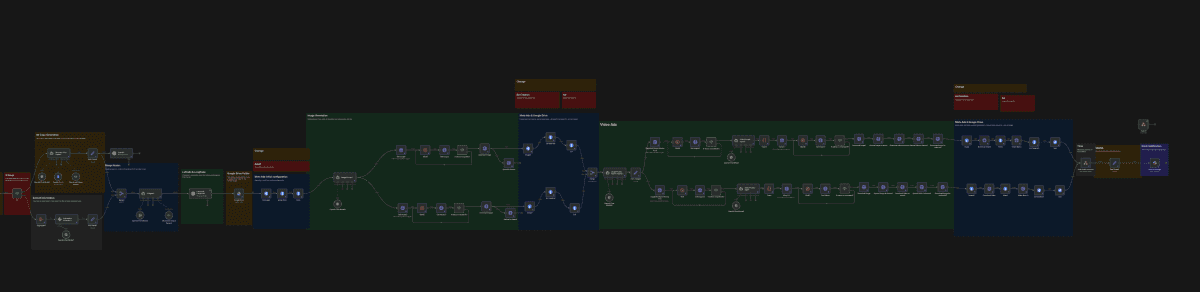
Fully automated AI ad workflow from APEX. The process develops Meta image ads and video ads completely autonomously, from the creative idea through asset generation and variant logic to campaign-ready delivery, scalable and measurable.
This does not mean that agencies will disappear. But their role is changing radically. Away from manual execution, toward system design, orchestration, and accountability for results.
Agencies that continue to sell working hours are coming under pressure. Agencies that understand AI as the core of their offering are gaining impact. They deliver faster, more cheaply, and more consistently.
The market will consolidate. The most adaptable will survive, not the largest.
Marketing as a Strategic Moat
In the age of AI, products and services lose their uniqueness faster. Features can be copied, processes replicated, solutions rebuilt.
What cannot be copied is attention and trust.
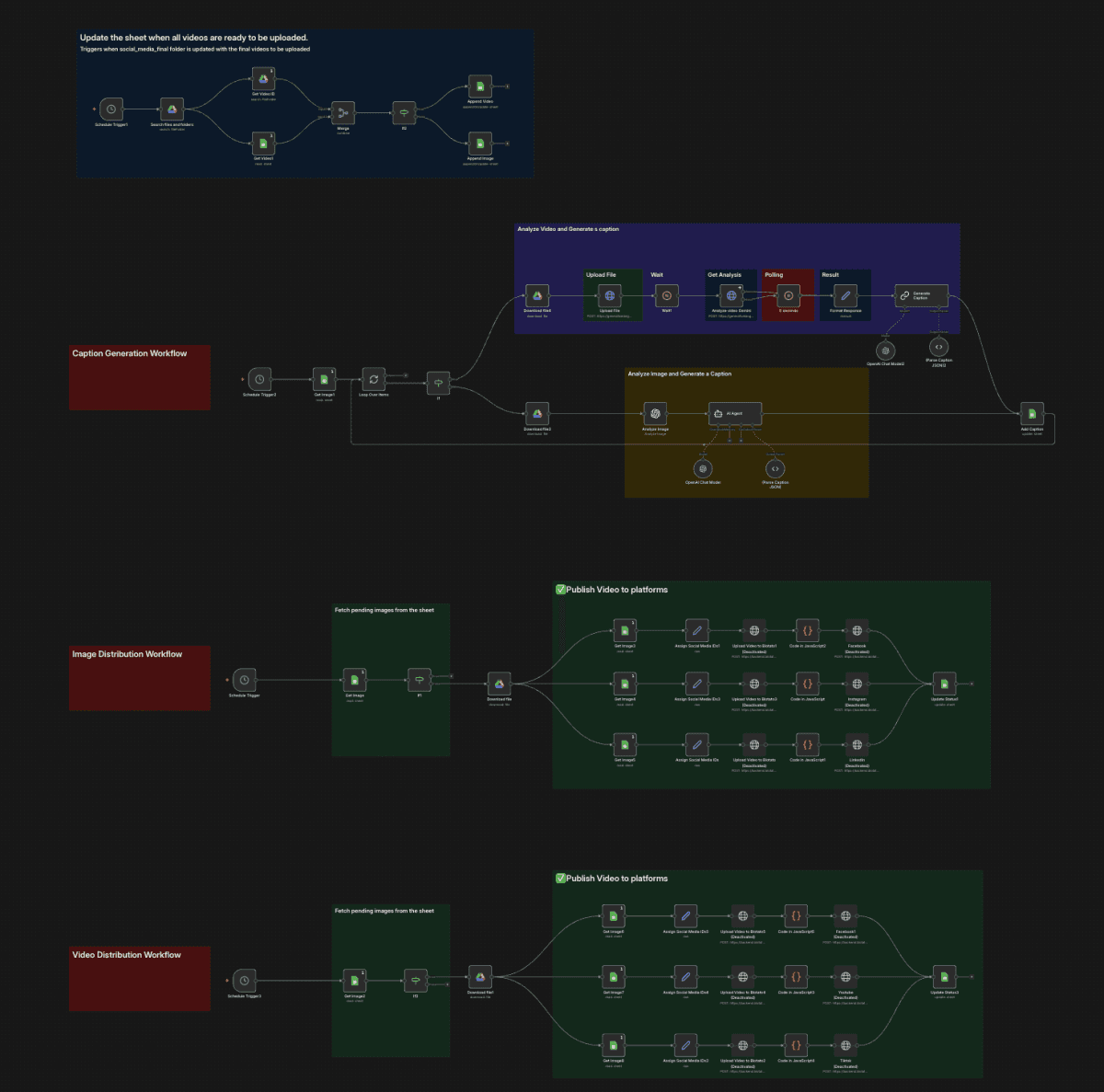
Fully automated AI content and publishing workflow from APEX. While others are still writing captions and uploading posts manually, this system analyzes videos and images, generates high-performing copy, and distributes content automatically across all relevant platforms, with no human bottlenecks.
Marketing thereby moves from a supporting channel to a central strategic asset. Visibility decides, and quality alone does not. Whoever is present in the market gets noticed before any comparison is made.
Companies that build reach, reputation, and expert status today create a lead that cannot be caught up with technologically. Content, opinions, perspectives, and presence become the differentiating factor.
For technical service providers in particular, marketing becomes a core competence. Not as advertising, but as positioning. Whoever explains, contextualizes, and provides orientation wins market share, even when others can deliver something technically similar.
Conclusion: The Curve Has Not Yet Turned Steep
Technological upheavals do not follow a linear development. At first there is complexity, uncertainty, and apparent inefficiency. Productivity gains fail to appear or seem contradictory.
This is exactly where we find ourselves right now.
Many are using AI incorrectly or superficially. That creates frustration. But this is a typical early stage rather than a sign of failure. As soon as structures, competencies, and models come together, development accelerates massively.
Whoever invests, learns, and restructures now gains years of advantage. Whoever waits until everything is mature enters a market that has already been divided up.
The old world is losing its economic logic. The new one is still malleable. This is not a risk. This is an opportunity.
About APEX Consulting
APEX Consulting is an AI automation and growth consulting firm supporting B2B organizations with intelligent workflows, AI agents, CRM automation, and scalable operating systems. The firm focuses on practical, implementation-driven solutions that reduce manual effort and enable sustainable growth.
More information: https://apex-consulting.ai/