

Finally, connect your company knowledge with AI.
ChatGPT knows a lot, but not what happens inside your company. No details about internal processes, no current product data, no company-specific guidelines.
This is exactly where the problem begins. If you want to use AI productively, it needs to be able to access your knowledge. The solution is called Retrieval-Augmented Generation (RAG), a framework that connects large language models with external, company-owned knowledge.
Sounds complicated? It is.
But with the right strategies, you turn AI from a general AI tool into a real business assistant.
RAG (Retrieval-Augmented Generation) is an AI technique in which a language model retrieves relevant information from external data sources before answering. This produces more precise, more current, and more traceable answers than model knowledge alone.
Why isn't ChatGPT enough on its own?
Large language models like ChatGPT were trained on publicly available data. They know the world out there: Wikipedia, books, websites. But what is written in your CRM system, which internal processes apply, and which recipes your product development team is currently testing? Nothing.
The obvious idea: let's just put the company knowledge into the prompt. Theoretically possible, since the context windows of LLMs keep getting larger. In practice? Expensive, slow, and error-prone. The more text you throw in, the harder it becomes for the model to filter out the truly relevant information, the classic "needle in a haystack" problem. The art lies in giving the model exactly as much context as it needs. No more, no less.
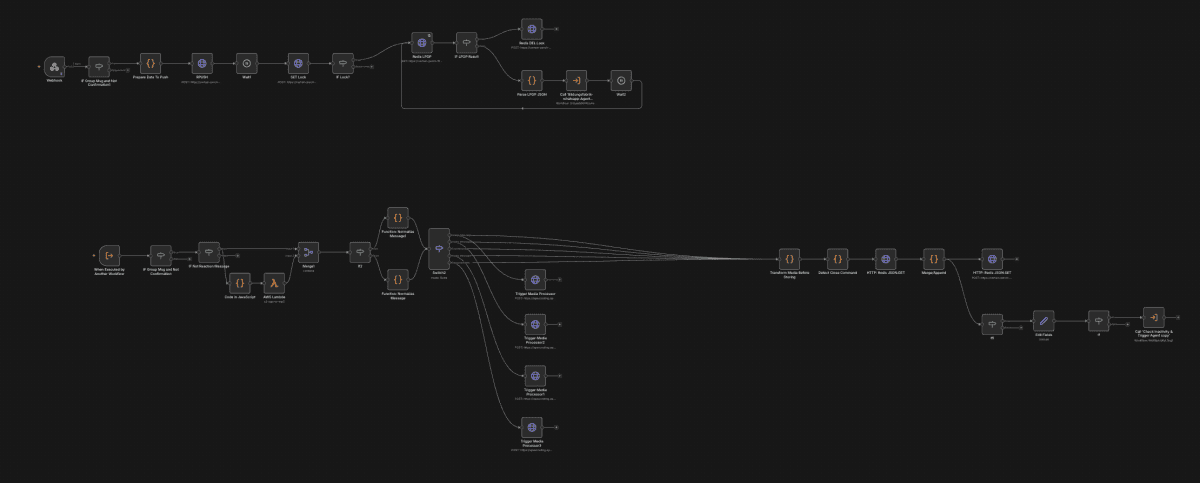
Our WhatsApp agent processes customer inquiries in real time through a complex workflow that includes routing, state management, and media processing. Without Retrieval-Augmented Generation (RAG), the underlying language model would have no access to customer-specific knowledge such as contracts, onboarding status, product versions, or internal process rules. RAG is business-critical here. Only through targeted retrieval from CRM, knowledge, and process data can the agent deliver precise, consistent, and reliable answers, instead of generic statements or risky hallucinations in a direct customer channel.
How RAG works: finding knowledge instead of throwing everything in
RAG is no magic trick, but a clever two-step system:
Indexing (ingestion): Your company knowledge, whether product catalogs, manuals, or other important information, is brought into a searchable form. Vector databases often come into play here, storing texts as multidimensional vectors. Similar content sits close together in the vector space ("apple" and "banana" are neighbors, "apple" and "car" are not).
Retrieval: When someone asks a question, the system searches the index, extracts the most relevant information, and inserts it directly into the prompt. The LLM then generates a well-founded answer, based on your data, not on random Wikipedia entries.
The core of it is embedding models, which convert texts into vectors. Which model you choose is decisive. It should fit your language, your field, and your use case. A poor embedding model delivers poor search results, and therefore poor answers.
The naive approach, and why it fails
Imagine you want to build an AI system that answers employee questions. You load your knowledge base, chop the texts into small pieces (so-called chunks), convert them into vectors, and store them in the vector store. When a query like "How do I onboard a new customer?" comes in, the system searches for semantically matching chunks, packs them into the prompt, and lets the LLM answer.
Sounds good, and it works too. But only sometimes. Because this naive approach has weaknesses:
Garbage in, garbage out: If the chunks are cut sloppily, you lose context. Suddenly the system mixes instructions from other guidelines or delivers incomplete directions.
Hallucinations: If the system finds no matching data, the LLM likes to invent something. It sounds convincing but is pure fiction, and unacceptable in business applications.
Structured data slips through the cracks: A purely semantic search does not automatically find "Onboarding 101" or "onboard customers." Filters like these need structured data, and you have to integrate it deliberately.
The solution: preserve context, use metadata, filter intelligently
How do you do it better? By preserving context during indexing and filtering intelligently during retrieval.
Metadata is worth its weight in gold
When indexing, store not just the plain text but also meaningful metadata. For example: process name, target group (Sales, Customer Success, Enterprise customers), onboarding phase (Pre-Sales, Kickoff, Go-Live), responsible team, duration, version, or validity date. This keeps the professional and organizational connections intact.
Instead of breaking the knowledge into many small, disconnected text fragments, you should index meaningful units where possible, such as a complete onboarding process or an entire SOP document rather than individual paragraphs. This significantly increases the consistency of the later answers.
During retrieval, you then combine semantic search with metadata filters. The system finds not only information that matches in content, but exactly the information that fits your context.
An example: The query "How do we onboard a new enterprise customer?" triggers a search that looks semantically for customer onboarding, but at the same time filters via metadata:
Target group = Enterprise Phase = Kickoff / Implementation Version = current
The result is not a general onboarding text, but exactly the valid, internal process for enterprise customers, including the right steps, responsibilities, and timeframes.
This is how a generic AI answer becomes a precise, company-specific recommendation for action.
Guardrails against hallucinations
So that your system does not simply start fantasizing, you need guardrails, safety mechanisms that ensure answers are based on real data. This can happen through system prompt tuning ("Only answer if you have well-founded information") or through downstream checks that verify whether the answer is really covered by the retrieved data.
Agent-based systems: the next stage of this evolution
Modern RAG systems are increasingly developing into agent-based architectures. Here the LLM decides autonomously which tools it uses, how often it asks follow-up questions, and how it combines information. Instead of rigid sequences, you have flexible, adaptive processes.
An example: Your agent has access to several search tools, one for semantic search, one with a time filter, one for SQL queries on structured databases. Depending on the query, the agent chooses the right tool or combines several. This makes the system not only more flexible but also more precise.
Further possible tools:
Text-to-SQL models for direct database queries
Hierarchical search in taxonomies or categories
AI-supported data enrichment, which automatically extracts important information from texts and stores it as metadata
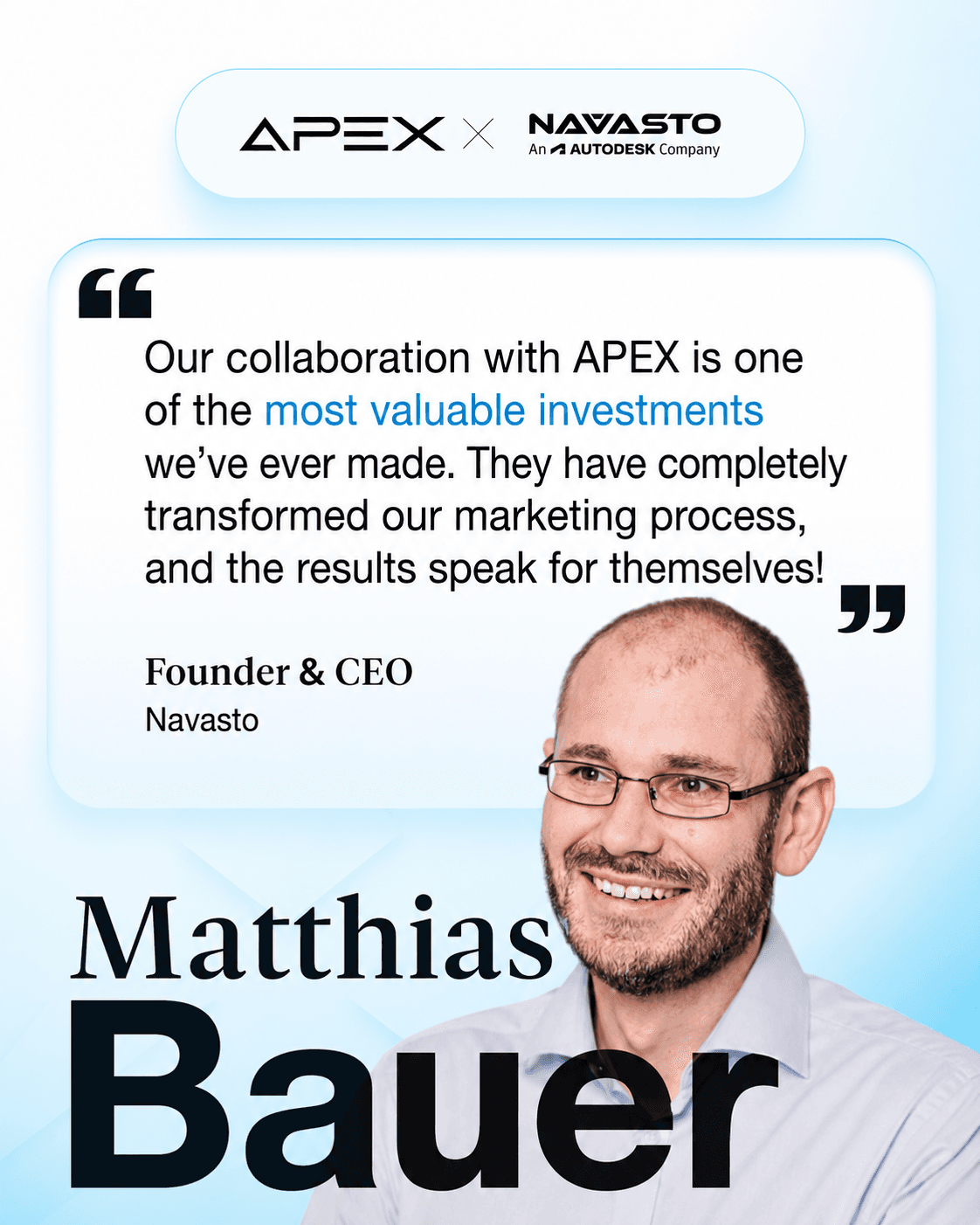
Customer voice from practice: Matthias Bauer, founder and managing director of Navasto, on the collaboration with APEX and the complete redesign of the marketing process with measurable results.
Evaluation: the blind spot of many RAG projects
As complexity and autonomy grow, one topic becomes increasingly important: evaluation. LLMs are not deterministic. The same question often leads to different answers. Models change through updates. Without systematic quality assurance, you are flying blind.
Human spot checks are not enough. You need automated evaluation methods. The most common one: another LLM acts as a "judge" and automatically assesses whether answers are correct, helpful, or wrong. This way you generate quality metrics that show you whether your system is getting better, or worse.
The workflow:
Create datasets with test questions and expected answers
Have your agent answer automatically
Assess the answers through an evaluation layer
Measure progress, detect regressions, optimize deliberately
This is evaluation-driven AI development, the counterpart to test-driven development in classic software development. There is no going without it anymore.
Three pillars for successful RAG systems
If you want to make AI truly productive with company knowledge, you need:
A solid indexing pipeline: Data must be carefully prepared, transformed, and enriched. This is less AI magic and more classic data work (ETL), but essential.
Intelligent retrieval: Combine semantic search with metadata filtering, use agent-based architectures, and give your system flexible tools to work with.
Systematic evaluation: Build in quality assurance from the start. Measure what works, spot weaknesses early, and iterate in a data-driven way.
RAG systems are not plug-and-play. But with the right approach, you turn AI from an imprecise advisor into a reliable, trustworthy business partner. Feel free to ask us if you have further questions. Start with a small use case inside your company, index cleanly, evaluate consistently.
Your company knowledge and your employees will thank you for it.
Book your free initial consultation today: https://calendly.com/apex-consulting-call/ki-beratung
About APEX Consulting
APEX Consulting is an AI automation and growth consulting firm supporting B2B organizations with intelligent workflows, AI agents, CRM automation, and scalable operating systems. The firm focuses on practical, implementation-driven solutions that reduce manual effort and enable sustainable growth.
More information: https://apex-consulting.ai/