
The 2026 AI Reality Check
"Will AI automations or AI employees still be relevant in 2 to 3 years?" Our team encounters this question constantly now.
It comes from agency owners, consultants, entrepreneurs, and SMEs who feel uncertain in the face of the pace at which new AI models are emerging.
And that uncertainty is understandable: when new agents seem to appear every few days and social media suggests you can build complete workflows with a single prompt, waiting feels like the sensible path.
But that waiting is precisely the biggest risk.
Anyone who starts now is not just building automations, but also accumulating experience. And experience is not automatable. It is built by working in real systems, by solving actual problems, by recognizing recurring patterns, and by working through failures.
The reverse engineering trap
Many people try to plan backwards from a hypothetical future. They ask questions like:
What if the next model replaces coding entirely?
What if agents automatically create n8n workflows?
What if design processes become largely automated?
These thoughts feel rational. But they almost inevitably lead to paralysis. If you project far enough into the future, you always arrive at the same conclusion: AI will eventually take over everything.
So why invest today?
But this way of thinking ignores reality. Agencies and SMEs need solutions today, not philosophical future scenarios.
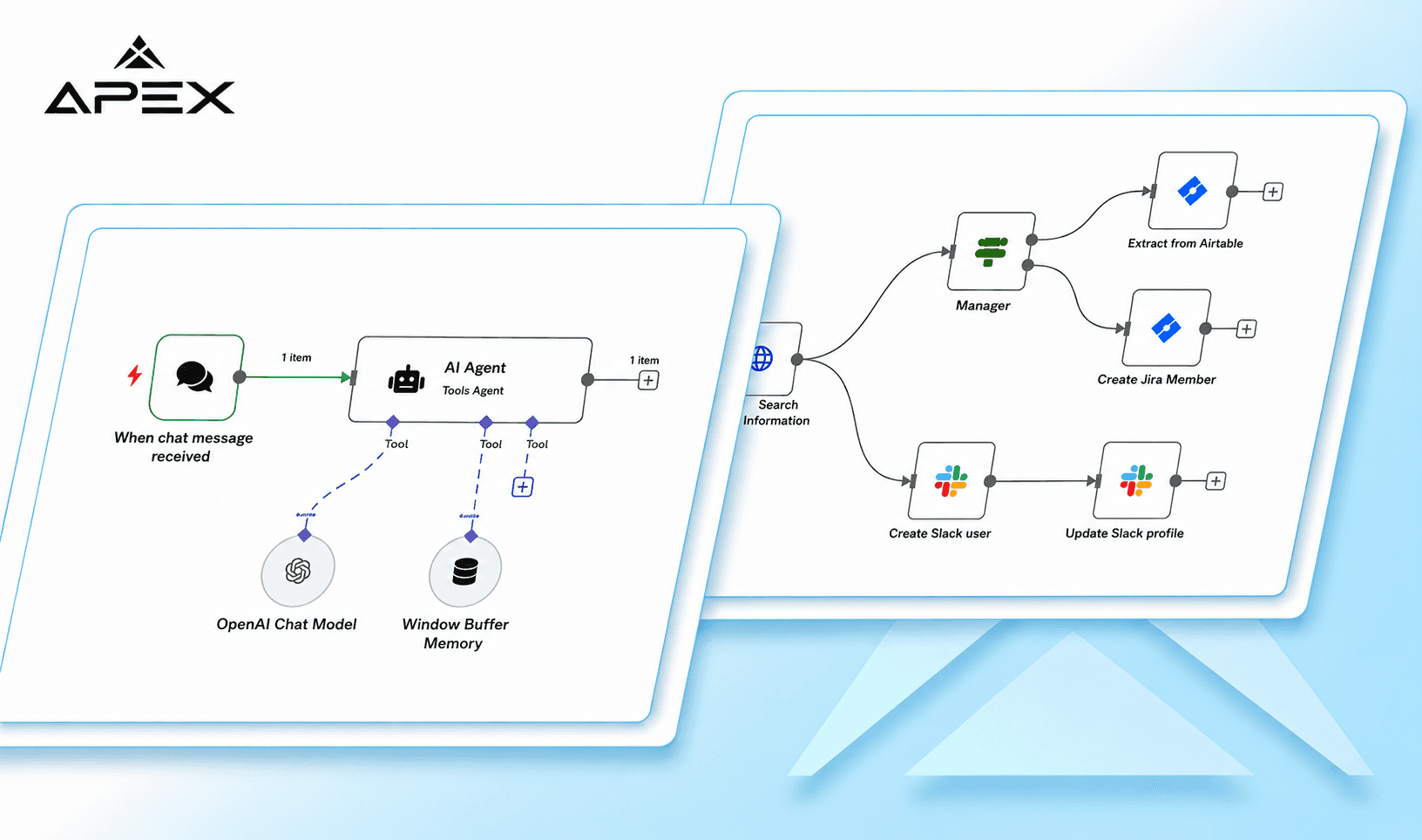
With the low-code tool n8n, our clients are already achieving savings well into the six-figure range today. At the same time, they are pushing their profit margins above 50 percent, because AI-powered automations accelerate processes and significantly reduce dependency on high personnel costs.
The gap between technology and practice
While people online speculate about the capabilities of GPT-7, most companies are still struggling with the basics from two or three years ago. Many have no automated quoting processes, no consistent lead follow-up, no automated client communication, and no structured data management.
They often do not even know which AI tools exist or how to use them safely.
The gap between discourse and reality is enormous. And that gap is exactly where the biggest opportunities arise.
AI is developing more slowly than expected
Two years ago, the assumption was that GPT-5 or GPT-6 would automate large parts of daily work. But in practice, we have seen improvements primarily to existing systems. The models have become more precise, more robust, and more context-aware, but they remain black boxes. Without structure, guidance, and process design, they do not function reliably.
The promise of creating complete automations from a single prompt holds up only partially under a reality check. Even when a first version is generated, practical deployment usually fails at three points:
selecting the right processes
contextualization through appropriate prompts
handling the many edge cases that arise in daily operations
Edge cases are the reason most "one-click automations" work in a demo but fail in real business processes.
That is exactly where the difference between a tool and genuine operational expertise becomes visible.
Why expertise makes the difference
You can draw the comparison to Facebook Ads or SEO. In theory, any company could handle those itself. Yet most still pay agencies for them. Not because they are incapable, but because of the time required, the margin for error, and the need for professional results.
The exact same thing is now happening with AI automation. A functioning automation system does not consist of a prompt or a flow diagram. It consists of the invisible foundation beneath it: error handling, data quality, interface integration, security, compliance, architecture decisions, and testing.
Companies are not buying the tool. They are buying the assurance that an expert builds the entire system to be stable and reliable.
Progress happens through application
The decisive question is therefore not where the technology will be in two years. The decisive question is: how much of a head start are companies and agencies losing by not starting today?
We are the first agency in the German-speaking world to have fully automated Meta Ads for one of the most well-known recruiting agencies in the industry. No risky experiments, but a precisely developed, stable system that demonstrates: innovation does not arise by chance, but through sound technical excellence.
Anyone who starts now is not just building automations, but also accumulating experience. And experience is not automatable. It is built by working in real systems, by solving actual problems, by recognizing recurring patterns, and by working through failures.
This kind of knowledge cannot be skipped, even if a new model appears in two years. It is the foundation that separates the expert from the user.
Why acting early pays off in the long run
Even if the tools change radically, the advantages of early movers remain. They understand the logic behind automations, they know the typical pitfalls, they know how to make systems stable. This lead grows with every project and cannot be closed by a new AI model.
That is why waiting is so dangerous: it does not lead to neutral standstill, but to a growing gap. While others continue to learn, test, implement, and optimize, you lose touch with operational reality.
SMEs that invest in AI-powered processes today lower costs, increase efficiency, and will be in two years where their competitors are only beginning to understand what potential exists. Agencies that build AI competency now open up new business areas, new service offerings, and entirely new paths to scaling.
The present decides, not the future
The biggest misconception in the current AI debate is believing that the future determines value. But in reality, the present determines value. Companies pay for solutions that solve problems today, not for predictions about models that might appear in five years.
Those who make use of today's possibilities will understand tomorrow's possibilities better, deploy them more effectively, and monetize them faster.
Those who wait will later need to learn not only the new tools, but also the fundamentals that others have already fully internalized.
Waiting is a path to failure
Waiting has never been a successful strategy. Acting almost always has been. It makes far more sense to build forward from today's possibilities than to plan backwards from a hypothetical future.
The companies and agencies that start now secure a lead that pays off over years. They learn how to structure processes, embed models correctly, and build systems that function in real business environments.
The question should therefore not be: "Will AI automation still be relevant in two years?" But rather: "How much can I lose by waiting two years?"
The answer to that is clear. And it speaks for immediate action.
👉 Book your free AI analysis here
About APEX Consulting
APEX Consulting is an AI automation and growth consulting firm supporting B2B organizations with intelligent workflows, AI agents, CRM automation, and scalable operating systems. The firm focuses on practical, implementation-driven solutions that reduce manual effort and enable sustainable growth.
More information: https://apex-consulting.ai/