Brauchst du wirklich einen autonomen KI-Agenten?
Denkst du gerade über KI-Agenten nach? Halt mal ganz kurz inne!
Bevor du nämlich stundenlang an einem super komplexen KI-System bastelst, solltest du dir eine ganz wichtige Frage stellen: Brauchst du wirklich einen autonomen Agenten, oder reicht vielleicht eine viel einfachere Lösung völlig aus?
Die meisten Probleme brauchen nämlich überhaupt keinen Schnickschnack-KI-Agenten. Tatsächlich lassen sich rund 65 Prozent aller Unternehmens-Automatisierungen komplett ohne KI lösen! Was du stattdessen brauchst, ist ein Blick auf die vier Stufen der KI-System-Pyramide – und das Wissen, wann welche Lösung genau die richtige für dich ist.
Die KI-Pyramide: Vier Stufen, vier tolle Lösungen
Stell dir KI-Systeme einfach wie eine Pyramide vor. Unten am Fuß findest du die einfachsten Tools, wie zum Beispiel Custom GPTs. Je weiter du nach oben kletterst, desto mehr Komplexität, Kosten und Wartungsaufwand kommen auf dich zu.
Ganz oben an der Spitze thronen dann die vollautonomen KI-Agenten. Klingt super verlockend, oder? Aber hier ist der Haken: Die teuerste und komplexeste Lösung ist nur ganz selten auch die beste!
Die vier Stufen im schnellen Überblick:
Custom GPTs / Claude Projects etc. – die reaktiven Helferlein
Einfache Workflow-Automatisierung ohne KI – die berechenbaren Abläufe
KI-Workflows – die intelligenten Routinen
KI-Agenten – die autonomen Problemlöser
Das Geheimnis hinter dem Erfolg? Werde zum cleveren Problemlöser und nicht bloß zum Erbauer von KI-Agenten! Wenn also jemand zu dir kommt und ruft „Wir brauchen unbedingt KI!“, ist es nicht deine Aufgabe, sofort mit der kompliziertesten Lösung um die Ecke zu kommen.
Deine Aufgabe (oder die Aufgabe deiner externen Agentur) ist es, den Kern des Problems zu verstehen und die effizienteste Lösung zu finden. Eine, die dir schnelle Erfolge bringt, die Kosten niedrig hält und schön einfach bleibt!
Stufe 1: Custom GPTs – dein reaktiver Assistent
Ein Custom GPT ist im Grunde ein vorkonfigurierter KI-Assistent. Du gibst ihm einfach bestimmte Anweisungen, eine Wissensbasis und einen passenden Tonfall mit auf den Weg. Denk an einen Praktikanten, der dein Unternehmen gut kennt und dir auf Abruf hilft!
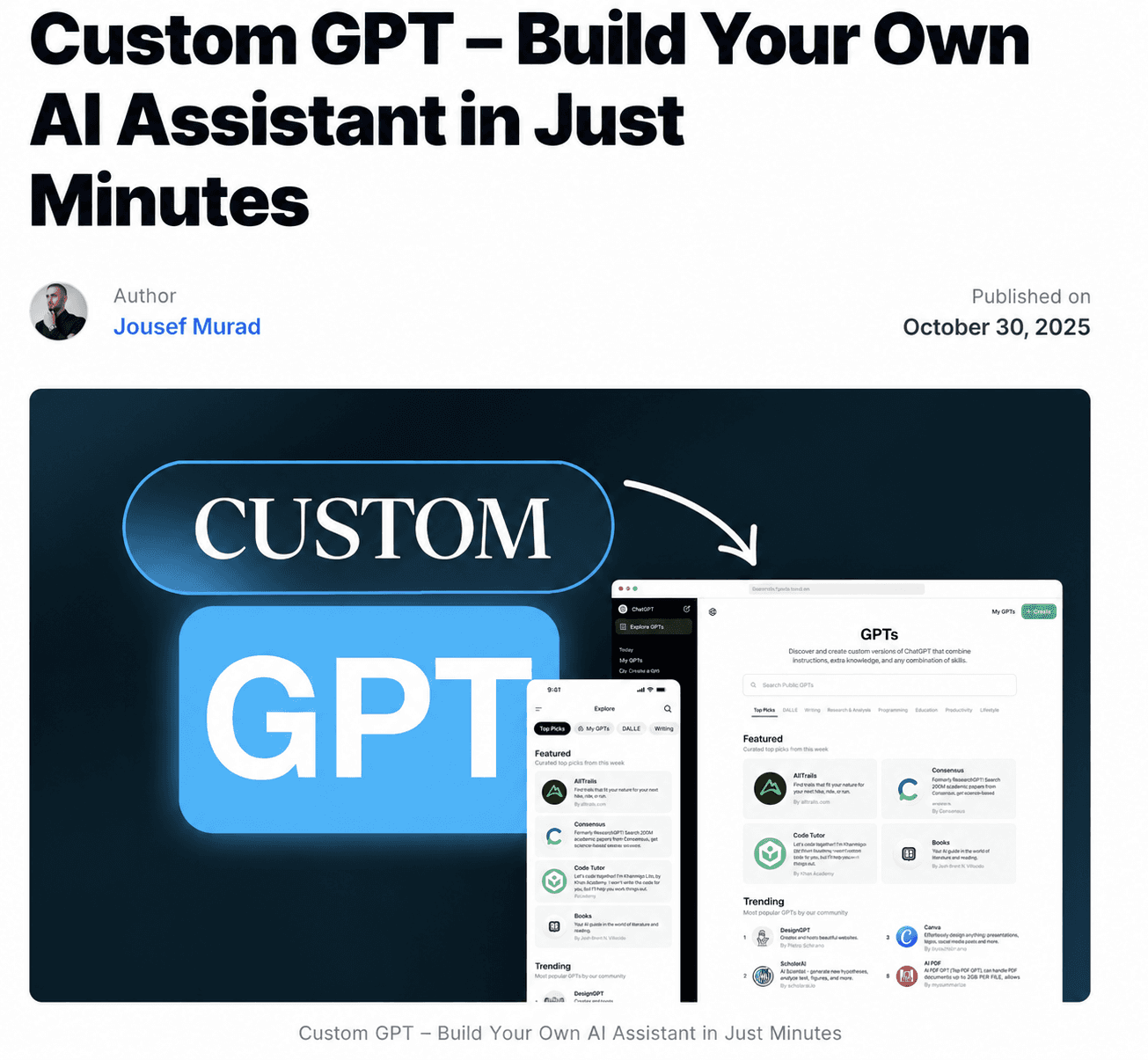
Ein Custom GPT ist eine individuell angepasste Version von ChatGPT. Du entscheidest ganz einfach, wie dein Assistent spricht, worauf er spezialisiert ist, welche Dokumente er kennt und welche Aufgaben er erledigen soll. Quelle: https://www.agenturmarkt.de/magazin/custom-gpt-so-baust-du-dir-in-minuten-deinen-eigenen-ki-assistenten
Das wichtigste Merkmal: Er ist völlig reaktiv. Das bedeutet, er legt erst los, wenn du ihn anstupst (promptest). Skalierbarkeit? Eher überschaubar. Aber für bestimmte Aufgaben ist er einfach perfekt!
Ein praktisches Beispiel: Stell dir vor, du schreibst regelmäßig tolle Blogbeiträge und brauchst jedes Mal eine Einrichtungsanleitung als Kommentar oder Notizzettel dazu. Dieser Prozess wiederholt sich, ist aber nie ganz genau gleich. Du musst oft kleine Details anpassen und möchtest flexibel bleiben. Eine vollautomatische Lösung wäre hier viel zu viel des Guten. Mach es lieber so: Füttere einen Custom GPT mit Anweisungen und Links, lass ihn den Blogbeitrag erstellen und verfeinere das Ganze nach Lust und Laune.
Schnell, unkompliziert und super effektiv!
Wann du es nutzen solltest: Immer dann, wenn du bei jedem Durchlauf selbst dabei sein möchtest oder musst. Wenn du Feedback geben, Dinge anpassen und verändern willst. Und wenn der Prozess zwar angestoßen wird, aber dein menschliches Urteilsvermögen braucht.
Stufe 2: Einfache Workflow-Automatisierung – ohne Schnickschnack, nur Logik
Hier sprechen wir über die klassische Automatisierung: Eine Kette von Schritten, die ganz automatisch durch einen Auslöser starten und auf reiner Wenn-Dann-Logik basieren. Keine KI-Intelligenz, null Überraschungen!
Das wichtigste Merkmal: Berechenbarkeit. Gleicher Auslöser, gleiche Schritte, gleiches Ergebnis. Ein glasklarer Ablauf von A bis Z.
Das bedeutet nicht, dass du keine intelligenten Elemente einbauen kannst, aber auch diese folgen klaren Bedingungen: Erfolg oder Misserfolg. Schwarz oder weiß. Hier gibt es keinen Spielraum für Interpretationen.
Der große Vorteil gegenüber Custom GPTs? Diese Automatisierungen laufen flüssig im Hintergrund, während du gemütlich schläfst! Sie starten zum Beispiel, sobald eine Meeting-Aufnahme fertig ist, oder jeden Morgen pünktlich um 6 Uhr. Sie lassen sich super skalieren, weil sie nicht auf deine Rückmeldung warten.
Wann du es nutzen solltest: Wenn die Schritte zu 100 Prozent auf reiner Logik basieren. Wenn es eine ganz klare, unmissverständliche Regel gibt, die genau zeigt, wo es langgeht. Hier ist absolut keine Interpretation nötig!
Stufe 3: KI-Workflows – Intelligenz in festen Bahnen
Jetzt wird es richtig spannend! Ein KI-Workflow folgt zwar immer noch einer festen Reihenfolge von Schritten, aber du nutzt an bestimmten Stellen die schlaue KI für Entscheidungen oder Ergebnisse.
Das wichtigste Merkmal: Ein fester Weg mit intelligenten Zwischenstopps. Die Struktur bleibt gleich, aber die KI trifft darin kluge, kontextabhängige Entscheidungen.
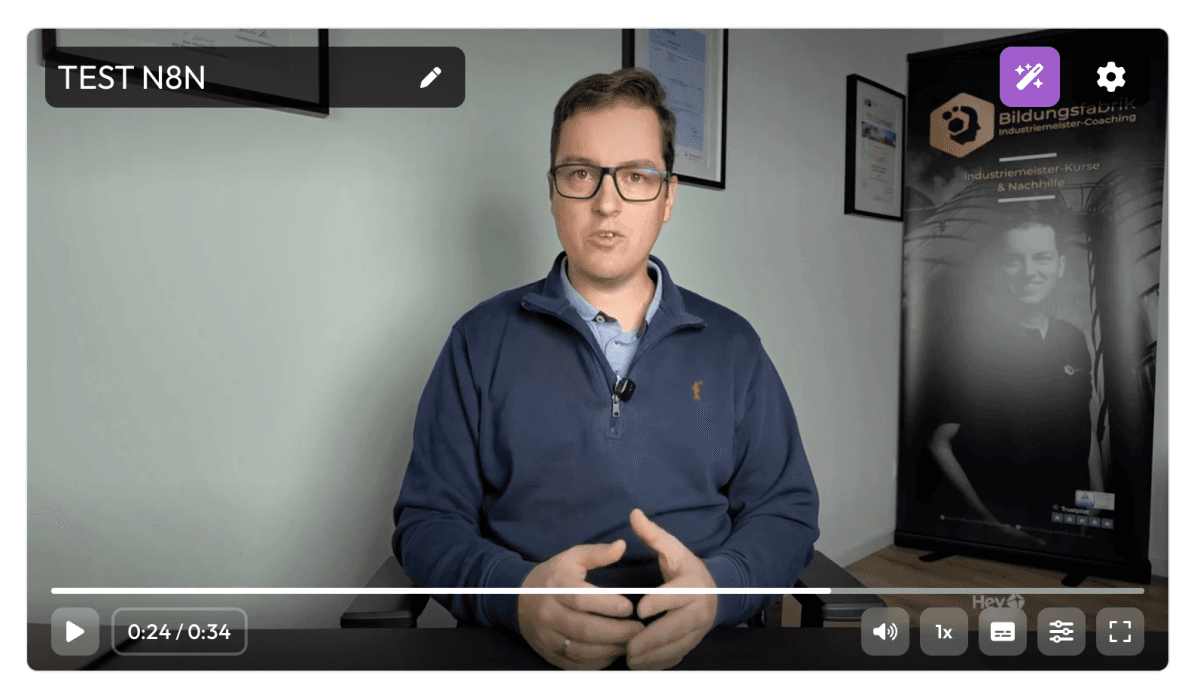
Beispiel für einen KI-Avatar-Workflow in n8n: Durch eine einfache Sprachnachricht in WhatsApp wird dein KI-Avatar – dein smarter digitaler Zwilling – fast wie von Zauberhand erstellt und in die Learning Suite hochgeladen. In weniger als 5 Minuten! Quelle: Bildungsfabrik
Ein praktisches Beispiel: Bei dir trudeln E-Mails ein und du möchtest sie automatisch in Kategorien wie Support, Finanzen, Wichtig oder HR einsortieren. Mit klassischer Logik oder Code wäre das ziemlich knifflig, weil du nach unzähligen Keywords suchen müsstest. Mit KI ist das ein Kinderspiel! Das System liest und versteht den Inhalt sowie die Betreffzeile der E-Mail und schlägt sofort die richtige Richtung ein. Danach geht es ganz normal im klassischen, vorhersehbaren Ablauf weiter.
Oder: Ein Content-Workflow, bei dem die KI Texte schreibt und überarbeitet, aber immer in der exakt gleichen Reihenfolge: Schritt 1, 2, 3, 4, 5. Kein Hin und Her, keine eigenständigen Alleingänge.
Wann du es nutzen solltest: Wenn du einen festen Ablauf hast, aber an bestimmten Punkten KI-Intelligenz brauchst, um Dinge zu verstehen, einzuordnen oder zu erstellen. Wenn die Gesamtstrecke klar ist, die Entscheidungen mittendrin aber vom Inhalt abhängen.
Stufe 4: KI-Agenten – die selbstständigen Entscheidungsträger
Und nun haben wir die Spitze der Pyramide erreicht! Ein KI-Agent ist ein eigenständiges System, das ganz selbstständig ein Ziel verfolgt. Es nimmt seine Umgebung wahr, trifft eigene Entscheidungen, nutzt verschiedene Tools, löst Probleme und passt seinen Weg flexibel an.
Das wichtigste Merkmal: Echte Eigenständigkeit! Du gibst einfach nur das Ziel vor und der Agent entscheidet selbst: Welche meiner fünf Tools brauche ich dafür? Und in welcher Reihenfolge setze ich sie am besten ein?
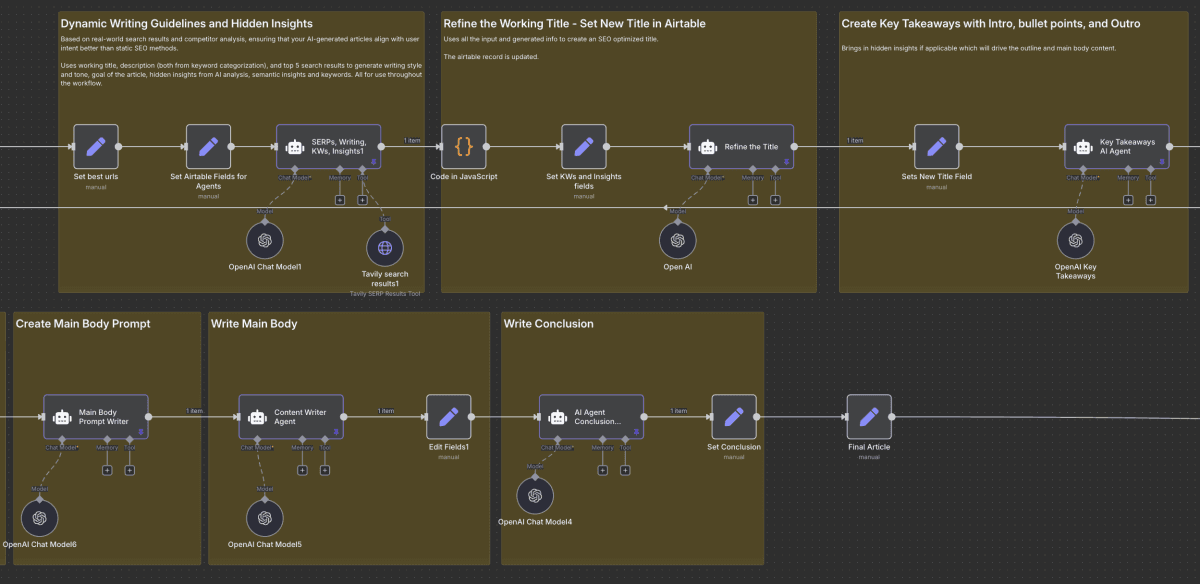
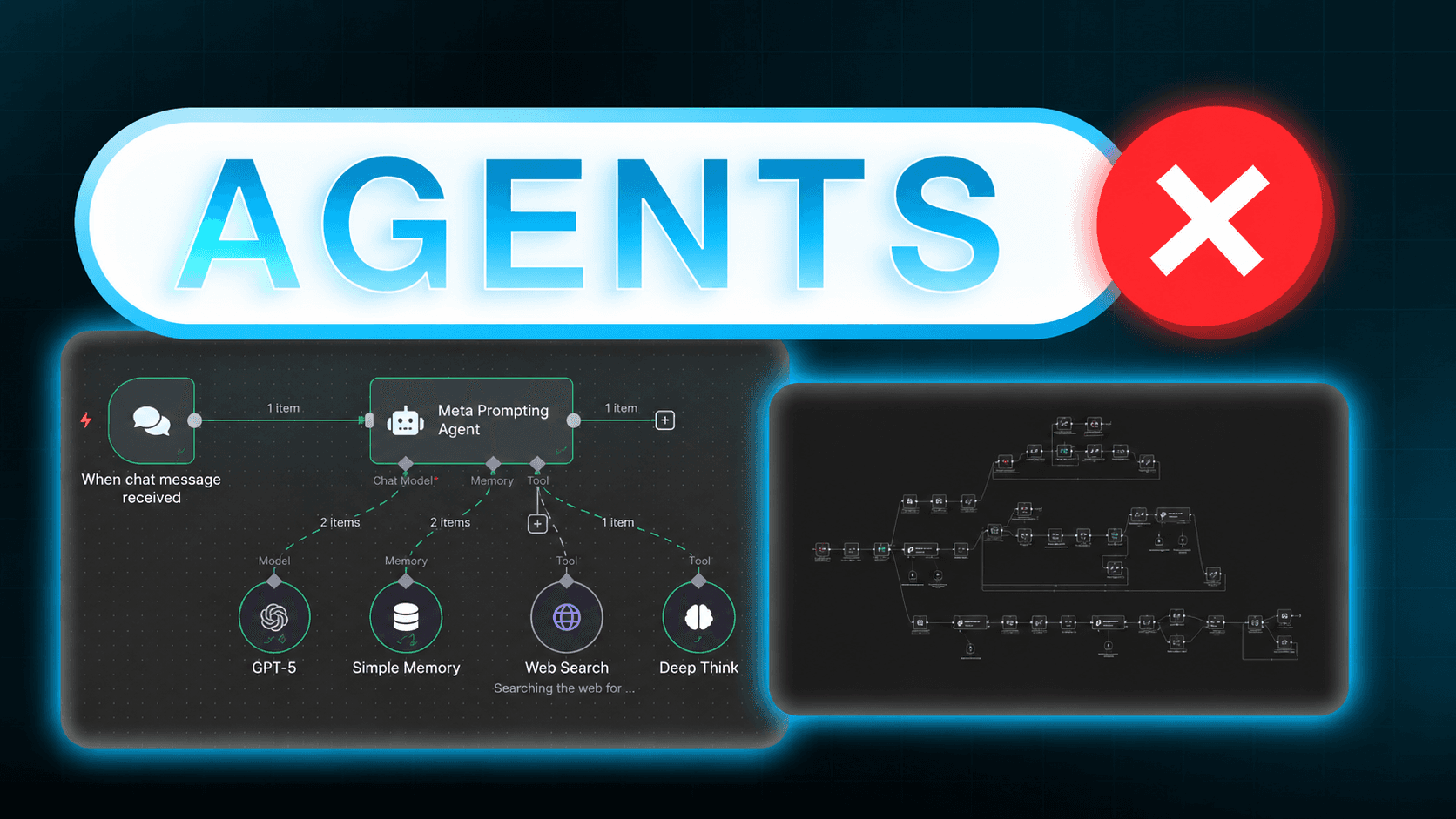
Ein KI-gesteuerter Workflow, der die Recherche, Strukturierung, das Schreiben und die Fertigstellung von Blogartikeln komplett automatisiert – inklusive SEO-Optimierung, Keyword-Analyse und einem einheitlichen Schreibstil.
Ein praktisches Beispiel: Ein Agent für dein Marketing-Team bekommt eine Anfrage über WhatsApp. Ihm stehen drei Tools für Textgestaltung, zwei für Bilderstellung und eine Datenbank zur Verfügung. Je nach Anfrage entscheidet er ganz alleine, welche Tools er wie kombiniert, um das beste Ergebnis zu liefern.
Und das Spannende ist: Auch wenn der Agent die Tools selbstständig auswählt, können diese Tools wieder ganz normale, feste Workflows oder KI-Workflows sein. Das sorgt für super Stabilität und macht das Ganze enorm verlässlich!
Wann du es nutzen solltest: Wenn der Ablauf eben nicht starr vorgegeben ist. Wenn du echte Flexibilität und Entscheidungsfreiheit brauchst. Wenn der Agent je nach Situation auch mal flexibel vor- und zurückspringen muss.
Die Entscheidungs-Logik: Welche Stufe passt zu dir?
Damit du den perfekten Durchblick behältst, haben wir hier eine super einfache Checkliste für dich vorbereitet:
Frage 1: Muss ich bei jedem einzelnen Durchlauf persönlich dabei sein?
Ja → Custom GPT
Nein → Weiter zu Frage 2
Frage 2: Basieren die Schritte zu 100 Prozent auf reiner Logik?
Ja → Workflow ohne KI
Nein → Weiter zu Frage 3
Frage 3: Ist die Reihenfolge der Schritte fest vorgegeben?
Ja → KI-Workflow
Nein → KI-Agent
Aber aufgepasst: Es gibt immer spannende Grenzfälle!
Manchmal sieht auf den ersten Blick alles nach einem KI-Workflow aus, aber ein Agent wäre am Ende doch die schlauere Wahl. Ein Beispiel: Ein Kundensupport-System, das E-Mails beantwortet. Der manuelle Ablauf wäre: E-Mail lesen, in der Wissensdatenbank suchen, Antwort schreiben. Klingt erst mal nach einer fixen Reihenfolge, oder?
Aber manchmal brauchst du die Wissensdatenbank gar nicht – dann hättest du wertvolle Tokens und Zeit gespart. Ein anderes Mal musst du vielleicht drei- oder viermal nachhaken, um dir ganz sicher zu sein. In solchen Fällen ist ein freier Agent, der flexibel entscheiden kann, einfach der absolute Gewinner!
Die Realität zeigt: Es ist selten alles nur schwarz-weiß. Es kommt immer ganz auf die Situation an, wie der Ablauf im echten Leben am besten funktioniert und wie viel Flexibilität du wirklich haben möchtest.
Erst das Problem, dann die Technik!
Die ehrliche Wahrheit ist doch: Man lernt nie aus! Manchmal startet man zuversichtlich mit einem Custom GPT und merkt nach ein paar Monaten, dass ein echter KI-Workflow viel cooler wäre. Oder man baut einen super komplexen KI-Agenten und stellt fest, dass ein einfacher Workflow völlig gereicht hätte.
Seit einigen Jahren helfen wir Agenturen, Startups und KMUs erfolgreich dabei, ihre Prozesse spürbar zu optimieren. Das geniale Ergebnis: Unsere Kunden sparen dauerhaft jede Woche viele Stunden Zeit und oft sogar fünfstellige Beträge im Jahr!
Das nimmst du am besten mit: Werde zum begeisterten Problemlöser und nicht nur zum Technik-Sammler! Fang immer mit der einfachsten Lösung an, die dein Problem knackt. Upgraden kannst du später immer noch – oder eben auch wieder abspecken. Einfach ausprobieren, Feedback sammeln und optimieren!
Und noch ein kleiner Geheimtipp aus der Praxis: Gut die Hälfte aller Unternehmens-Automatisierungen kommen komplett ohne KI aus! Schon das Einbinden von Custom GPTs oder einfachen Workflows bringt dir und deinem Team einen riesigen Effizienz-Schub.
Also: Bevor du das nächste Mal einen KI-Agenten bauen willst, atme kurz durch. Stell dir unsere drei Fragen. Und triff dann die Entscheidung, die dich wirklich weiterbringt – und nicht nur die, die am coolsten klingt!
Über APEX Consulting
APEX Consulting ist deine Beratung für KI-Automatisierung und Wachstum. Wir unterstützen B2B-Unternehmen mit intelligenten Workflows, KI-Agenten, CRM-Automatisierung und skalierbaren Betriebssystemen. Dabei setzen wir voll auf praxisnahe, direkt umsetzbare Lösungen, die dir lästige Handarbeit abnehmen und gesundes Wachstum ermöglichen.
Neugierig geworden? Mehr Infos findest du hier: https://apex-consulting.ai/