
KI-Agenten vs. KI-Automatisierungen vs. klassische Automatisierungen
Du hörst gefühlt überall von KI-Agenten und fragst dich, ob dein Unternehmen jetzt auch schnell auf diesen Zug aufspringen sollte?
Bevor du jetzt jede Menge Zeit und Energie in super komplexe KI-Systeme steckst, gibt es eine wichtige Sache, die du wissen solltest: In rund 90 Prozent der Fälle sind KI-Agenten eigentlich gar nicht nötig!
Was du wirklich brauchst, ist ein klarer Durchblick, welche Art der Automatisierung am besten zu deinen Aufgaben passt. Dieser kleine Ratgeber zeigt dir, wie du ganz einfach die richtige Wahl triffst und dabei jede Menge Stress, Kosten und Fehler vermeidest.
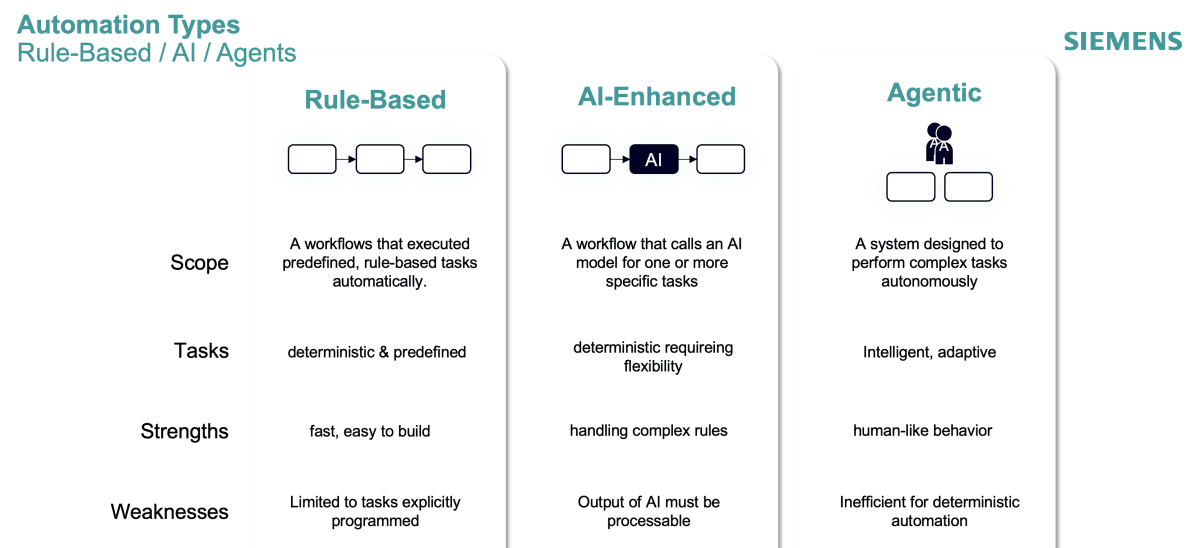
Vergleich von regelbasierter, KI-gestützter und agentenbasierter Automatisierung nach Aufgabenbereich, Stärken und Grenzen – von einfachen Wenn-Dann-Abläufen über smarte KI-Prozesse bis hin zu selbstständigen, lernenden Agenten-Systemen. Quelle: Siemens-Präsentation Realize Live 2025, Jousef Murad
Schritt für Schritt erklärt: Die 3 Stufen der Automatisierung
Stell dir vor, ein Kunde hat gerade etwas bei dir gekauft. Nun muss ein Formular verschickt, ein neuer Kundenordner in Google Drive angelegt, Daten in ein Projekt-Tool (wie Asana) eingetragen und ein Teammitglied informiert werden. In vielen Firmen läuft das alles noch per Hand ab – Klick für Klick, E-Mail für E-Mail.
Genau hier kommen unsere fleißigen Automatisierungs-Helfer ins Spiel, und jeder hat seine ganz eigenen Superkräfte!
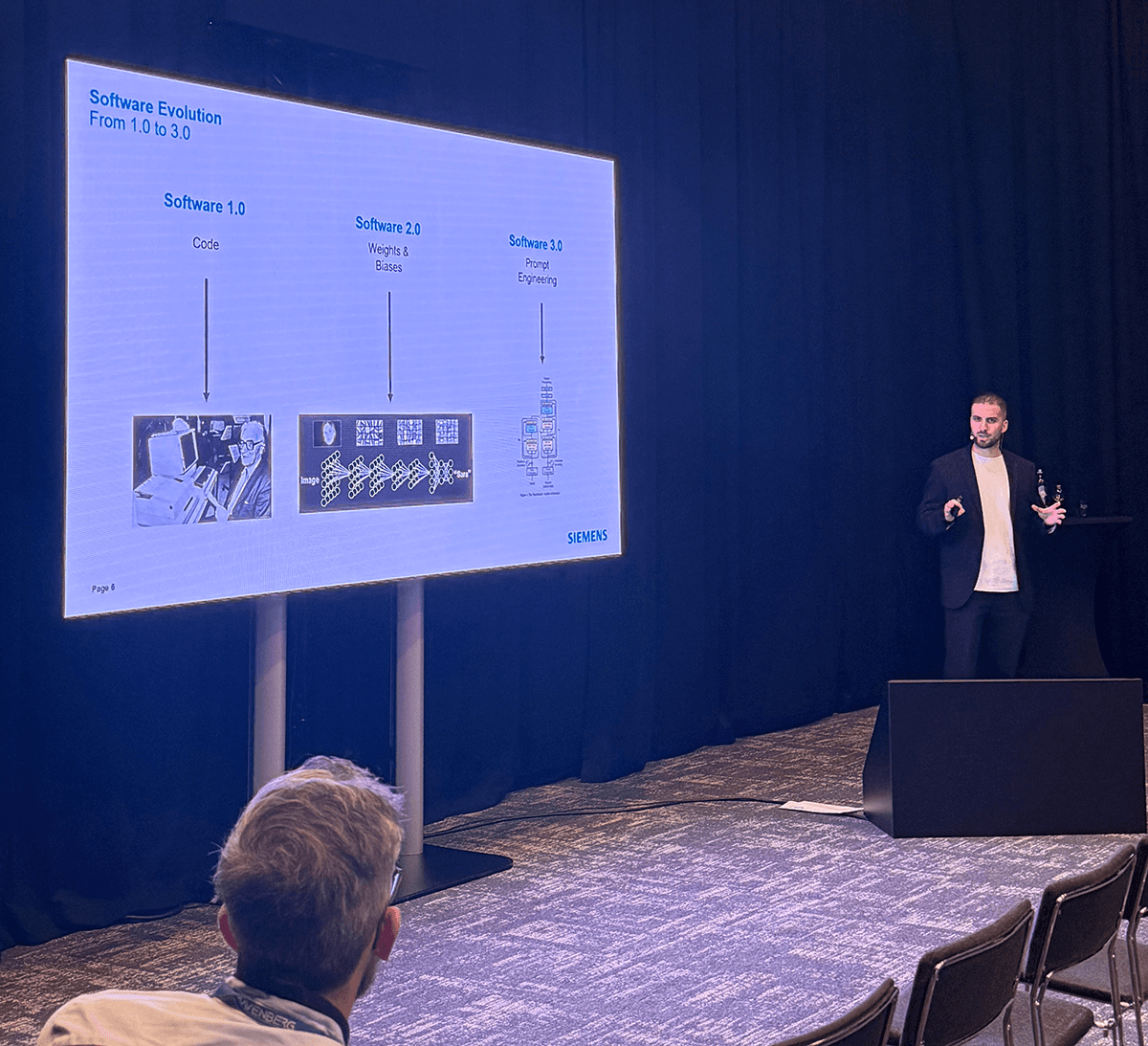
Die Entwicklung von Software 1.0 zu 3.0: Hier sieht man den Weg von klassischer Software über schlaue KI-Modelle bis hin zu Software 3.0, bei der Eingabeaufforderungen (Prompts) und Agenten-Systeme die Hauptrolle spielen.
Klassische Automatisierung: Dein treuer Bürokollege
Die einfachste Form ist die reine Prozess-Automatisierung. Ein Vertriebler klickt im CRM-System auf „Zahlung erhalten“ und – schwups! – ab diesem Moment läuft alles wie von Zauberhand: Die E-Mail geht raus, der Ordner in Google Drive wird erstellt und der Fragebogen abgelegt. Fertig!
Das Prinzip dahinter? Eine ganz einfache „Wenn-dann“-Logik. Wenn Ereignis A passiert, erledige bitte Aktion B.
Ganz ohne Schnickschnack und ohne langes Nachdenken – einfach super zuverlässig! Diese Methode ist am wenigsten fehleranfällig, weil der Computer genau das tut, was du ihm vorgibst.
Perfekt für: Klar definierte, feste Abläufe, die sich jeden Tag wiederholen. Wenn deine Arbeitsschritte immer gleich bleiben, ist die klassische Automatisierung deine absolute Nummer 1!
KI-Automatisierung: Wenn es persönlich werden soll
Manchmal reichen starre Regeln einfach nicht aus. Was ist zum Beispiel, wenn du nach dem Fragebogen keine Standard-Mail, sondern eine ganz persönliche Begrüßung verschicken willst, die direkt auf die Wünsche deines Kunden eingeht?
Hier kommt die KI-Automatisierung ins Spiel! Die KI liest den Fragebogen, versteht den Inhalt und erstellt einen maßgeschneiderten Fahrplan für deinen Kunden. So etwas Persönliches war vor ein paar Jahren noch undenkbar – heute klappt das dank moderner Sprachmodelle im Handumdrehen!
Wichtig zu wissen: Die KI übernimmt hier nur ganz bestimmte Zwischenschritte. Der Rest des Weges läuft weiterhin nach festen Regeln ab.
Perfekt für: Aufgaben, bei denen Texte verstanden, bewertet oder individuell angepasst werden müssen. Wenn Flexibilität den Unterschied macht, ist KI eine wunderbare Ergänzung!
KI-Agenten: Selbstständige Denker mit kleinen Tücken
Jetzt wird es richtig spannend!
KI-Agenten folgen keinem festen Plan mehr. Sie treffen eigene Entscheidungen! Der Agent schaut sich den Fragebogen an und überlegt selbstständig: Reichen die Infos aus? Muss ich noch Daten von der Website des Kunden heraussuchen? Gibt es Besonderheiten, die direkt dem Support gemeldet werden müssen?
Der Agent reagiert ganz dynamisch auf jede neue Situation. Das klingt im ersten Moment absolut genial, hat aber auch seine Tücken. Aktuelle KI-Agenten machen nämlich noch recht häufig Fehler. Wenn sie nicht optimal eingerichtet sind, können sie schneller falsche Entscheidungen treffen als einfache „Wenn-dann“-Regeln.
Perfekt für: Sehr flexible Abläufe, bei denen eigenständiges Entscheiden wichtig ist. Aber Vorsicht: Prüfe vorher immer, ob sich das Ganze nicht doch mit einfachen Regeln lösen lässt!
KI-Agentensysteme: Das eingespielte Spezialisten-Team
Die absolute Königsklasse sind Systeme, in denen mehrere Spezial-Agenten zusammenarbeiten. Ein Manager-Agent behält den Überblick und verteilt die Aufgaben an seine Experten:
Support-Agent: Kümmert sich um den Kundenkontakt und die Ordner.
Beratungs-Agent: Erstellt kreative Inhalte und Pläne.
Vertriebs-Agent: Hält Ausschau nach weiteren passenden Angeboten.
Weil jeder Agent seine klare Spezialaufgabe hat, klappt die Zusammenarbeit super und es passieren viel weniger Fehler, als wenn ein einzelner Alleskönner-Agent alles alleine machen müsste.
Perfekt für: Sehr komplexe Abläufe mit vielen verschiedenen Schritten. Aber mal ehrlich: Die allerwenigsten Unternehmen brauchen das im Alltag wirklich.
Die goldene Regel: So wenig KI wie möglich, so viel wie nötig!
Hier ist der wertvollste Tipp für dich: Baue KI wirklich nur dort ein, wo sie echten Nutzen bringt. Warum? Weil jede zusätzliche KI die Sache komplizierter macht und neue Fehlerquellen einschleusen kann.
In der Praxis lassen sich rund 90 Prozent aller Abläufe mit einfacher, klassischer Automatisierung viel sicherer und besser lösen. Bevor du also viel Geld ausgibst, stelle dir diese Fragen:
Ist mein Prozess eigentlich immer derselbe? Kann ich die Entscheidungen mit einfachen „Wenn-dann“-Regeln festlegen? Brauche ich wirklich eine KI, die selbstständig entscheidet, oder reicht ein fester Ablauf?
Wenn du die ersten beiden Fragen mit „Ja“ beantworten kannst, bleibe ganz entspannt bei der klassischen Automatisierung. Sie läuft stabiler, ist schneller eingerichtet und spart dir langfristig jede Menge Ärger!
Dein einfacher Wegweiser: Welche Technik passt zu dir?
Wähle die klassische Automatisierung, wenn:
Deine Abläufe jeden Tag genau gleich ablaufen
Einfache, feste Regeln völlig ausreichen
Sicherheit und Fehlerfreiheit für dich an erster Stelle stehen
Du schnell und unkompliziert Zeit sparen möchtest
Wähle die KI-Automatisierung, wenn:
Texte verstanden und richtig eingeordnet werden müssen
Eine persönliche Ansprache deinen Kunden ein Lächeln ins Gesicht zaubert
Einzelne Schritte im Ablauf flexibel sein müssen
Der restliche Prozess trotzdem stabil auf festen Regeln aufbaut
Wähle KI-Agenten wirklich nur dann, wenn:
Dein Ablauf super dynamisch und schwer vorhersehbar ist
Eigenständige Entscheidungen absolut notwendig sind
Du damit leben kannst, dass mal ein kleiner Fehler passiert
Klassische Regeln hier einfach an ihre Grenzen stoßen
Der KI-Hype im Reality-Check
KI-Agenten klingen natürlich super aufregend! Aber in den meisten Fällen sind sie wie ein Rennwagen für den Wocheneinkauf: ein bisschen zu viel des Guten, teuer und im Alltag unpraktisch. Die klassische Automatisierung ist und bleibt für die allermeisten Aufgaben der wahre Held im Büro – einfach, zuverlässig und schnell.
Setze KI ganz gezielt dort ein, wo sie echten Mehrwert bringt: im Kundenservice via WhatsApp, als schlaue Chat- und Sprachassistenten für dein Team, beim Schreiben von Texten oder bei wirklich kniffligen Entscheidungen.
Alles andere kostet oft nur unnötig Kraft und Zeit.
Dein nächster Schritt: Nimm dir heute einen deiner täglichen Abläufe vor und überlege ganz ungezwungen: Welche Automatisierung würde mir hier am besten helfen? Lass uns doch einfach mal ganz unverbindlich in unserer KI-Beratung über deine Ideen plaudern!
Über APEX Consulting
APEX Consulting ist eine fröhliche und tatkräftige Beratung rund um KI-Automatisierung und Wachstum. Wir unterstützen B2B-Unternehmen mit intelligenten Abläufen, cleveren KI-Agenten, CRM-Automatisierung und unkomplizierten Systemen. Dabei konzentrieren wir uns auf praktische Lösungen, die sich leicht umsetzen lassen, manuelle Arbeit spürbar verringern und für nachhaltiges Wachstum sorgen.
Mehr Infos findest du hier: https://apex-consulting.ai/