
How To Start Implementing AI In Your Business
Not long ago, artificial intelligence was mostly discussed as a future possibility. Today, it has become a practical force at the core of modern business. In a relatively short time, AI has moved from theory to real-world application, with organizations across industries using it to improve efficiency, generate insights, and discover capabilities that were previously difficult to achieve at scale.
Yet, despite its growing presence, many executives and decision makers still hesitate when it comes to adopting it within their own companies. The hesitation rarely comes from doubt about the technology itself. Instead, it arises from uncertainty about how it works, where it creates value, and how an organization can realistically begin.
What AI Actually Is
Much of the confusion surrounding artificial intelligence stems from the way it is often presented. Discussions about AI are frequently dominated by technical jargon or dramatic success stories from global technology companies. While these examples are impressive, they can also feel distant from the everyday challenges faced by most businesses. What organizations often need is not another headline about breakthrough algorithms, but a clearer understanding of how the technology functions in practice and how it can be applied in a focused and strategic way.
At its foundation, artificial intelligence refers to computer systems designed to perform tasks that traditionally required human intelligence. These tasks include recognizing patterns, interpreting language, making predictions, and learning from experience. Rather than following a rigid set of instructions, many AI systems improve their performance over time by analyzing data and adjusting their internal models based on what they observe.
How Machine Learning Works: The Three Core Approaches
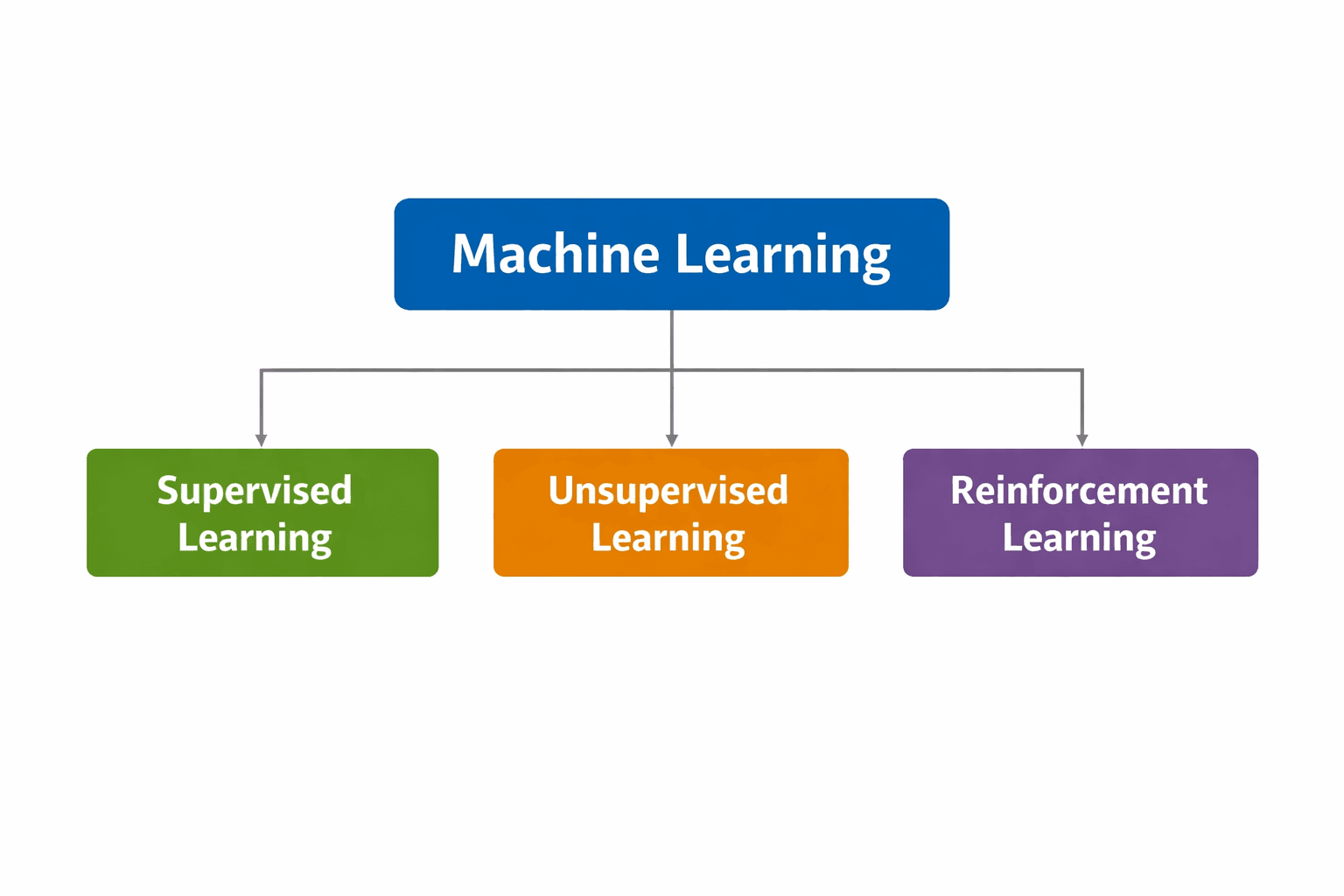
The three main categories of machine learning are supervised learning, which trains models on labeled data; unsupervised learning, which identifies patterns in unlabeled data; and reinforcement learning, which improves decision-making through trial-and-error feedback.
Machine learning represents one of the most important approaches within the broader AI landscape. In traditional software, programmers write explicit rules that tell a system exactly how to behave. Machine learning reverses this logic. Instead of defining every rule, developers train models using large sets of data, allowing the system to identify relationships and patterns on its own. As the model processes more examples, it gradually becomes better at producing accurate predictions or classifications.
Most machine learning applications rely on three primary learning methods:
Supervised learning involves training models on labeled data, where the correct outcome is already known. By studying these examples, the system learns how to predict future outcomes such as estimating sales demand, identifying fraudulent transactions, or recommending products to customers.
Unsupervised learning is where the data is not labeled, and the system must identify patterns independently. This approach is commonly used to discover customer segments, analyze behavioral trends, or detect anomalies that may signal unusual activity.
Reinforcement learning focuses on decision-making through continuous feedback. Systems experiment with different actions and gradually improve by learning which choices produce the best outcomes over time. This method is frequently applied to complex optimization problems such as logistics planning or resource allocation.
More recently, generative AI has introduced a new set of capabilities that have captured public attention. These systems can produce new content in the form of written text, images, software code, audio, and video. Their emergence has significantly expanded the visibility of artificial intelligence across everyday business activities. Tasks such as drafting documents, summarizing information, assisting customer support agents, and analyzing large volumes of internal data can now be supported by AI systems that interact with users in natural language.
Despite these technological advances, successful AI adoption rarely depends on algorithms alone. Data is the foundation on which every effective AI system is built. Models rely on data to learn patterns, identify relationships, and produce useful predictions. If the data feeding a model is incomplete, inconsistent, or poorly structured, the results will reflect those weaknesses. Organizations that wish to benefit from AI must therefore begin by examining their data landscape. They need to understand what information they collect, how reliable it is, how it is stored, and whether it aligns with the questions they are trying to answer. Strong data governance, careful data management, and a clear understanding of data quality often determine whether an AI initiative succeeds or struggles.
When these foundations are in place, the practical applications of AI become increasingly visible across business functions.
Marketing & Sales: Machine learning models help organizations understand customer behavior with greater precision. Companies can anticipate purchasing patterns, personalize recommendations, and refine pricing strategies based on predictive insights, delivering experiences that feel tailored rather than generic.
Operations & Supply Chain: Predictive maintenance systems analyze equipment data to detect early signs of failure before they become costly downtime. Demand forecasting models anticipate shifts by analyzing historical trends and external factors, while logistics optimization improves routing, reduces delays, and keeps inventory aligned with reality.
Financial Services: AI monitors transactions for fraud, assesses credit risk, and supports regulatory compliance by processing large volumes of financial data at a speed and consistency that manual review doesn't match.
Human Resources: Predictive models improve hiring decisions, surface patterns in employee engagement, and identify early signs of potential turnover before they become retention problems.
Healthcare: AI assists with diagnostics, medical imaging analysis, and patient monitoring, extending clinical capacity and supporting faster, better-informed decisions at the point of care.
Public Sector: Similar technologies support traffic management, strengthen public safety systems, and inform infrastructure planning across cities and regions.
Together, these examples illustrate that artificial intelligence is no longer limited to research environments. It has become a practical tool that supports decision-making and operational efficiency across industries, even as many organizations continue to determine how best to begin adopting it.
How to Begin: A Practical Approach
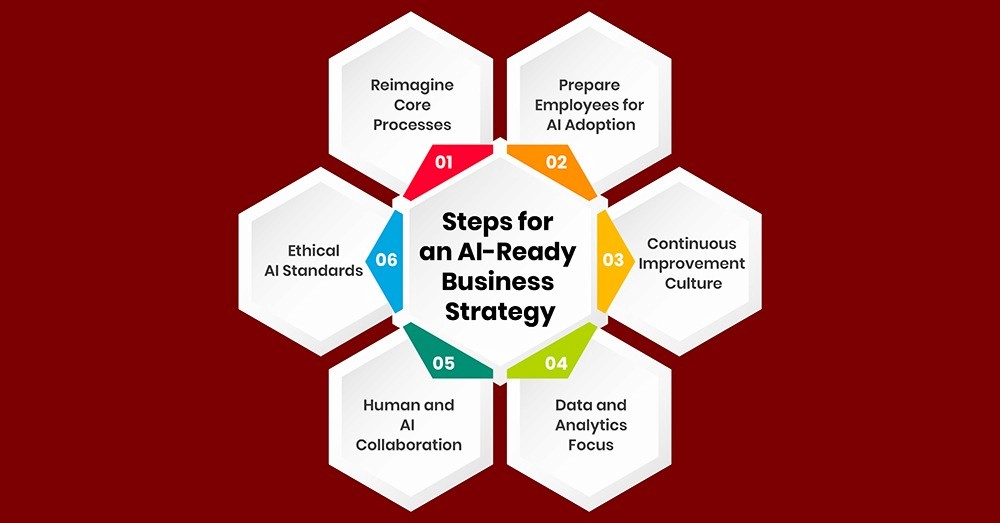
AI in business succeeds when companies redesign processes for AI, equip employees to work with it, continuously improve systems, leverage quality data. Source: The Strategy Institute.
A frequent mistake is attempting to launch ambitious AI programs without clearly defining the underlying business problem. Technology initiatives driven primarily by enthusiasm rather than practical need often struggle to deliver measurable value. The steps below offer a more grounded path.
Phase 1. Define the Problem Identify specific operational challenges or opportunities where better predictions, faster analysis, or improved automation could make a meaningful difference. Avoid starting with a technology and working backward. The business case comes first.
Phase 2. Reimagine the Process Before building anything, map current workflows and pinpoint where inefficiencies exist. Consider how processes could be redesigned around AI rather than simply adding it on top of existing operations. This distinction determines whether AI creates lasting value or just adds complexity.
Phase 3. Audit Your Data Assess whether sufficient high-quality data exists and whether your infrastructure can support robust analytics. Data readiness is the most common limiting factor at this stage and the most important one to surface early.
Phase 4. Assess Internal Capability Evaluate whether internal teams have the expertise required to execute. Where gaps exist, invest in training and reskilling. Cross-departmental collaboration also matters here, AI initiatives that stay siloed rarely scale.
Phase 5. Run a Controlled Pilot Test the initiative in a contained environment where performance can be measured and risks managed. Define success metrics before the pilot begins, not after. Iterate based on what the data shows, not on initial expectations.
Progress through these phases rarely follows a straight line. Organizations that treat each phase as a genuine checkpoint, rather than a box to tick, consistently report stronger outcomes as they scale.
The Human Element
Equally important is the human dimension of AI adoption. Artificial intelligence should not be viewed solely as a technical project managed by data scientists or engineers. Instead, successful implementations rely on thoughtful human-AI collaboration, where machines handle repetitive, rules-based work while humans focus on higher-value tasks such as exception handling, creativity, and decision-making. Establishing clear roles, human-in-the-loop processes, and designated points of oversight ensures that AI augments rather than replaces professional judgment.
Finally, embedding ethical considerations and governance into AI projects safeguards long-term success. Organizations should define principles around transparency, fairness, and privacy, conduct impact assessments before deployment, and maintain continuous monitoring to address potential risks or biases. By aligning AI initiatives with both ethical standards and strategic objectives, companies can implement solutions that are responsible, effective, and sustainable.
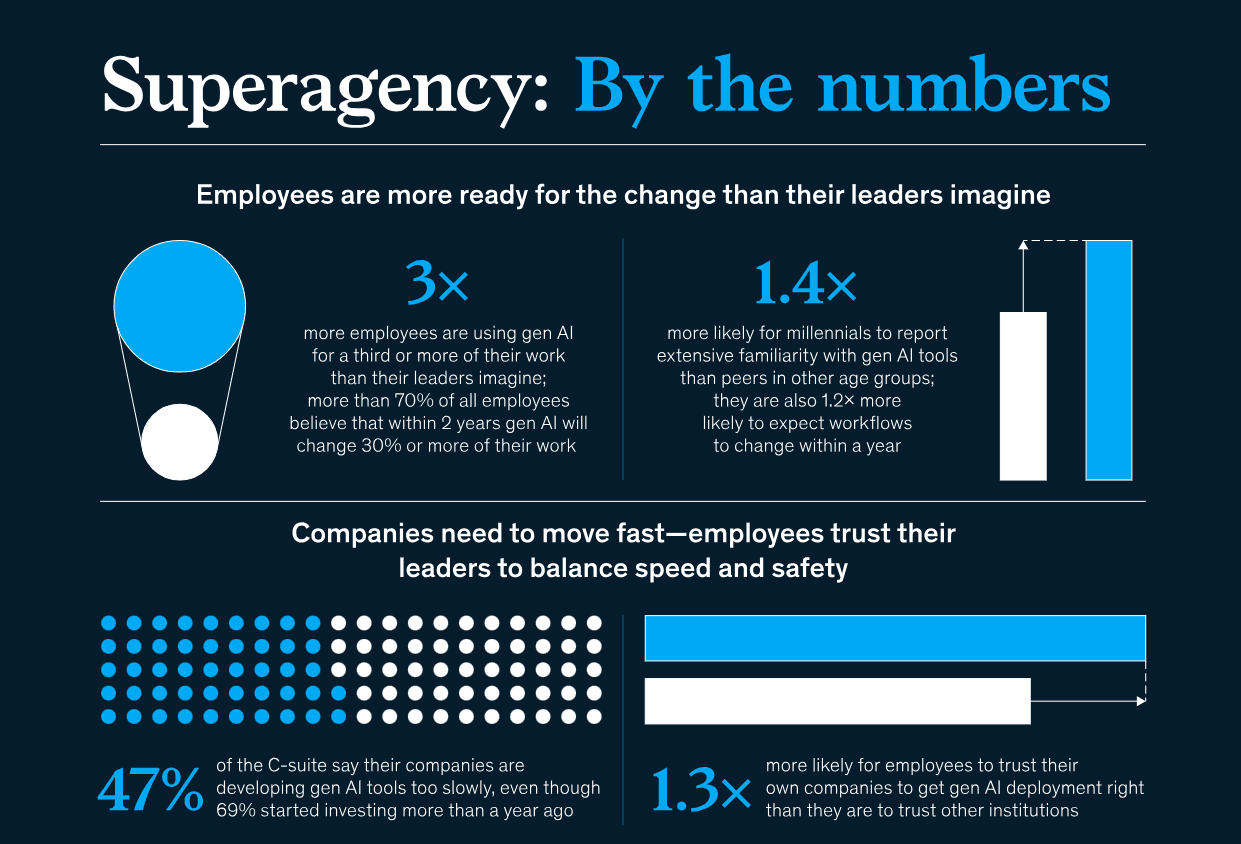
A McKinsey report concluded that employees are generally ready to work with AI, but the biggest barrier to successful adoption is leadership. Source: McKinsey & Co.
Over time, companies that succeed with artificial intelligence often move through a series of stages. They begin with targeted experiments focused on narrow use cases. As their understanding grows, they integrate AI into key operational processes. Eventually, the technology becomes embedded across departments, supporting strategic decision-making and enabling new business capabilities. Each stage introduces new considerations related to infrastructure, talent development, governance frameworks, and cultural adaptation.
The Long Game
What becomes evident through this progression is that artificial intelligence is not a single product or a one-time investment. It is an evolving capability that strengthens as organizations refine their data practices, develop internal expertise, and align technological tools with long-term business objectives.
The broader business landscape is entering a period in which AI will increasingly influence competitive dynamics. Organizations that approach the technology with clarity and discipline are likely to uncover substantial advantages in efficiency, innovation, and strategic insight. Those who pursue it without direction may find themselves investing resources without achieving meaningful results.
Measuring that return honestly is part of the discipline. Pilot programs should carry defined cost ceilings and clear success metrics established before work begins, not retrofitted once results come in. ROI in AI rarely arrives in a single quarter. The more reliable pattern is incremental: reduced processing time in one function, improved forecast accuracy in another, lower error rates across a third. Tracking these gains consistently, even when they appear modest at first, builds the internal evidence base that justifies broader investment and keeps leadership aligned on what the technology is actually delivering versus what was initially projected.
Artificial intelligence is no longer confined to technology laboratories or the largest global corporations. It is becoming an accessible and practical tool for organizations of many sizes. When introduced with careful planning, strong data foundations, and a focus on solving real operational problems, it has the potential to strengthen nearly every function within a modern enterprise.
The most successful AI initiatives rarely begin with complex models or large-scale deployments. They begin with a deeper understanding of the organization's challenges, a thoughtful strategy for using data, and a willingness to experiment, learn, and adapt over time.
For businesses prepared to approach artificial intelligence in this way, the path forward is not only achievable but filled with meaningful opportunity.
About APEX Consulting
APEX Consulting helps B2B organizations implement AI automation, intelligent workflows, and scalable operating systems that reduce manual effort and support sustainable growth. If you're exploring what AI could look like inside your organization, book a free call with the team: https://calendly.com/apex-consulting-call/15min