

The age of AI employees has begun.
You have a capable team, yet somehow everything in your company still revolves around you. Every day new tasks land on your desk, mistakes pile up, and important projects sit untouched. You might be wondering whether you hired the wrong people.
The truth is usually different: the problem does not lie with your employees but with your processes. Anyone who ignores these seven warning signs becomes the bottleneck of their own success, and that does not have to be the case.
👉 Book your free initial consultation with our team of AI experts now: https://calendly.com/apex-consulting-call/15min?month=2026-09
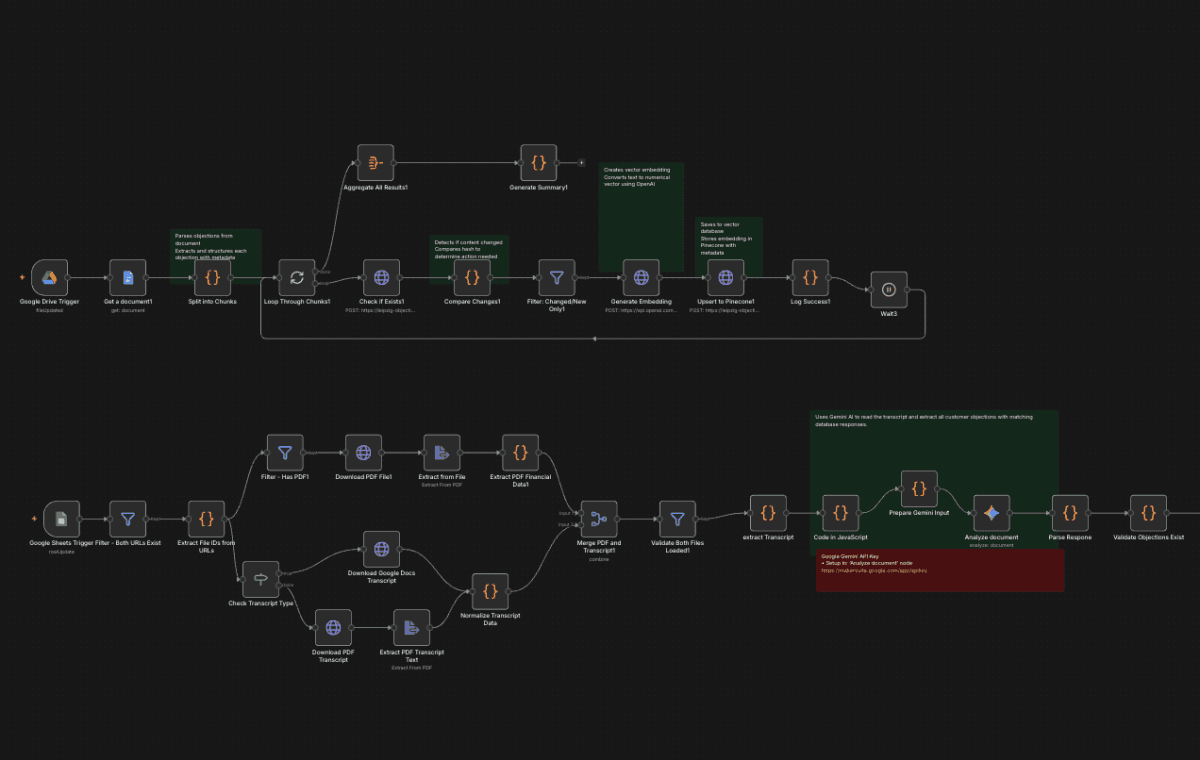
AI-powered sales workflow for automatically identifying customer objections and dynamically calculating pricing. The process analyzes documents and conversation transcripts, matches objections against a knowledge base, and generates tailored proposals. This makes sales processes scalable, consistent, and significantly faster.
The seven warning signs of broken processes
1. The same mistakes keep happening
If you regularly find yourself frustrated because the exact same mistake has happened again, you have a classic process problem. "There are no mistakes, only happy little accidents," Bob Ross may have said, but in your business the rule is: those who do not learn from history are condemned to repeat it.
The solution: document your mistakes systematically. Create a simple practice for learning from failures rather than reliving them. This not only prevents repetition but also makes your team more independent when handling challenges.
2. You are the one catching all the balls
Everyone on your team has their tasks, but as soon as something is unclear or falls between two stools, you are the one who steps in. This might feel like taking responsibility, but it is a clear sign of a process breakdown.
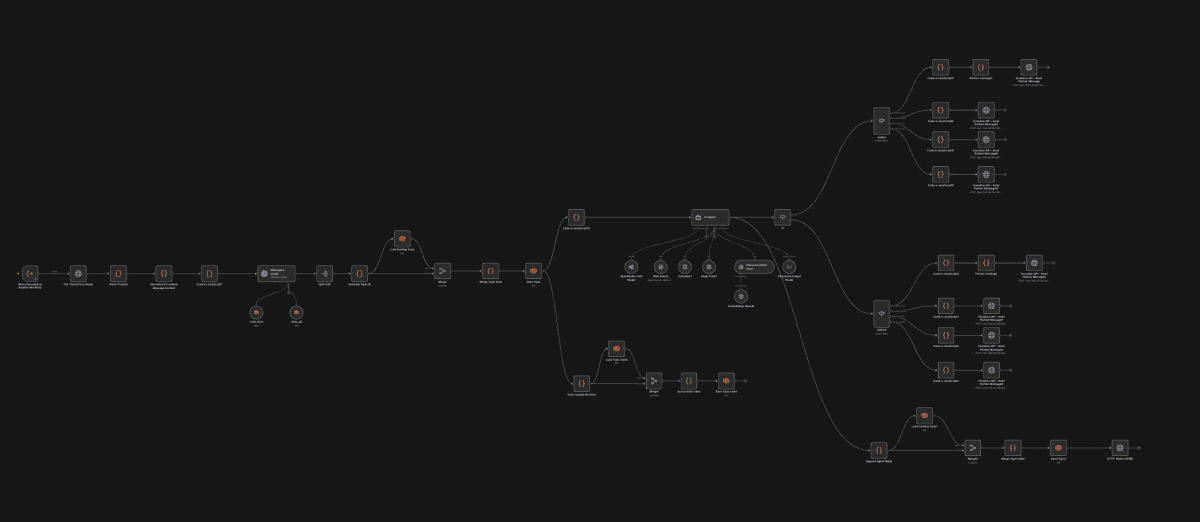
No time to type? A WhatsApp agent that converts voice commands into structured support tickets. Priorities, status, and assignments are automatically recognized and adjusted in real time. Ideal for fast, hands-free support in day-to-day operations.
This pattern frequently arises when you are used to working with freelancers or gig workers. You assign specific tasks and that is that. The problem is that you become the bottleneck. Everything has to pass through you.
The game-changer: delegate not just tasks but responsibility and decision-making authority. Use tools like a process org chart to clearly define who is responsible for what, without constantly being asked.
3. Your top priorities are not being executed
You have clear strategic goals, a vision, major initiatives, and yet nothing moves. Then your priorities are not aligned with those of your team.
We all have limited time. Multitasking does not work. When your team does not know what is truly important, it works on the wrong things. The result: your big goals remain wishful thinking.
The solution: create alignment. Your priorities must be transparent and comprehensible to everyone. Only then does real movement happen in the right direction.
4. Only new, shiny projects get done
The opposite is equally dangerous: when your team only works on exciting new projects while daily routine tasks, client work, accounting, operations, get neglected, you are heading for trouble.
Studies show that 60 to 80 percent of work in every company consists of routine, often unglamorous tasks that keep the business running. When these are ignored because the new podcast launch or book release is coming up, you are putting the existence of your business at risk.
The reality check: track how your team's time is actually being used. Create a dashboard that makes the different work categories visible. This quickly shows whether the balance is right or whether you are focusing too heavily on the new and exciting.
5. "I cannot delegate anything without it going wrong"
If this sentence sounds familiar, here is an uncomfortable message: it is less a process problem and more a trust and mindset issue.
The solution here is therapy. Seriously. Sometimes we need to work on ourselves before we can optimize our systems.
6. Your team does not use your perfect SOPs
You have created detailed standard operating procedures, built dashboards, created the perfect infrastructure, and nobody uses any of it. Frustrating, right?
Here is the problem: you have placed the Mona Lisa in front of your team and expect them to develop it further. That will not happen. People hesitate to change something that already looks "perfect."
The better strategy: let your team build the systems themselves. Give them a rough framework, like Bob Ross giving someone a blank canvas, and let them work out the details. People use what they have created themselves. This is called buy-in, and it is the reason most system projects fail: a lack of involvement.
Remember: SOPs are not your tool. They are your team's tool. So your team should build them.
7. You think you need an "integrator"
When you start thinking about hiring an "integrator," meaning someone who gets everyone else to do their work, pause for a moment.
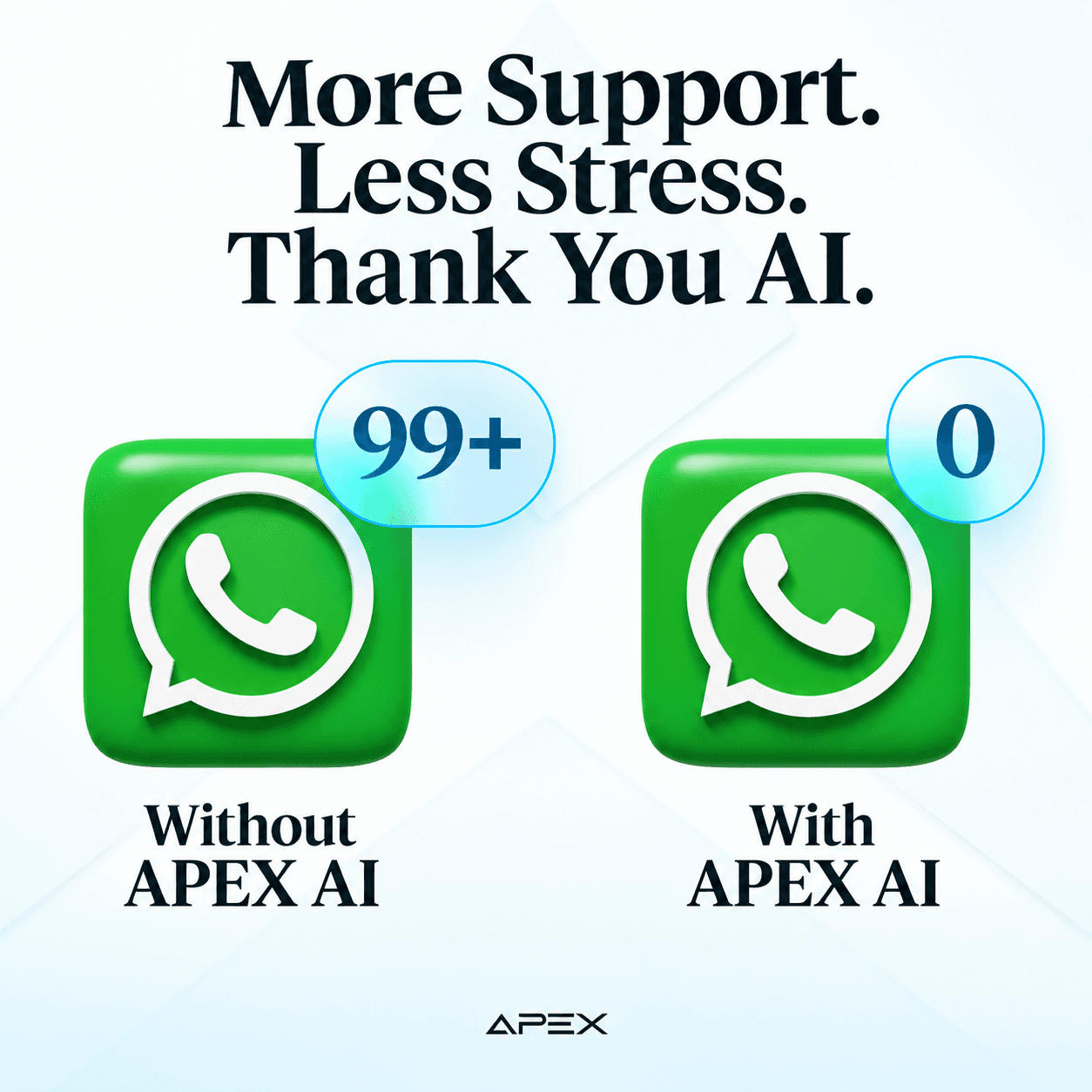
More support with zero overload. Our AI accesses your company knowledge, your FAQs, your processes, and your systems and answers inquiries in under two minutes. WhatsApp, email, or web chat, 24/7, consistent and fully automated.
This concept comes from a time before AI and modern automation. Back then it made sense to hire someone full-time to hold all the operational threads together.
But today? In the age of AI agents, automations, and intelligent systems, you do not necessarily need an internal employee for this task.
Many companies hire full-time project managers to do work that a system could handle. The result: an unsatisfied project manager who feels underutilized, an unprofitable business, and slow operations. You are paying someone for 40 hours a week to do something that could be done in 4 hours.
The smart approach: decentralize so that every team member is responsible for themselves, eliminate unnecessary processes entirely, and automate repetitive tasks using AI, automations, and templates. Only after working through these three steps and finding that a gap still remains should you consider an operations role. Clients have used this approach to reduce 40 to 80 hours of project management down to 4 hours, simply through working smart rather than throwing more people at the problem.
Your business deserves better processes
The good news: if you recognize these seven warning signs, you are already on the right path. A business that runs without you is not a fantasy. It is the result of well-designed, functioning processes.
Most entrepreneurs look for the solution in new hires, bigger teams, or more control. The key lies in intelligent systems that distribute responsibility, clarify priorities, and empower your team to work independently.
Your next step: go through the list again. At which point did you nod most strongly? That is exactly where you should start. Document a recurring mistake. Redefine responsibilities. Track your team's time. Or finally start using AI employees.
You have a capable team. Now you just need the processes that set it free. Enjoy the process!
About APEX Consulting
APEX Consulting is an AI automation and growth consulting firm supporting B2B organizations with intelligent workflows, AI agents, CRM automation, and scalable operating systems. The firm focuses on practical, implementation-driven solutions that reduce manual effort and enable sustainable growth.
More information: https://apex-consulting.ai/