
Kontext- & Prompt-Engineering
Glaubst du auch, dass der Schlüssel zu richtig tollen KI-Ergebnissen nur im perfekten Prompt liegt?
Dann ist es höchste Zeit für ein super spannendes Update!
Während viele noch an den feinsten Nuancen ihrer Wortwahl feilen, hat sich im Hintergrund längst ein ganz neuer, genialer Trend etabliert: das Context-Engineering.
Mit dem Einzug von intelligenten Agenten-Systemen wird eine Sache immer klarer: Nicht das KI-Modell entscheidet über Erfolg oder Misserfolg, sondern die Qualität des Kontextes! Die meisten Fehler bei modernen KI-Agenten liegen gar nicht am Modell selbst – es sind schlichtweg Kontext-Fehler.
Wir starten gerade in eine Ära, in der es nicht mehr nur darum geht, was du die KI fragst, sondern womit du sie für ihre Arbeit ausrüstest.
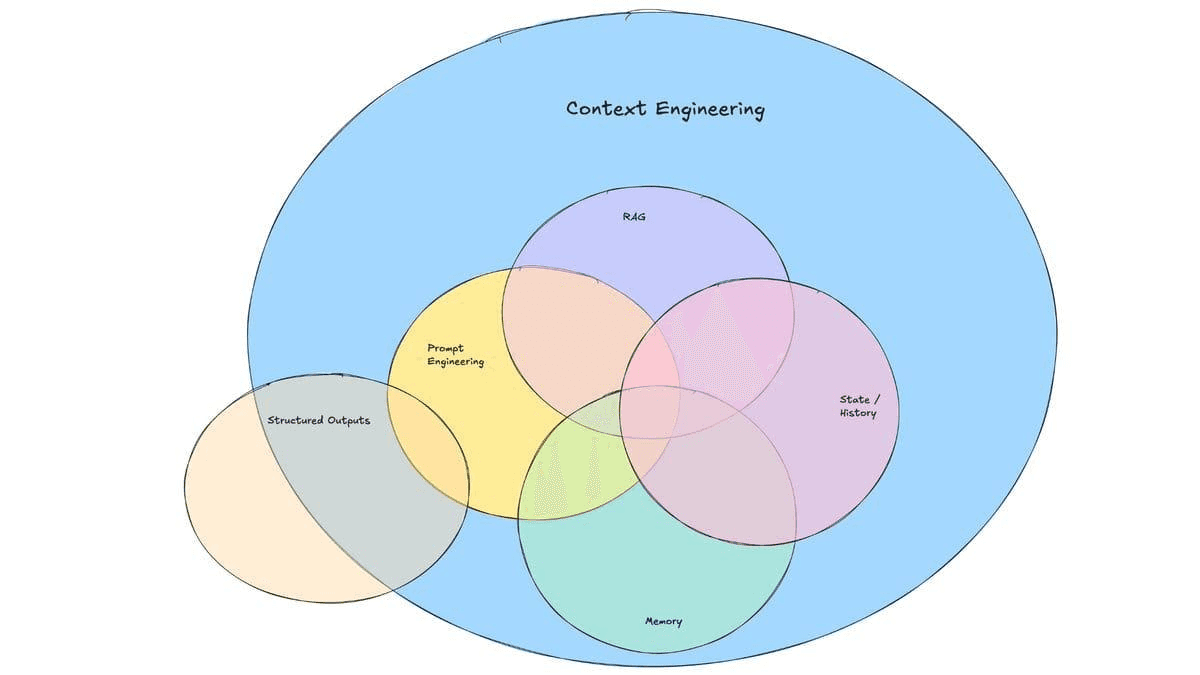
Übersicht der Kernbausteine moderner Context-Engineering-Systeme: Die Grafik zeigt dir das tolle Zusammenspiel zwischen Prompt-Engineering, RAG, Gedächtnis, Statusverwaltung und strukturierten Ausgabeformaten im großen Rahmen des Context-Engineerings. Quelle: https://blog.langchain.com/the-rise-of-context-engineering/
Was „Kontext“ eigentlich wirklich bedeutet
Bevor wir uns in das Abenteuer Context-Engineering stürzen, sollten wir kurz klären, was alles zu einem erstklassigen „Kontext“ in einem KI-System gehört. Kleiner Spoiler vorab: Es ist viel, viel mehr als nur ein Prompt!
Kontext ist einfach alles, was das KI-Modell sieht, bevor es dir eine Antwort gibt. Stell dir das wie bei einem vollgepackten Schreibtisch vor: Erst wenn alles ordentlich sortiert, vollständig und griffbereit ist, macht die Arbeit so richtig Spaß und gelingt im Handumdrehen!
Die 7 wichtigsten Bausteine des KI-Kontexts
Die Anweisung (System-Prompt): Das goldene Fundament für das Verhalten der KI – inklusive Regeln, Beispielen, Schreibstil und Sicherheitsgrenzen. (Link zum PODS-Framework)
Der User-Prompt: Deine eigentliche Frage oder Aufgabe an die KI.
Der Status (State): Das aktive Kurzzeitgedächtnis des Systems. Ohne diesen Verlauf wäre jede Antwort völlig zusammenhangslos.
Das Langzeitgedächtnis: Fest gespeichertes Wissen, wie zum Beispiel Markenrichtlinien, Projektinfos, interne Abläufe und die Vorlieben deiner Kunden.
Die RAG-Ebene (Retrieval-Augmented Generation): Clever dazugeladene Infos aus Dokumenten, Wissensdatenbanken, deinem CRM, CMS, aus APIs oder Dateisystemen.
Tools und Funktionen: Alles, was die KI aktiv für dich tun kann! Zum Beispiel Termine im Kalender prüfen, CRM-Einträge machen, Datenbanken checken oder E-Mails abschicken.
Ausgabe-Struktur: Klare Vorgaben, in welchem Format du die Antwort haben möchtest – zum Beispiel als schicke Tabelle, in JSON, Markdown oder als Formular.
Diese Bausteine sorgen dafür, dass deine KI nicht im Dunkeln tappt, sondern in einem klar definierten Rahmen arbeitet, der einfach passt.
Der Unterschied zwischen einer einfachen Demo und einem echten Profi-Agenten
Stell dir folgendes Szenario vor: Eine E-Mail flattert in dein Postfach: „Hi, bist du morgen kurz für eine schnelle Abstimmung da?“
Ein einfacher Demo-Agent sieht nur diesen einen Satz. Er hat keinen Kontext und kein Hintergrundwissen. Das Ergebnis ist nett, aber verbesserungswürdig:
„Vielen Dank für Ihre Nachricht. Morgen passt mir gut. Darf ich fragen, um wie viel Uhr?“
Das ist zwar höflich, hilft dir im Alltag aber nicht wirklich weiter, weil der Agent deinen echten Kalender gar nicht kennt.
Ein echter Profi-Agent hingegen baut sich erst den perfekten Kontext auf, bevor er antwortet:
Er checkt deinen Kalender (morgen komplett ausgebucht), schaut in den E-Mail-Verlauf (ihr duzt euch), wirft einen Blick ins CRM (es ist ein super wichtiger Kontakt) und nutzt seine Tools für Kalender und E-Mails.
Und schwupps, die Antwort ist absolut genial und super hilfreich: „Hi Jim, morgen ist es bei mir leider total voll. Donnerstagvormittag würde aber super passen! Ich habe dir direkt eine Kalendereinladung geschickt.“
Das fühlt sich fast wie Magie an – liegt aber nicht an einem schlaueren Modell, sondern an dem fantastisch vorbereiteten Kontext!
Die wichtigste Botschaft hierbei: Agenten scheitern fast nie am Modell selbst. Sie scheitern, weil ihnen die passenden Infos fehlen.
Warum Prompt-Engineering für Agenturen und KMU nicht mehr ausreicht
Prompt-Engineering verfeinert die Worte. Context-Engineering optimiert das ganze System!
Für den echten Praxiseinsatz – wie Kundenkommunikation, Lead-Qualifizierung, Content-Erstellung und interne Automatisierungen – brauchst du Systeme, die:
Daten ganz automatisch abrufen
Unwichtige Infos clever herausfiltern
Deine Tools fehlerfrei einbinden
Klare Ausgabe-Formate vorgeben
Jeden Kontext dynamisch und genau passend zur Situation aufbauen
Und das ist ein ganz anderes, viel spannenderes Level als das bloße Schreiben von Text-Prompts!
Worauf es beim Context-Engineering wirklich ankommt
Context-Engineering bedeutet, schlaue und dynamische Systeme zu entwickeln, die einer KI genau die Infos und Tools bereitstellen, die sie für ihre Aufgabe braucht. Das funktioniert am besten mit diesen vier einfachen Prinzipien:
1. Ein System statt nur ein Textfeld
Kontext ist keine starre Vorlage, sondern ein fließender Prozess, der automatisch vor jedem KI-Aufruf abläuft.
2. Dynamisch statt starr
Jede Aufgabe braucht andere Infos. Die KI sollte sich diese ganz flexibel und automatisch aus Kalendern, dem CRM, Dokumenten oder dem Web zusammensuchen können.
3. Relevanz ist Trumpf
Nicht jede Info ist auch nützlich. Zu wenig Kontext führt zu Fehlern, zu viel Kontext stiftet Verwirrung. Die Kunst liegt darin, genau die richtige Mischung zu finden!
4. Struktur schlägt Masse
Eine gut zusammengefasste Info ist viel wertvoller als ein riesiger Datenberg. Klare Strukturen helfen der KI, die richtigen Entscheidungen zu treffen.
Was Agenturen und KMU jetzt tun sollten
Hier ist die goldene Erkenntnis: Unternehmen, die KI nur als einfachen Textschreiber nutzen, werden schnell von denen überholt, die KI als cleveren Teil ihres gesamten Systems verstehen.
Ganz konkret bedeutet das für dich:
Die KI kann nur dann tolle Markentexte schreiben, wenn sie deine Markenrichtlinien kennt.
Die KI kann nur dann gute Angebote erstellen, wenn sie deine Preismodelle versteht.
Die KI kann Kontakte nur dann richtig einschätzen, wenn sie Zugriff auf deine CRM-Daten hat.
Die KI kann deine Kundenkommunikation nur dann automatisieren, wenn sie Kalender, Postfächer und Kundenhistorien kennt.
Die KI kann Aufgaben nur dann für dich übernehmen, wenn sie die passenden Tools dazu nutzen darf.
Die KI ersetzt nicht dein Fachwissen. Sie ist wie ein super fleißiger Verstärker – aber eben nur, wenn man sie richtig füttert!
Werde zum Kontext-Architekten!
Die Zukunft von KI im Unternehmen hängt nicht von besseren Prompts oder neueren Modellen ab. Sie hängt davon ab, ob wir lernen, geniale Kontext-Systeme zu bauen, die:
Informationen wunderbar strukturiert bereitstellen
Tools auf schlaue Weise einbinden
Dynamisch auf jede neue Aufgabe reagieren
Die Qualität des Kontextes immer weiter verbessern
Nicht die KI allein entscheidet über deine Ergebnisse, sondern das System, das sie leitet. Der echte Wettbewerbsvorteil der nächsten Jahre liegt ganz klar beim Context-Engineering!
Über APEX Consulting
APEX Consulting ist dein Partner für KI-Automatisierung und Unternehmenswachstum. Wir unterstützen B2B-Unternehmen mit intelligenten Workflows, KI-Agenten, CRM-Automatisierung und skalierbaren Betriebssystemen. Dabei setzen wir auf praxisnahe Lösungen, die dir im Alltag sofort Arbeit abnehmen und dein Wachstum ankurbeln.
Mehr Infos findest du hier: https://apex-consulting.ai/