
Wie du deine Agentur super einfach fit für die KI-Zukunft 2026 machst!
Wir hören es in gefühlt jedem Telefonat: „Ja ja, wir nutzen schon ChatGPT“ oder „Wir haben uns da ein paar Prompts gebaut“.
Klingt cool und ist ein toller Anfang!
Aber mal ehrlich: In einer Welt, in der Künstliche Intelligenz (KI) die gesamte Arbeitsweise komplett auf den Kopf stellt und neu ordnet, ist „ein bisschen ChatGPT“ ungefähr so effektiv wie ein kleiner Regenschirm bei einem Meteoritenschauer.
Und das sagen wir nicht einfach so als Trend-Agentur, die erst seit gestern auf der KI-Welle mitsurfen will.
Wir arbeiten schon seit über sieben Jahren tief im Herzen der KI – also schon zu einer Zeit, als KI noch kein Modewort war, sondern ein echtes Nerd-Hobby (bei uns im Rahmen einer Masterarbeit), das man seinen Freunden wie eine superseltene Orchideenart erklären musste!
Wenn wir heute sagen, dass Agenturen ihr ganzes Denken einmal komplett umkrempeln müssen, dann ist das kein theoretisches Gerede, sondern echte Praxis-Erfahrung. Wir haben live miterlebt, wie KI ganze Systeme ersetzt, Märkte dreht und Geschäftsmodelle in nur wenigen Monaten völlig verändert.
Und genau deshalb sprechen wir Klartext – ganz unkompliziert und direkt!
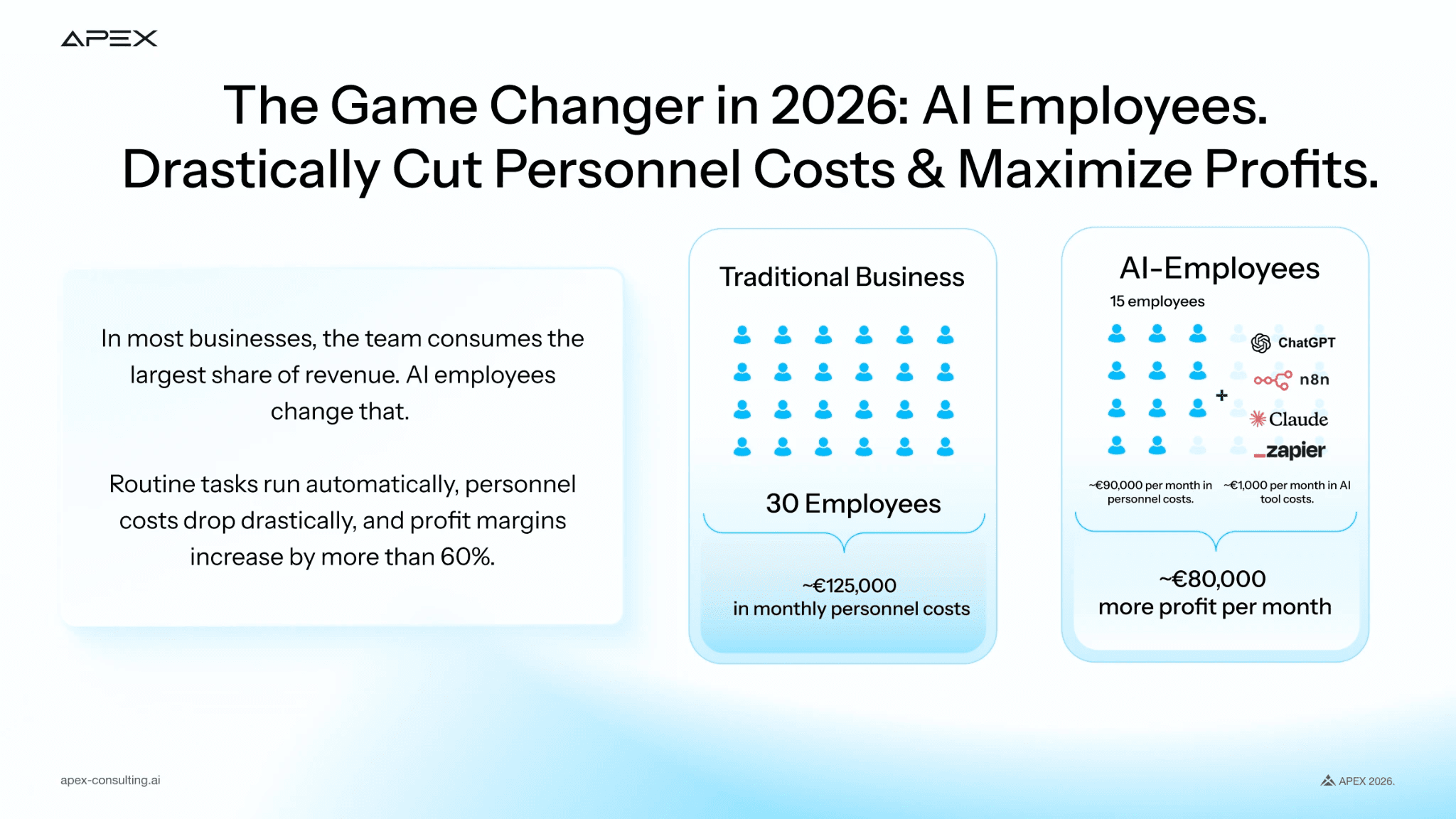
Der geniale Hebel für mehr Gewinn, ganz ohne neues Personal: KI-Mitarbeiter.
Willkommen im Jahr 2026: Wo Plattformen dich nicht angreifen, sondern dich einfach überflüssig machen.
Die großen Plattformen haben alle ein gemeinsames Ziel: Sie wollen dich als Agentur am liebsten gar nicht mehr brauchen.
Meta sagt das ganz offen, Google baut heimlich an den gleichen Funktionen und Amazon zieht nach. TikTok testet sogar schon KI-gesteuerte Anzeigen, die ganz ohne Agenturhilfe laufen!
Der Markt arbeitet nicht gegen dich, weil du schlechte Arbeit machst. Er arbeitet gegen dich, weil klassische Agenturdienstleistungen zwischen den Kunden und den Plattformen immer weniger gebraucht werden.
Und während auf den üblichen Konferenzen noch die alten Tipps von gestern verteilt werden (mehr Anrufe machen, noch lauter werben, noch ein neues Angebot testen), rollt eine technologische Riesenwelle auf uns zu, die dieses alte Denken einfach wegspült.
Wenn du dieses Jahr doppelt so viel tun musst, um die gleichen Ergebnisse wie letztes Jahr zu erzielen, liegt das nicht an der schlechten Wirtschaft. Es zeigt einfach, dass das alte Geschäftsmodell langsam veraltet.
Die 3 Stufen der KI-Bereitschaft – und warum zwei davon eine kleine Selbsttäuschung sind
Viele Agenturen stecken leider noch auf Stufe 1 fest.
Sie sehen KI als ein nettes Werkzeug, das man mal nutzt, „wenn gerade Zeit ist“. Hier mal ein kleiner Text, da mal ein automatischer Social-Media-Post und ein bisschen ChatGPT für neue Ideen.
Das fühlt sich zwar modern an, ist aber extrem gefährlich, weil man den Anschluss verpasst.
Stufe 2 sieht auf den ersten Blick schon schlauer aus: Prozesse werden automatisiert, Aufgaben an die KI übergeben und eigene kleine Chat-Helferlein gebaut. Das ist super! Aber es ändert nichts am eigentlichen Geschäftsmodell. Es ist wie ein neuer Anstrich auf einem Haus, dessen Fundament wackelt.
Die einzige Stufe, auf der Agenturen wirklich fit für die Zukunft sind, ist Stufe 3: Hier verstehst du, dass KI nicht nur Aufgaben übernimmt, sondern dass sich die Wünsche deiner Kunden komplett verändern. Der Markt erneuert sich von Grund auf!
Früher war gutes Texten Mangelware. Heute hat jeder einen Texter in der Tasche – kostenlos und rund um die Uhr!
Das bedeutet nicht, dass dein Können wertlos ist. Aber du musst damit heute andere Probleme lösen als früher. Und wenn dein Angebot ein Problem löst, das es so gar nicht mehr gibt, hilft es leider auch nicht, wie gut du darin bist.
Was echte KI-Bereitschaft bedeutet – aus 7 Jahren Praxis und echtem Einsatz
Wirklich bereit für die KI zu sein bedeutet, die Spielregeln zu verstehen und nicht nur die Werkzeuge zu kennen. Die Technologie verändert nämlich nicht nur das „Wie“, sondern vor allem das „Was“!
Erfolgreiche Agenturen haben heute eines gemeinsam: Sie beobachten Trends nicht nur, sie verstehen das ganze System dahinter. Sie wissen genau, welche KI-Modelle welche Märkte verändern werden, können echten Wandel von kurzem Hype unterscheiden und passen ihr Team und ihre Technik blitzschnell an.
Wir sehen das tagtäglich bei unserer Arbeit: Bei echten Projekten im Hintergrund und in komplexen Systemen, wo KI kein nettes Spielzeug ist, sondern das solide Fundament.
Wenn man sieben Jahre lang KI aufbaut und testet, sieht man Muster einfach viel früher als andere!
Dein Weg zur echten KI-Bereitschaft
Kleiner Spoiler vorab: Es fängt nicht mit den Tools an!
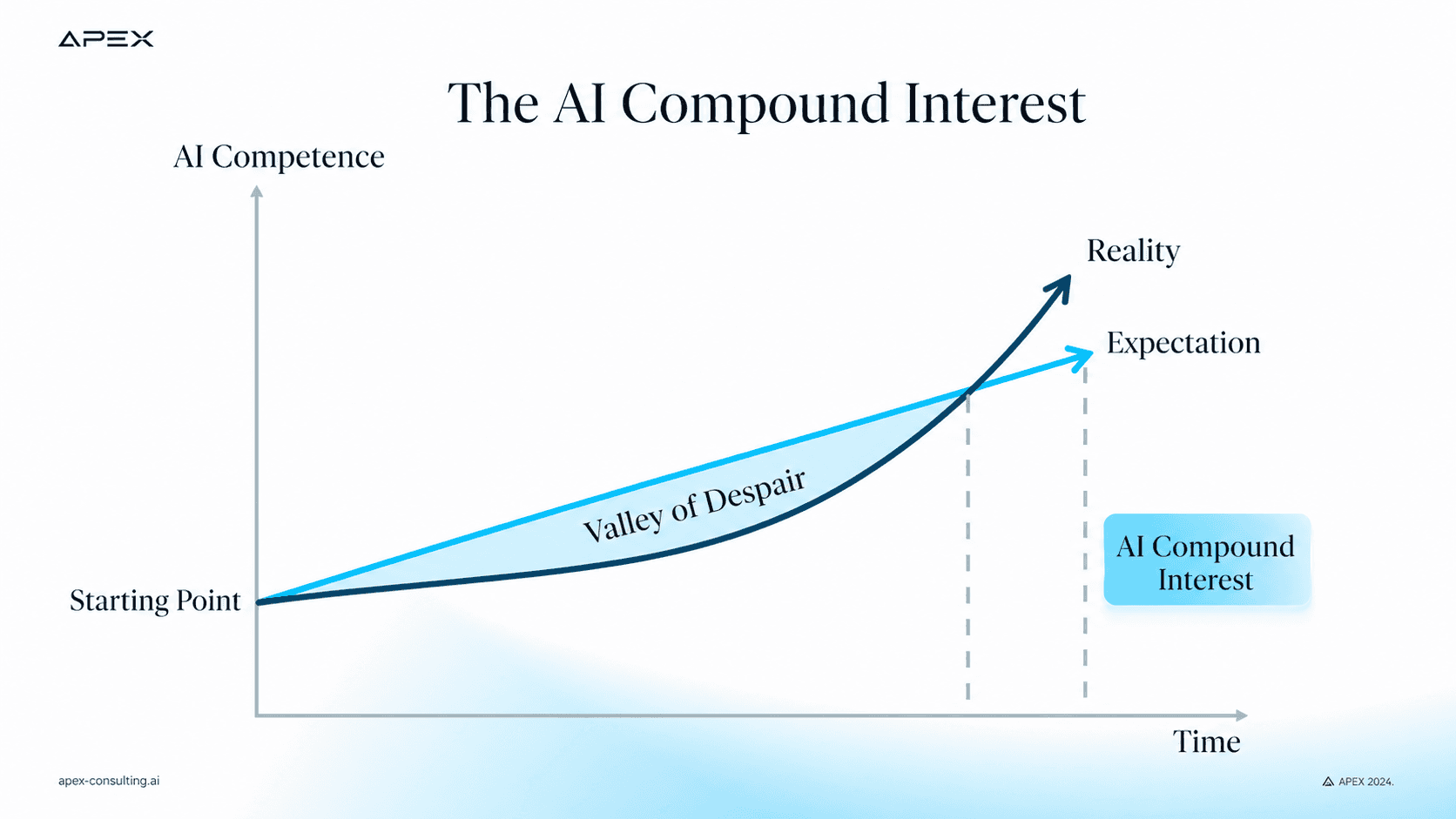
Wer heute mit KI startet, baut sich einen riesigen Vorsprung auf, der von Tag zu Tag schneller wächst! Mit diesem Mitnahme-Effekt bist du morgen schon da, wo andere erst in Jahren ankommen.
Der Weg beginnt mit der Erkenntnis, dass KI nicht nur ein weiteres Werkzeug für deine Agentur ist, sondern das neue Fundament, auf dem deine Agentur steht.
Du brauchst ein echtes Verständnis dafür, wie diese Systeme ticken und warum manche Entwicklungen einfach kommen müssen. Ganz entspannt und strategisch gedacht!
Du brauchst ein Team, das KI nicht nur nutzt, sondern ganz natürlich damit denkt. Mitarbeiter, die von sich aus Lust auf die nächsten coolen Neuerungen haben.
Du brauchst ein gemeinsames „KI-Gehirn“: Euer eigenes gesammeltes Wissen, damit die KI maßgeschneiderte Ergebnisse liefert und nicht nur den gleichen Standard-Kram wie bei allen anderen.
Und du musst ganz nah dran sein an den neuesten Trends und Methoden, die heute vielleicht nur wenige Experten kennen, aber morgen schon Standard sind.
Wenn du das schaffst, baust du eine Agentur auf, die durch KI wächst, anstatt kleiner zu werden! Eine Agentur, die schneller denkt, schneller entscheidet und schneller umsetzt.
KI zerstört keine Agenturen. KI ersetzt nur die Agenturen, die sich nicht weiterentwickeln.
Wer glaubt, mit dem Arbeitsmodell aus dem Jahr 2020 im Jahr 2030 noch erfolgreich zu sein, übersieht die Realität.
Aber für Agenturen, die KI jetzt richtig verstehen und nutzen, bietet sich aktuell die größte Wachstumschance seit der Erfindung des Internets. Lass uns diese Chance gemeinsam nutzen!
Über APEX Consulting
APEX Consulting ist dein Partner für KI-Automatisierung und Wachstum. Wir unterstützen Unternehmen mit smarten Abläufen, cleveren KI-Helfern und modernen Systemen. Dabei setzen wir auf einfache Lösungen aus der Praxis, die dir die Arbeit erleichtern und dein Wachstum ankurbeln.
Mehr Infos findest du hier: https://apex-consulting.ai/