
Your AI Action Plan for 2026
Forget everything you think you know about artificial intelligence. Because 2026 will not be the year of ever-better models. It will be the year AI finally arrives where it belongs: in your working day. New studies from McKinsey, OpenAI, and renowned universities show that the AI landscape is fundamentally shifting.
The question is no longer which model is the best, but how you use AI in a way that delivers real value. Here are the six most important trends you need to know about right now.
1. The age of model obsession is over
Remember when everyone was debating GPT-4 versus Claude? That debate will be definitively history in 2026. The quality differences between different AI models are shrinking dramatically. Even free alternatives like DeepSeek or Llama are now playing in the Champions League.
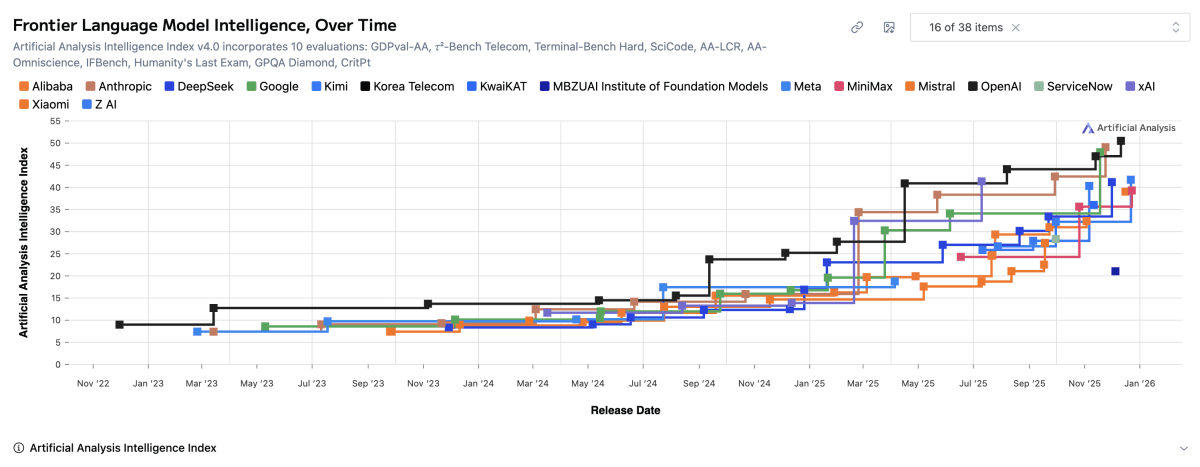
The graphic shows that the performance of leading AI models has converged significantly over time. Despite coming from different providers, all models today operate at an almost equally high performance level.
Why is this? Technology is making a giant leap. Nvidia's latest graphics chips consume around 100,000 times less energy per processed token than ten years ago. AI models are thereby becoming what electricity has long been: a commodity product that is simply available.
This shifts competition entirely. OpenAI scores with its brand recognition, Google with seamless integration into Gmail, Android, and search, Anthropic specializes in developers and enterprises. It is no longer about the raw performance of the model, but about reach, integration, and trust.
What this means for you
Stop comparing models. Ask yourself instead: how well does this AI system fit into my working day? Can I integrate it seamlessly into my existing tools? That is the question that counts in 2026.
2. Workflows beat agents, and by a clear margin
Autonomous AI agents get a lot of attention in the media. In practice, however, they play almost no role for most agencies and SMEs. According to a McKinsey study, fewer than 10 percent of companies deploy autonomous agents.
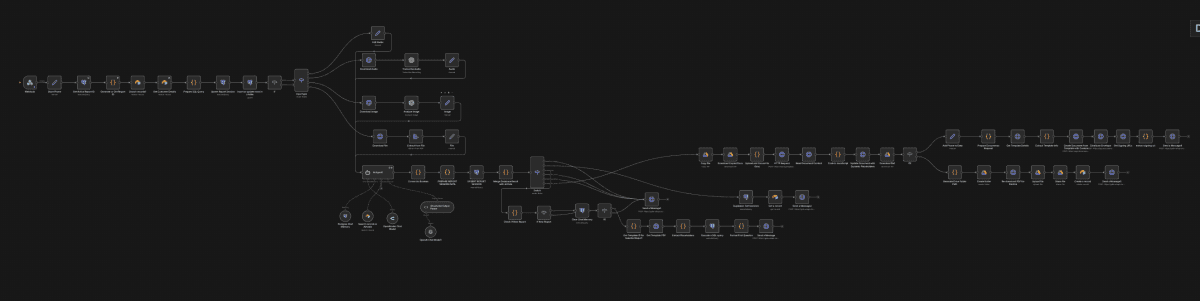
This AI agent takes over a complete process that would otherwise keep teams busy for hours: reports are automatically created, coordinated directly with clients via WhatsApp, stored in Airtable with revision security, and immediately forwarded for digital signature. No follow-up, no copy-paste, no delays. Those who work this way are one step ahead operationally.
What is already working are AI workflows: specifically configured AI tools for clearly defined processes. Around 20 percent of companies are already using them productively.
The results speak for themselves and translate directly to agencies and mid-sized companies:
One company automated its data preparation and reduced preparation effort by 60 percent, while simultaneously cutting errors significantly. Transferable to reporting, lead qualification, or proposal preparation.
A service business halved customer service costs through AI-powered inquiry handling while simultaneously increasing client satisfaction. Relevant for support, appointment qualification, and first contact.
One company automated technical maintenance tasks. AI took over the preparatory work, humans only checked the results. Outcome: 50 percent time savings. Exactly the principle agencies can apply to content, campaigns, or CRM maintenance.
Conclusion: it is not autonomous super-AI that delivers the greatest leverage today, but pragmatic AI workflows that automate recurring tasks and meaningfully relieve teams. This is precisely where the greatest benefit lies for agencies and SMEs.
Why workflows are the better choice
Fully autonomous AI agents are still struggling with massive challenges, from data security to reliability. Workflows, on the other hand, combine the best of both worlds: AI takes over the routine work steps, and you retain control over final decisions.
Your action plan for 2026: take your most successful AI prompts and transfer them into repeatable workflows. Where do you keep pressing "Generate"? That is exactly where your automation potential lies.
3. The technical gap is disappearing, finally
In the past, as a marketing manager you had to wait days for the IT department just to get a simple dashboard. In 2026 that time is over. According to OpenAI, 75 percent of enterprise users report completing tasks with AI that they previously could not handle technically.
Sales staff are suddenly writing scripts. Marketing professionals are building their own analysis tools. Content managers are automating reporting. AI is becoming the "great equalizer," as an MIT study shows: people with less technical knowledge in particular benefit massively and catch up with experts.
Try this: find a technically challenging task this month that you would normally outsource. Dashboard creation? Data analysis? Automation script? Tackle it with tools like ChatGPT or Gemini Cloud. You will be surprised at what suddenly becomes possible.
4. Good prompts are no longer enough: you need context
AI models are becoming so good that even vague instructions work. Sounds great, right? Not entirely. Because the central weakness remains: the knowledge gap.
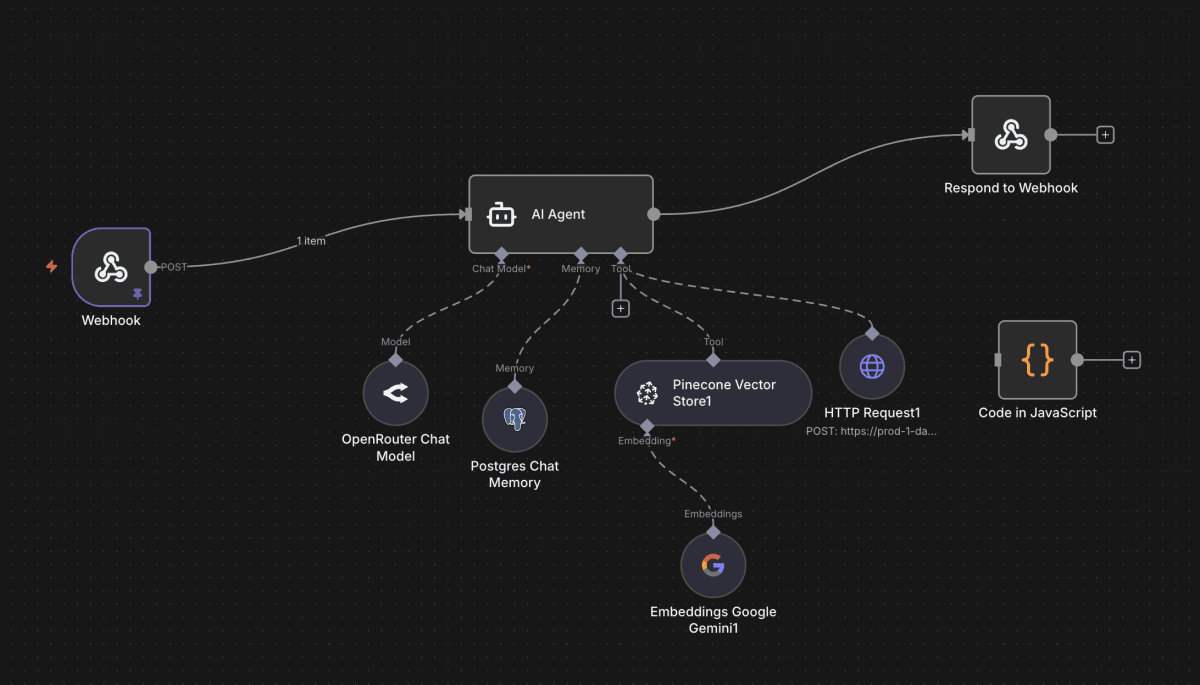
Architecture of a RAG-based AI assistant for thesis creation: inputs are processed via a webhook, analyzed by the AI agent, and enriched with context using a vector database (Pinecone), embeddings, and persistent chat memory, before structured, scientifically consistent responses are generated.
AI knows Wikipedia, but not your company goals. It knows marketing theories, but not your brand guidelines. It speaks perfect English, but has no access to internal emails or documents. It is like a highly qualified employee who simply knows nothing about your company.
The context question decides everything
That is why a platform war is currently raging between Google, Microsoft, and others. It is about who controls your data and therefore the context. Whoever can best integrate your information wins.
Feel free to seek professional advice from an agency that specializes in this topic and can support your team: https://calendly.com/apex-consulting-call/ki-beratung
Two critical practical tips:
Organize your data systematically. Scattered folders with cryptic names like "Presentation_final_final_v3" are the death of any AI integration. Create structure, name files logically, maintain a clear filing system.
Consolidate your tools. Data spread across ten different platforms? Impossible for AI to connect everything. The more centrally your information is organized, the better AI can use it for reports, presentations, or analyses.
Good prompts remain important, but without the right context their potential evaporates.
5. Advertising in chatbots is coming, whether you want it or not
It is virtually certain: in 2026 ChatGPT will show advertising. Sounds annoying? Perhaps. But the alternative would be worse.
Without advertising revenue, powerful AI models would only be available through expensive subscriptions. That would create a digital divide: wealthy users get premium AI, everyone else, casual users, students, nonprofits, people in developing countries, gets left out.
What will AI advertising look like?
Experts expect that ads will not be built directly into responses, as that would destroy trust. More likely are separate display banners, similar to those on websites today.
The paradox: advertising enables broad access to cutting-edge technology. As annoying as individual ads may be, they democratize AI and make it available to millions of people who cannot or do not want to spend €20 a month.
What you should do now
Wharton professor Ethan Mollick puts it precisely: we are at a "jagged frontier" where nobody has all the answers. AI is changing competencies so radically that willingness to learn and speed matter more than perfect plans.
The most important recommendation for 2026: just start. Not with a master plan, but with small steps. Find one concrete task where AI could help. Try it out. Learn from it. Iterate.
The AI future does not belong to those who are perfectly prepared. It belongs to those who experiment, fail, learn, and keep going. The six trends show the direction. Now it is up to you to use them.
About APEX Consulting
APEX Consulting is an AI automation and growth consulting firm supporting B2B organizations with intelligent workflows, AI agents, CRM automation, and scalable operating systems. The firm focuses on practical, implementation-driven solutions that reduce manual effort and enable sustainable growth.
More information: https://apex-consulting.ai/