
The AI Readiness Framework 2026
Why automation often disappoints
Many companies start automation under pressure. Too many tasks, too little time, rising costs. So whatever is causing the most pain gets automated.
The problem: automation amplifies what is already there.
If processes are clear, they will run faster. If processes are unclear, problems will surface faster.
A typical mistake is jumping straight to tools without first asking three simple questions:
Do we actually know exactly how our workflows operate?
Does our data flow reasonably reliably?
Is it clear who takes responsibility when something does not work?
A readiness assessment forces you to answer exactly these questions before you invest money and time.

This feedback stands for something bigger: APEX works not only in the DACH region, but also internationally, from large US corporations and SMEs to specialized agencies.
What a readiness assessment is really about
It is not about whether you are "modern enough." And it is not about whether you use AI or not. It is about whether your company is stable enough to carry automation in a meaningful way. We look at four areas that are decisive for agencies and SMEs.
1. Processes: understandable beats perfect
You do not need perfect processes. But you do need processes that can be explained.
A simple rule from practice: if you cannot explain a workflow to a new employee, you cannot automate it either.
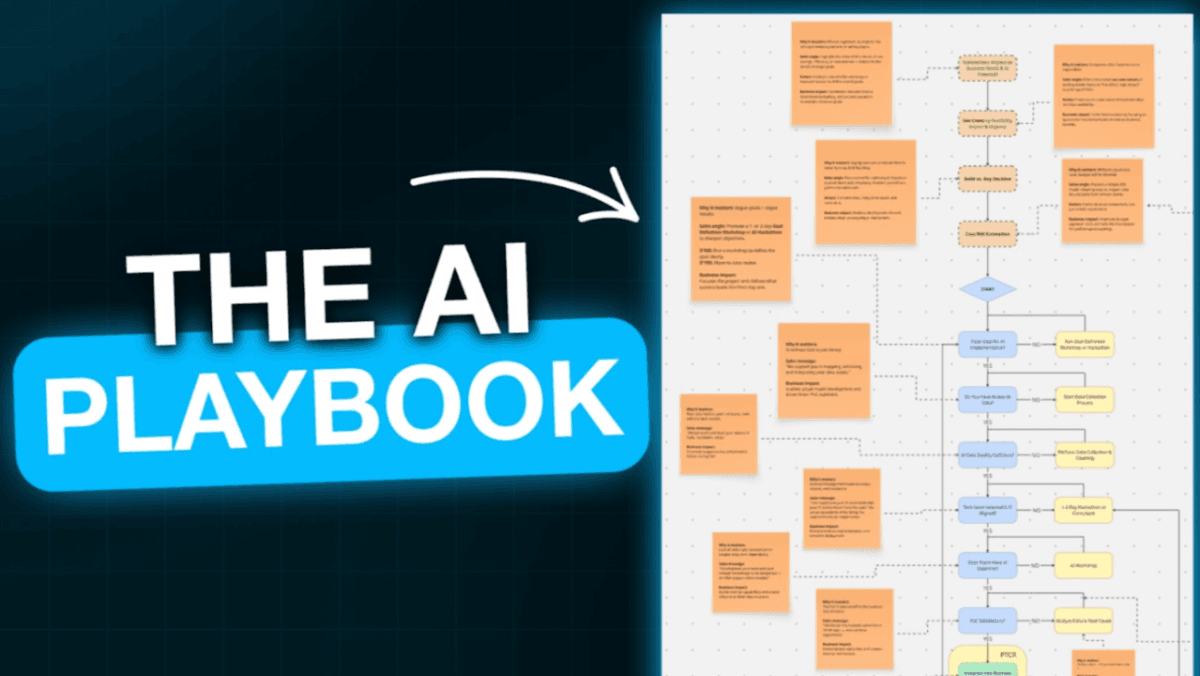
In the newsletter "The AI Playbook" with over 40,000 subscribers, we regularly publish insights from our work with agencies, SMEs, and coaches: https://www.linkedin.com/newsletters/the-ai-playbook-7328012303117815809/
Questions that matter here:
Is there a clear path from lead to invoice?
Does onboarding run similarly every time or completely differently each time?
Does your team know what the next step is without having to ask?
Many companies operate on implicit knowledge. That works as long as everything stays small. The moment automation is introduced, that knowledge falls apart.
Automation does not need bureaucracy. It needs clarity.
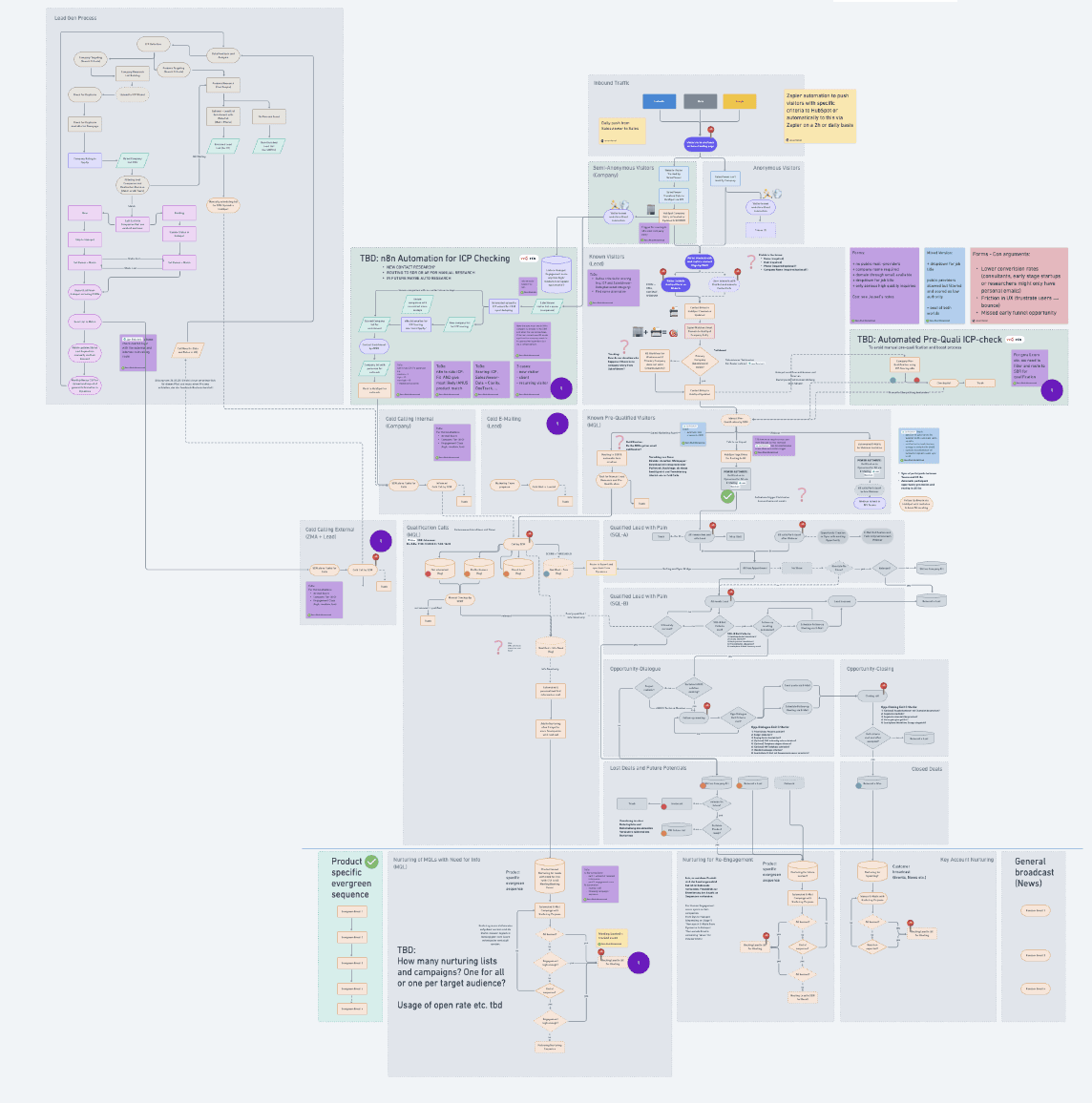
At APEX we sketch before we build. The graphic shows how inbound, outbound, and automation workflows interlock and are scaled through n8n, CRM logic, and decision rules. The goal is end-to-end, data-driven lead processing with clean handovers between marketing, sales, and automation.
2. Data: collect less, use better
In almost every SME there is enough data. The problem is not the volume, but the quality and the connections between it.
Leads come in but are not cleanly categorized. Proposals are created but status changes are not properly maintained. Project information sits in one tool, invoices somewhere else.
A readiness assessment therefore looks at things in a very pragmatic way:
Where does data originate?
Who uses it further down the line?
Where is it maintained twice over or manually?
Automation only works when data is reliable. Otherwise you are automating rework.
3. Technology: realistic beats ambitious
You do not always need a high-end architecture. Many companies overestimate what their systems can do and underestimate what is blocking them.
Important questions are:
Which tools are genuinely business-critical?
Which systems can be cleanly connected?
Where are workarounds already appearing today?
A good assessment draws a clear distinction between:
This works and stays
This works but needs connecting
This actually no longer works
This clarity saves you months of poor decisions. Get help from experts in automation and AI so you do not invest unnecessary time and money in actions that make no sense.
4. People: the most important factor
This is often pushed aside, but it is decisive.
Automation changes work. Tasks disappear, others emerge. If nobody takes responsibility or the team does not come along, every project fails.
This comes down to simple things:
Is there one person who owns automation?
Is automation seen as support or as control?
Are you as the owner genuinely behind it, or are you delegating the topic away?
Automation without buy-in from the top remains a side project.
What the readiness score actually tells you
At the end there is a score. It is not a verdict and not a marketing gimmick.
It helps you assess:
Whether you should start with pilots immediately
Or whether foundational work is still missing
Where the greatest lever for relief lies
Many companies are surprised at how clearly priorities emerge from this. Instead of optimizing everywhere at once, you know where it is genuinely worth it.
The roadmap: step by step
A good readiness assessment does not end with analysis, but with a clear sequence.
Phase 1: Clarity. Name results openly, accept bottlenecks, set expectations realistically.
Phase 2: Stabilize. Simplify processes, organize data flows, clarify responsibilities. Not exciting, but decisive.
Phase 3: First pilot. One clear use case with measurable relief. For example lead qualification, proposal processes, or client onboarding.
Phase 4: Scale. What works becomes the standard. Further automations build on top of it.
Phase 5: Improve. Automation develops alongside your company instead of restarting from scratch every year.
Why this matters particularly for agencies and SMEs
Large companies can afford failed attempts. You cannot.
A structured automation readiness assessment ensures that automation genuinely gives you time back, instead of creating new dependencies.
At APEX Consulting we see time and again that companies do not automate too little, but too early and without a clear foundation.
Automation is not a tool topic. It is a structural question.
When you know where your company stands, you make better decisions. You automate with purpose, not under pressure. And you build systems that grow with you.
An automation readiness assessment is not a nice-to-have. It is the most sensible starting point for AI in 2026.
About APEX Consulting
APEX Consulting is an AI automation and growth consulting firm supporting B2B organizations with intelligent workflows, AI agents, CRM automation, and scalable operating systems. The firm focuses on practical, implementation-driven solutions that reduce manual effort and enable sustainable growth.
More information: https://apex-consulting.ai/