
The true success factor in the AI era is human capability.
We are currently witnessing perhaps the biggest technology boom since the early internet era. AI is everywhere- from ChatGPT to automation to self-learning systems.
But behind all the enthusiasm lies an uncomfortable truth: up to 95% of all AI projects fail to generate measurable business value (source).
Studies show that the root cause is not the technology itself. Most companies fail because they focus too heavily on tools and models-and too little on the skills needed to embed AI meaningfully into business processes.
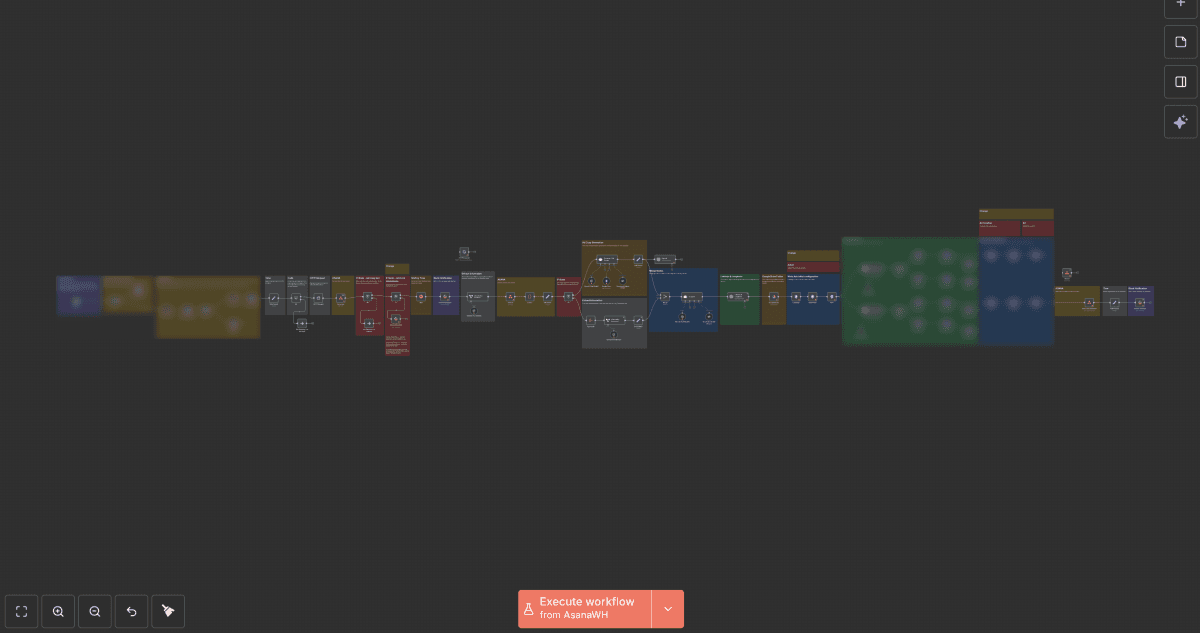
This n8n workflow automates the entire process of creating Facebook and
Instagram ads. Campaign details are pulled from Asana, the ad copy is generated
with OpenAI, creative assets are produced, and fully structured ads are published
directly in the Meta Ads Manager - all in about 5 minutes instead of 1.5 hours.
The problem is not primarily in the tools, but in the understanding of business processes, internal communication, and implementation (the speed of implementation).
The future belongs not to pure technicians, but to bridge builders: entrepreneurs who can connect business, technology, and teamwork.
Here are 10 key competencies that determine success or failure in the era of AI automation-and why they matter so much in practice.
1. Understanding Processes & Business Process Mapping
AI does not solve chaos. It only automates it.
Before you automate anything, you need clarity about what is actually supposed to happen. Anyone who can precisely map processes-whether onboarding, lead generation, or operations-lays the foundation for working automations.
Without a clean process understanding, AI projects remain abstract-and fail before they even start.
2. Practical Workflow Automation
Tools like Zapier, Make, or n8n are today’s productivity engines.
Anyone who masters them can build digital assembly lines that automate routine tasks-often without writing a single line of code.
A marketer who automates reporting or a recruiter who automatically enriches candidate data becomes a multiplier within the organization.
Automation is no longer an IT job-it’s a core skill.
3. Prompt/Context Engineering & Working With AI
AI is only as good as the instructions it receives.
“Prompt engineering” and “context engineering” aren’t just playing around with ChatGPT-they are the ability to guide AI iteratively and contextually, almost like managing a highly capable but very literal team member.
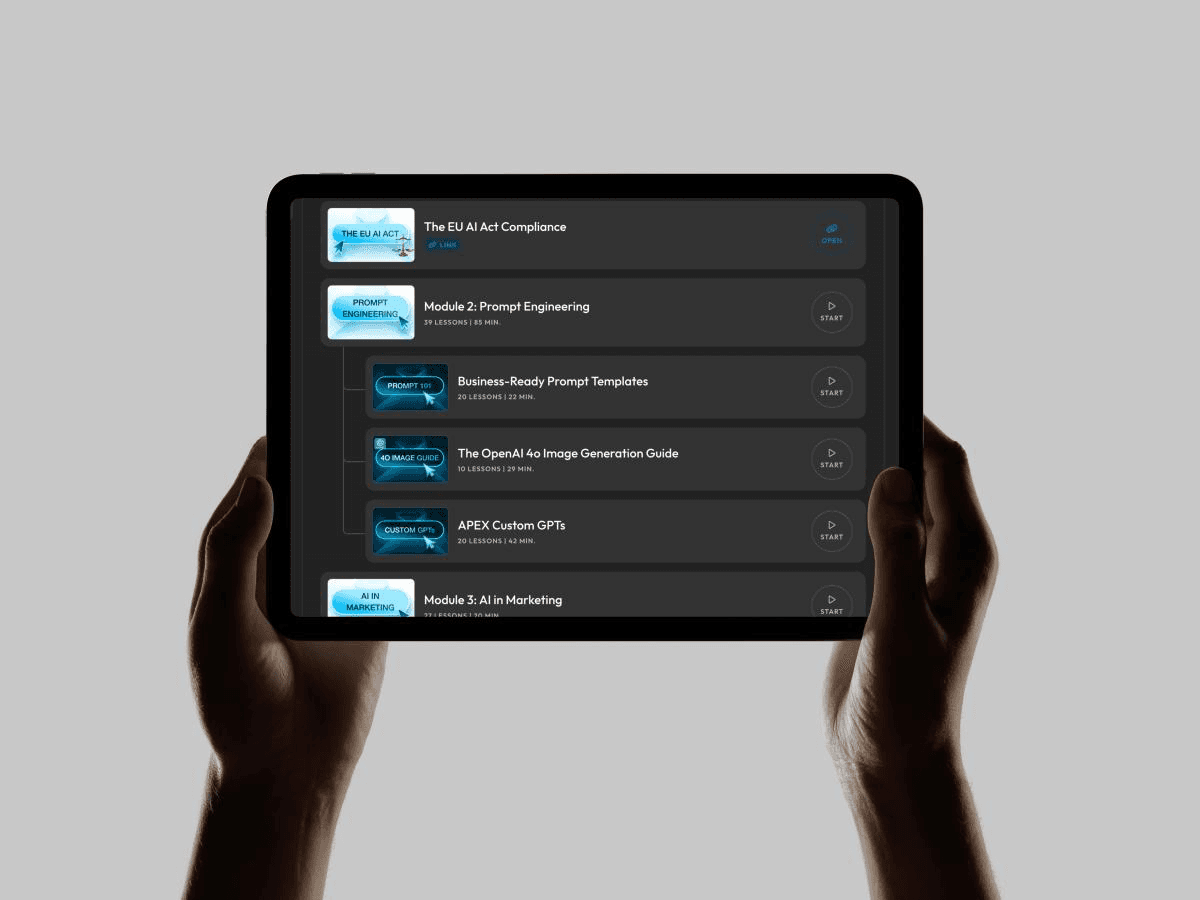
Insight into the APEX Learning Suite: AI training modules for marketing,
automation, and business transformation.
Those who learn to think with AI rather than simply “ask it questions” achieve reliable, business-relevant outcomes.
4. SaaS Implementation & Integration
Every automation is built on software-CRMs (UmsatzIO, HubSpot, Pipedrive...), project management tools (Asana, Monday...), or analytics platforms.
But many companies fail to integrate these systems cleanly.
The result: data silos, duplicated work, unused licenses.
Skills in SaaS setup, API connections, and process integration are extremely valuable-they determine whether an organization becomes interconnected or remains a digital patchwork.
5. Database Design & Data Management
Every automation needs a brain-a structured data foundation.
Whether in Airtable, Pinecone, or SQL: clean data modeling ensures scalability and reliability.
Messy data = weak automations.
Well-structured data = exponential efficiency gains.
6. Creating User Interfaces With No-Code Tools
Not every solution should stay hidden in the backend.
No-code platforms like Airtable, Glide, or Retool enable simple dashboards, forms, and mini-apps that allow non-technical colleagues to control automations.
AI becomes accessible-instead of overwhelming.
7. Data Analysis & Interpretation
Automations generate vast amounts of data-but numbers alone are meaningless.
The key is turning information into actionable insights: not just knowing that a workflow saves 10 hours, but understanding why it works-and where efficiency can be multiplied.
8. Cross-Department Communication
Automation affects all areas: sales, marketing, HR, customer success, finance.
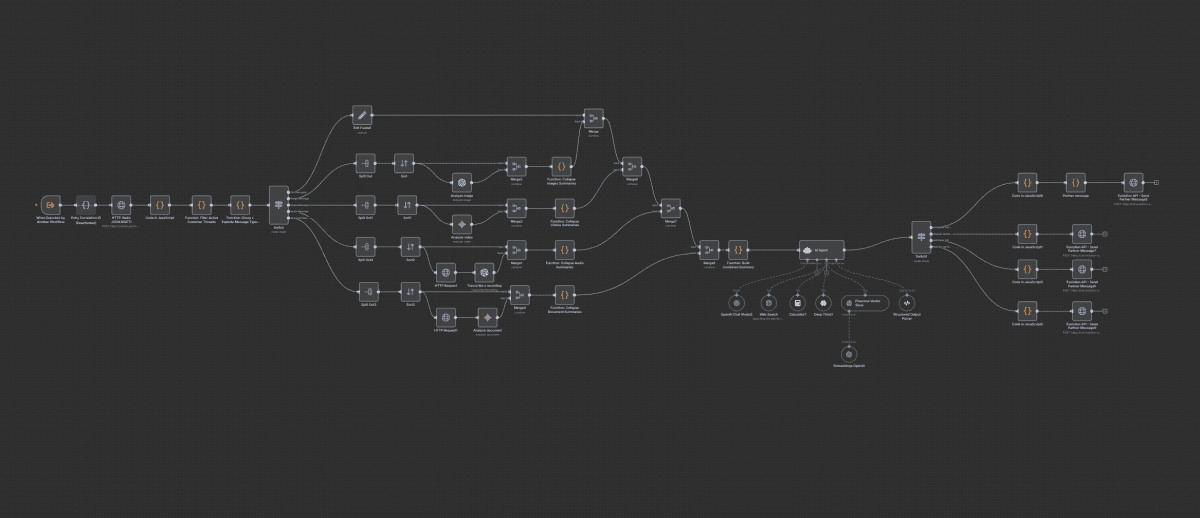
A look into our n8n workflow for automated WhatsApp customer support -
featuring AI-powered real-time analysis of text, image, and audio files.
Anyone who understands and can translate these different “languages” becomes the bridge between technology and business.
This ability-explaining technical solutions in terms of business value-is often the decisive success factor.
9. Problem-Solving Mindset
Tools don’t solve problems-structured thinkers do.
A clear, analytical approach that breaks complex challenges into smaller, testable steps (divide & conquer) is the foundation of every successful AI project.
Companies that analyze problems systematically innovate faster-and fail less.
10. Continuous Learning & Experimentation
The AI ecosystem changes weekly (sometimes daily…).
New models, APIs, platforms-anyone who wants to keep up must stay curious and adaptable.
What matters is not perfection, but the ability to experiment quickly and turn learning into action.
Yesterday’s playbooks become outdated tomorrow-but learning ability remains the ultimate competitive advantage.
Equally important is access to external knowledge: companies that collaborate with external partners, agencies, or specialized consultants benefit from fresh expertise, best practices, and early indicators of new trends.
Those who systematically integrate external perspectives drastically shorten their learning curve and spot opportunities before competitors even notice them.
AI transformation is not a one-time project-it is an open learning system that becomes smarter through continuous exchange.
Success in the AI Era Depends on People-Not Tools
If 95% of AI projects fail today, it’s not because of the technology-it’s because companies lack the crucial skills, structures, and mindsets needed to use it effectively.
The winners of the coming years won’t be those who buy the most tools, but those who connect technology, strategy, and human intelligence.
Whoever masters these 10 core competencies won’t just integrate AI into daily operations-they will transform their company into a scalable, learning system that acts faster, makes better decisions, and recognizes market opportunities before anyone else can react.
The AI revolution does not reward spectators.
It rewards those who act now.
If you want to find out how far your company is on this journey, book your free AI integration consultation: apex-consulting.ai
About APEX Consulting
APEX Consulting is an AI automation and growth consulting firm supporting B2B organizations with intelligent workflows, AI agents, CRM automation, and scalable operating systems. The firm focuses on practical, implementation-driven solutions that reduce manual effort and enable sustainable growth.
More information: https://apex-consulting.ai/